Love this? Save it for later!
Share the inspiration with your friends
The dinner party was in four hours and I’d completely forgotten. Not the party itself, mind you—I’d remembered to buy wine and even cleaned the bathroom. But the main dish? Completely slipped my mind. Everyone else would be bringing those fancy, multi-day preparation dishes they’d been posting about in the group chat. Sarah had her grandmother’s coq au vin marinating for two days. Mark was bringing a lamb tagine he’d been perfecting for weeks. And me? I had three pounds of bratwurst from a random Costco run and a jar of sauerkraut that had been living in my fridge for… well, let’s just say it had been there a while. I stood there staring into my fridge, honestly ready to just order pizza and admit defeat. But then I remembered this German bratwurst skillet my Oma used to throw together in a pinch—and I mean literally throw together, with no measuring and no fuss. I had onions, I had butter, I had beer left over from last weekend. So I figured, what’s the worst that could happen? Twenty minutes later, the whole kitchen smelled like a German Christmas market, and I actually had to stop myself from eating it all before anyone arrived. The bratwurst skillet ended up being the dish everyone asked for the recipe—not the coq au vin, not the tagine. Just simple bratwurst, sauerkraut, and onions. Maybe you’ve been there—the panic of an empty menu and a full guest list. That’s why I keep coming back to this recipe. It saves me every time.
Why You’ll Love This Recipe
This isn’t just another sausage recipe. After testing this German bratwurst skillet about seven times (yes, seven—my neighbors started getting suspicious), I can tell you exactly why it works so well.
- Ready in Under 30 Minutes : From fridge to table in about 25 minutes. Perfect for those nights when you forgot to plan dinner or, you know, a dinner party.
- Simple Ingredients : You probably have most of these already. Beer, onions, butter, bratwurst—these are not exotic finds. No special grocery trips required.
- Perfect for Entertaining : This bratwurst skillet looks impressive but requires zero stress. It’s the kind of dish you can make while chatting with guests.
- Crowd-Pleaser : I’ve served this to picky kids, German grandmothers, and my friend who “doesn’t really like sausage.” Everyone goes back for seconds.
- Unbelievably Delicious : The caramelized onions and beer create this rich, savory sauce that coats every bite of bratwurst. It’s simple comfort food that tastes like you spent hours.
What makes this recipe different from all the other sausage skillets out there? It’s the technique. Most recipes just brown the sausage and throw everything in a pan together. But I’ve learned that slowly caramelizing the onions first—getting them truly golden and sweet—makes all the difference. Then adding the beer and letting it reduce creates this incredible glaze that clings to the bratwurst. It’s not just another version. It’s my best version, tested and tweaked until it was just right.
This is the kind of recipe that makes you close your eyes after the first bite. It’s comfort food reimagined—faster, simpler, but with the same soul-soothing satisfaction. Perfect for impressing guests without stress, or turning a regular Tuesday night into something memorable.
What Ingredients You Will Need
This recipe uses simple, wholesome ingredients to deliver bold flavor and satisfying texture without the fuss. Most of these are pantry staples or easy to find at any grocery store.
- Bratwurst : 6 links (about 1.5 pounds), fresh or pre-cooked. I prefer Johnsonville or a local butcher brand for the best snap when you bite into them. Look for links that feel firm and plump.
- Sauerkraut : 1 (14-ounce) jar or can, drained but not rinsed. I like Frank’s or Boar’s Head. The brine adds so much flavor. (Tip: look for sauerkraut in the refrigerated section—it’s fresher and crunchier.)
- Yellow Onions : 2 large, thinly sliced. Sweet onions like Vidalia work great too. The onions are the backbone of this dish—don’t skimp on them.
- Butter : 2 tablespoons, unsalted. Adds richness and helps those onions caramelize beautifully. Use dairy-free butter if needed.
- Beer : 1 cup (8 ounces), any German-style lager or pilsner. I use Warsteiner or Bitburger. The beer adds depth and helps deglaze the pan. (Non-alcoholic beer works fine too, or use beef broth.)
- Caraway Seeds : 1 teaspoon. Optional but highly recommended. They add that classic German flavor that pairs perfectly with sauerkraut.
- Brown Sugar : 1 tablespoon. Just a touch to balance the tanginess of the sauerkraut and beer. You won’t taste sweetness—it just rounds everything out.
- Salt and Black Pepper : To taste. Go easy on the salt because the bratwurst and sauerkraut are already salty.
- Fresh Parsley : For garnish. Adds a pop of color and freshness. Totally optional but makes it look pretty.
- Whole Grain Mustard : For serving. Not in the skillet, but essential on the side. The tangy, grainy texture is perfect with the bratwurst.
Equipment Needed
You don’t need a fancy kitchen for this one. Here’s what you’ll need:
- Large Skillet or Dutch Oven : 12-inch with a lid. Cast iron is ideal for even browning, but any heavy-bottomed pan works. I use my trusty Lodge cast iron skillet—it’s been through dozens of these bratwurst skillet dinners.
- Sharp Knife : For slicing onions and parsley. A good chef’s knife makes the prep so much faster.
- Cutting Board : Preferably wooden or plastic. Keep it stable with a damp towel underneath.
- Tongs : For flipping the bratwurst. Metal tongs with silicone tips work great—they won’t scratch your pan.
- Wooden Spoon or Spatula : For stirring the onions and scraping up those browned bits from the bottom of the pan.
- Measuring Cups and Spoons : For the beer, brown sugar, and caraway seeds. Eyeballing works for experienced cooks, but measuring ensures consistency.
- Lid : To cover the skillet while the bratwurst simmers. If your skillet doesn’t have a lid, use a baking sheet or aluminum foil.
Budget-friendly tip: You don’t need a fancy Dutch oven. A regular non-stick skillet with a lid works perfectly. I’ve made this bratwurst skillet in a $15 pan from Target and it turned out just as good.
Preparation Method
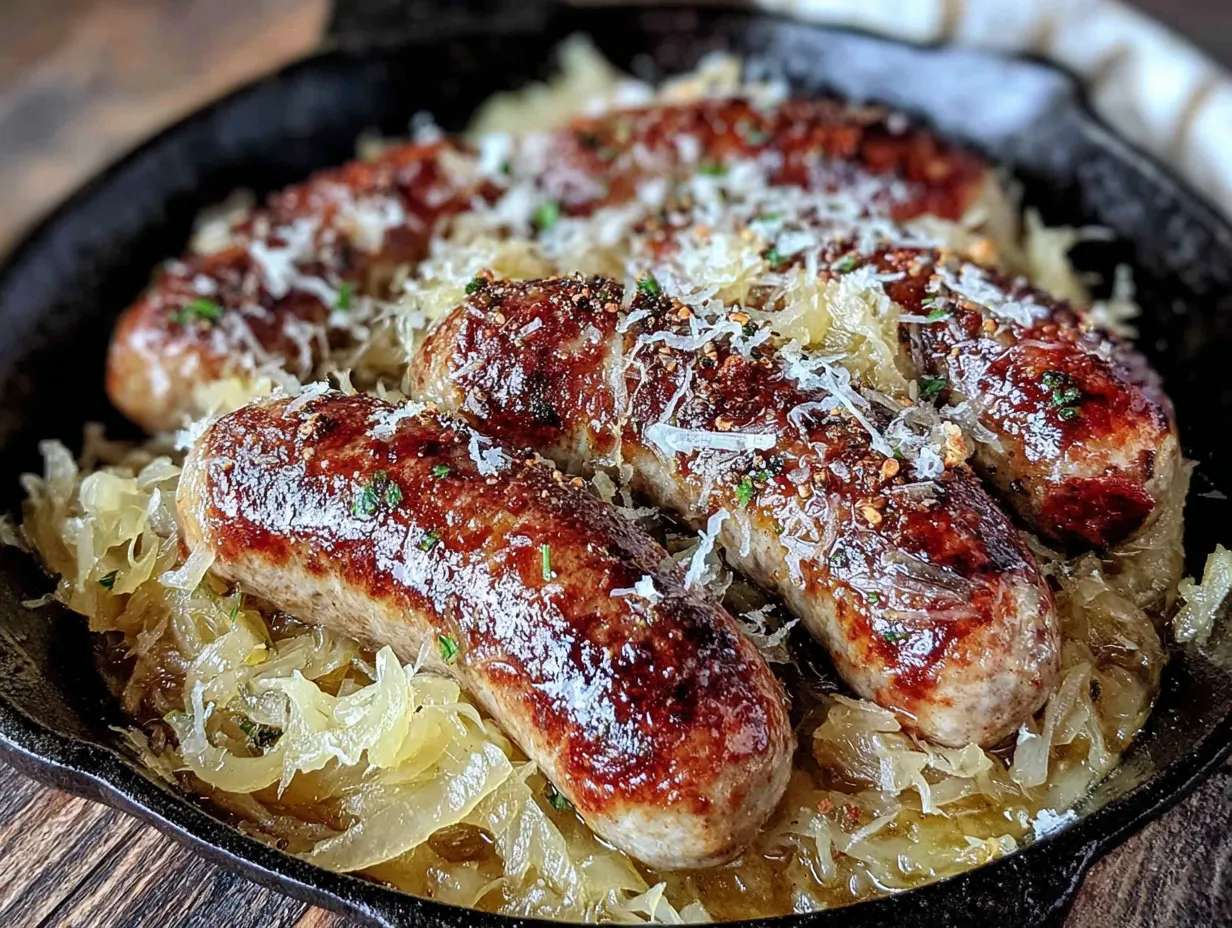
Let’s get cooking. This German bratwurst skillet comes together fast, so have everything ready before you start.
- Prep the Ingredients (5 minutes): Thinly slice both onions into half-moons. Don’t stress about perfect uniformity, but try to keep them similar thickness so they cook evenly. Drain the sauerkraut in a colander but don’t rinse it—you want that tangy brine. Pat the bratwurst dry with paper towels. This helps them brown better.
- Brown the Bratwurst (8-10 minutes): Heat your large skillet over medium-high heat. Add 1 tablespoon of butter. Once it’s sizzling, add the bratwurst links. Don’t crowd the pan—give them space. Cook for 4-5 minutes per side, until they’re deep golden brown with nice caramelized spots. You’re not cooking them through yet, just building flavor. Use tongs to flip them carefully. Remove the bratwurst to a plate and set aside.
- Caramelize the Onions (10-12 minutes): Reduce the heat to medium. Add the remaining 1 tablespoon of butter to the pan. Toss in the sliced onions and a pinch of salt. Stir them around, scraping up any browned bits from the bottom of the pan—that’s pure flavor. Cook the onions, stirring occasionally, until they’re soft and golden brown. This takes patience. Don’t rush it. If they start to stick, add a splash of water or beer. The onions should look like they’re melting into the pan.
- Add the Sauerkraut and Seasonings (2 minutes): Once the onions are beautifully caramelized, add the drained sauerkraut, caraway seeds, and brown sugar. Stir everything together. Let it cook for about 2 minutes, just to warm the sauerkraut and let the flavors start mingling. The kitchen will start smelling incredible at this point—like a German beer hall.
- Deglaze with Beer (1 minute): Pour in the beer. It will sizzle and steam—that’s good. Use your wooden spoon to scrape up any remaining browned bits from the bottom of the pan. The beer will combine with the onions and sauerkraut to create a beautiful, savory sauce. Let it bubble for about a minute.
- Simmer the Bratwurst (10-12 minutes): Nestle the browned bratwurst back into the skillet, pushing them down into the onion-sauerkraut mixture. Reduce the heat to medium-low. Cover the skillet with a lid and let everything simmer together for 10-12 minutes. The bratwurst will cook through and absorb all those wonderful flavors. The sauce will reduce slightly and thicken.
- Finish and Serve (2 minutes): Uncover the skillet. Taste the sauce and adjust seasoning with salt and pepper if needed. Remember, the bratwurst and sauerkraut are already salty, so go easy. Let everything cook uncovered for another minute or two to thicken the sauce slightly. Garnish with fresh parsley. Serve hot with whole grain mustard on the side.
Pro tip: If the sauce seems too thin after simmering, remove the bratwurst and let the sauce bubble uncovered for 2-3 minutes until it reaches your desired consistency. If it’s too thick, add a splash more beer or water.
Cooking Tips & Techniques
After making this bratwurst skillet more times than I care to admit (and messing it up plenty along the way), here’s what I’ve learned.
Don’t rush the onions. I know it’s tempting to crank up the heat and get them done fast. But high heat burns the sugars in the onions before they have time to soften and caramelize properly. Medium heat, patience, and occasional stirring give you those sweet, jammy onions that make this dish special. I once tried to speed this up and ended up with bitter, burnt onions that ruined the whole skillet. Learn from my mistake.
Score the bratwurst for extra flavor. Before browning, use a sharp knife to make shallow diagonal slits across each bratwurst link—about 3-4 slits per side. This helps the fat render out and creates more surface area for browning. Plus, the sauce seeps into those cuts and makes every bite more flavorful.
Use the right beer. A light German lager or pilsner works best. Avoid dark beers or stouts—they can make the sauce bitter and overpower the delicate flavor of the bratwurst. I’ve tried using an IPA once and it was way too hoppy. Stick with something crisp and mild. If you don’t drink beer, use chicken or beef broth with a splash of apple cider vinegar for acidity.
Let the bratwurst rest. After browning, let the bratwurst rest on a plate for a few minutes before adding it back to the skillet. This allows the juices to redistribute, keeping the sausages juicy and tender. Cutting into them immediately after browning will release all those precious juices.
Multitask like a pro. While the onions are caramelizing, you can prep any side dishes. Maybe boil some potatoes or slice some rye bread. The bratwurst skillet only needs attention during the browning and onion stages—the simmering part is hands-off, giving you time to set the table or pour yourself a drink.
Variations & Adaptations
This German bratwurst skillet is wonderfully adaptable. Here are some variations I’ve tried and loved.
Beer-Free Version : Substitute the beer with beef or chicken broth plus 1 tablespoon of apple cider vinegar. The vinegar mimics the acidity of beer without the alcohol. I’ve made this for friends who don’t drink and they couldn’t tell the difference.
Keto/Low-Carb Adaptation : Skip the brown sugar entirely—the caramelized onions provide enough natural sweetness. Serve the bratwurst skillet over cauliflower rice or alongside roasted vegetables. The sauerkraut is already low-carb and perfect for keto diets.
Spicy Twist : Add 1-2 teaspoons of smoked paprika and a pinch of red pepper flakes along with the caraway seeds. Or use spicy Italian sausage instead of bratwurst for a different flavor profile. My husband loves this version—it adds a nice warmth without being overwhelming.
Apple Addition : Dice one apple (Granny Smith or Honeycrisp) and add it to the skillet with the sauerkraut. The apple adds sweetness and a slight tartness that pairs beautifully with the bratwurst. This is actually how my Oma used to make it. The apple softens as it cooks and almost melts into the sauce.
Smoky Version : Use smoked bratwurst or add 1 teaspoon of liquid smoke to the beer. This gives the dish a deeper, campfire-like flavor that’s perfect for fall. I made this for Oktoberfest last year and it was a hit.
Vegetarian Option : Substitute the bratwurst with plant-based sausages. Cook them the same way—brown them first, then simmer in the sauce. The onions and sauerkraut are already vegetarian, so this adaptation works surprisingly well.
Serving & Storage Suggestions
This bratwurst skillet is incredibly versatile when it comes to serving.
Serving Temperature : Serve hot, straight from the skillet. The bratwurst should be steaming and the sauce bubbling. I like to bring the whole skillet to the table for a rustic, family-style presentation.
What to Serve With It : This dish pairs beautifully with German potato salad, boiled potatoes tossed with parsley and butter, or crusty rye bread for soaking up the sauce. For a lighter option, serve with a simple green salad dressed with a tangy vinaigrette. A side of whole grain mustard and extra sauerkraut is non-negotiable in my house.
Beverage Pairings : A cold German lager or pilsner is the obvious choice. For wine drinkers, a dry Riesling or a Grüner Veltliner cuts through the richness beautifully. Non-alcoholic options include sparkling water with a squeeze of lemon or a non-alcoholic beer.
Storage Instructions : Store leftovers in an airtight container in the refrigerator for up to 4 days. The flavors actually meld and deepen overnight, making leftovers even better. I’ve been known to make this bratwurst skillet specifically for lunch the next day.
Reheating Methods : Reheat in a skillet over medium heat with a splash of water or beer to loosen the sauce. Microwave works in a pinch, but the stovetop method keeps the bratwurst from getting rubbery. Reheat gently—you don’t want to dry out the sausages.
Freezing Instructions : This dish freezes well for up to 3 months. Let it cool completely, then transfer to a freezer-safe container. Thaw overnight in the refrigerator and reheat as directed. The sauerkraut and onions hold up beautifully to freezing.
Flavor Development : Honestly, this bratwurst skillet tastes even better the next day. The bratwurst absorbs more of the beer and onion flavors, and the sauerkraut mellows out. If you have time, make it a day ahead and reheat gently before serving.
Nutritional Information & Benefits
Here’s the approximate nutritional breakdown for one serving (one bratwurst link with about 1/2 cup of the onion-sauerkraut mixture):
- Calories : 380-420
- Protein : 18-20g
- Fat : 28-32g (mostly from the bratwurst and butter)
- Carbohydrates : 12-15g
- Fiber : 3-4g
- Sugar : 6-8g (naturally occurring from onions plus added brown sugar)
- Sodium : 900-1100mg (varies by bratwurst and sauerkraut brand)
Health Benefits : Sauerkraut is a fermented food rich in probiotics, which support gut health and digestion. It’s also packed with vitamin C and vitamin K. Onions contain quercetin, a powerful antioxidant that supports heart health. The caraway seeds aid digestion and add a subtle licorice-like flavor.
Dietary Considerations : This recipe is naturally gluten-free if you use gluten-free beer or broth. It’s also low-carb (about 12-15g net carbs per serving). For a lower-sodium version, look for low-sodium bratwurst and rinse the sauerkraut before using. The dish contains dairy from the butter, but you can easily substitute with dairy-free butter or olive oil.
Potential Allergens : This recipe contains dairy (butter) and may contain gluten depending on the beer and bratwurst used. Check labels if you have sensitivities. Some bratwurst brands contain milk or wheat as fillers, so read ingredient lists carefully.
I believe in balance, so I don’t stress about the numbers. This bratwurst skillet is a treat, not an everyday meal. The probiotics from the sauerkraut make me feel a little better about the butter and bratwurst!
Conclusion
This German bratwurst skillet has honestly become my secret weapon in the kitchen. It’s the recipe I turn to when I need something impressive without the stress, when I want comfort food that comes together fast, or when I just need to use up that jar of sauerkraut that’s been sitting in my fridge. It’s simple, it’s forgiving, and it always delivers.
I hope you give this recipe a try and make it your own. Maybe add more caraway seeds, or skip the brown sugar, or throw in some sliced apples like my Oma did. The beauty of this dish is that it welcomes your personal touch. Don’t be afraid to experiment—that’s how the best recipes are born.
I’d love to hear how your bratwurst skillet turns out! Drop a comment below and let me know if you tried any variations or if this became a new favorite in your household. And if you’re looking for more easy weeknight dinners, check out my crispy garlic chicken or my one-pot creamy mushroom pasta. Happy cooking, friends!
Frequently Asked Questions
Can I use pre-cooked bratwurst for this recipe?
Absolutely. Pre-cooked bratwurst works perfectly. Just brown them for 2-3 minutes per side instead of 4-5, since they’re already cooked through. The simmering step will warm them up and infuse them with flavor.
Do I have to use beer? What can I substitute?
No, you don’t have to use beer. Substitute with chicken or beef broth plus 1 tablespoon of apple cider vinegar for acidity. Non-alcoholic beer also works great. The beer adds depth, but the dish is still delicious without it.
Can I make this in a slow cooker or Instant Pot?
Yes! For a slow cooker, brown the bratwurst and onions in a skillet first, then transfer everything to the slow cooker and cook on low for 4-6 hours. For Instant Pot, use the sauté function to brown the bratwurst and onions, then pressure cook on high for 5 minutes with a quick release.
How do I prevent the bratwurst from splitting while cooking?
Prick each bratwurst a few times with a fork before cooking. This allows steam to escape and prevents them from bursting. Also, avoid cooking them on too high heat—medium-high for browning is plenty.
Can I double this recipe for a crowd?
Definitely. Double all ingredients and use a larger skillet or Dutch oven. You may need to brown the bratwurst in batches to avoid overcrowding. The simmering time stays the same. This bratwurst skillet is perfect for parties and potlucks.
Pin This Recipe!
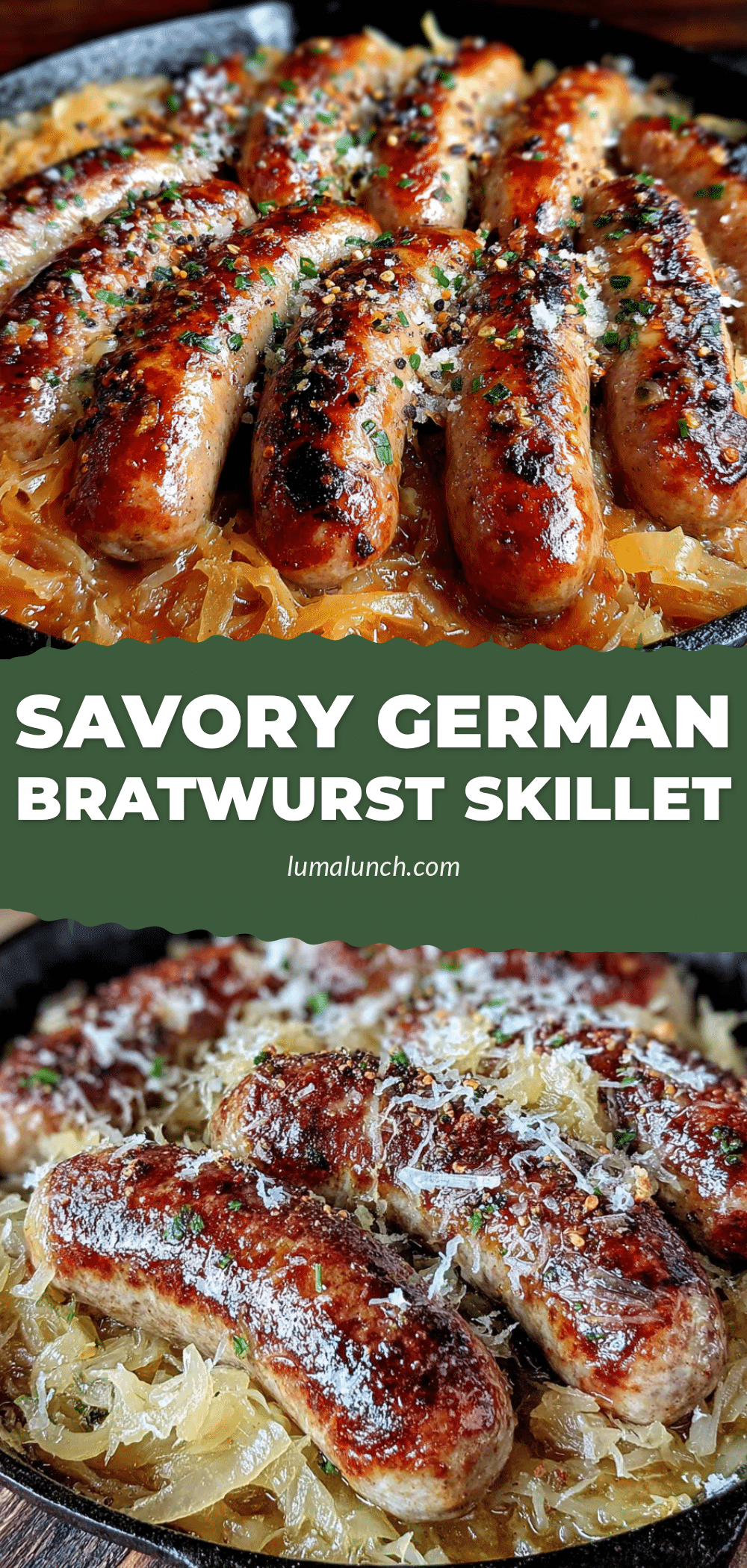
Easy German Bratwurst Skillet with Sauerkraut & Onions

A quick and comforting German-inspired skillet with bratwurst, caramelized onions, and sauerkraut simmered in beer. Ready in under 30 minutes, it’s perfect for weeknight dinners or impressing guests with minimal effort.
- Prep Time: 5 minutes
- Cook Time: 25 minutes
- Total Time: 30 minutes
- Yield: 6 servings 1x
- Category: Main Course
- Cuisine: German
Ingredients
- 6 links bratwurst (about 1.5 pounds), fresh or pre-cooked
- 1 (14-ounce) jar or can sauerkraut, drained but not rinsed
- 2 large yellow onions, thinly sliced
- 2 tablespoons unsalted butter
- 1 cup (8 ounces) German-style lager or pilsner beer (or non-alcoholic beer or beef broth)
- 1 teaspoon caraway seeds (optional)
- 1 tablespoon brown sugar
- Salt and black pepper to taste
- Fresh parsley for garnish (optional)
- Whole grain mustard for serving
Instructions
- Prep the Ingredients (5 minutes): Thinly slice both onions into half-moons. Drain the sauerkraut in a colander but don’t rinse it. Pat the bratwurst dry with paper towels.
- Brown the Bratwurst (8-10 minutes): Heat a large skillet over medium-high heat. Add 1 tablespoon of butter. Once sizzling, add the bratwurst links. Cook for 4-5 minutes per side until deep golden brown. Remove to a plate and set aside.
- Caramelize the Onions (10-12 minutes): Reduce heat to medium. Add remaining 1 tablespoon of butter. Add sliced onions and a pinch of salt. Cook, stirring occasionally, until soft and golden brown. If they start to stick, add a splash of water or beer.
- Add the Sauerkraut and Seasonings (2 minutes): Add drained sauerkraut, caraway seeds, and brown sugar. Stir and cook for about 2 minutes.
- Deglaze with Beer (1 minute): Pour in the beer. Use a wooden spoon to scrape up any browned bits from the bottom of the pan. Let it bubble for about a minute.
- Simmer the Bratwurst (10-12 minutes): Nestle the browned bratwurst back into the skillet. Reduce heat to medium-low. Cover and simmer for 10-12 minutes.
- Finish and Serve (2 minutes): Uncover. Taste and adjust seasoning with salt and pepper if needed. Let cook uncovered for another minute or two to thicken the sauce slightly. Garnish with fresh parsley. Serve hot with whole grain mustard on the side.
Notes
Don’t rush the onions—medium heat and patience give you sweet, jammy onions. Score the bratwurst with shallow slits before browning for extra flavor. Use a light German lager or pilsner; avoid dark beers or IPAs. Let the bratwurst rest after browning to keep them juicy. For a thicker sauce, remove bratwurst and let sauce bubble uncovered for 2-3 minutes. Leftovers taste even better the next day.
Nutrition
- Serving Size: 1 bratwurst link wit
- Calories: 400
- Sugar: 7
- Sodium: 1000
- Fat: 30
- Saturated Fat: 12
- Carbohydrates: 14
- Fiber: 4
- Protein: 19
Keywords: bratwurst, sauerkraut, German skillet, quick dinner, one-pan meal, Oktoberfest, comfort food