Love this? Save it for later!
Share the inspiration with your friends
My neighbor Brenda wasn’t trying to impress anyone. I’d stopped by to borrow a ladder—ours had mysteriously vanished into the garage abyss—and the smell hit me before I even made it to her front door. It was warm, spiced, and unmistakably like autumn had decided to move into her kitchen and set up camp. She opened the door holding a loaf pan, still hot, with this gorgeous cinnamon-sugar crust shimmering on top.
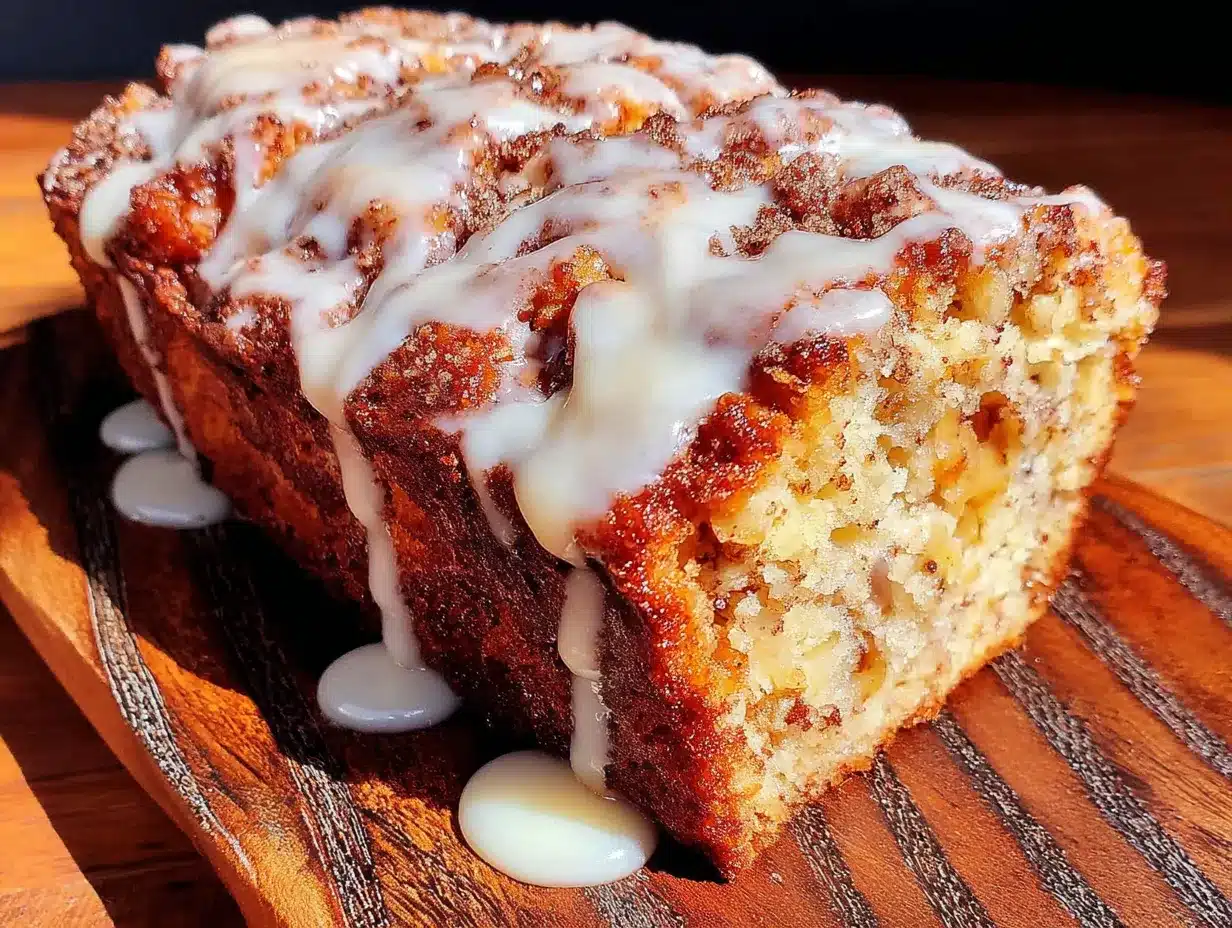
“Oh, it’s just something I threw together,” she said, waving her hand like she’d made toast. I mean, honestly. “Leftover apple cider from the orchard trip last weekend.” She cut me a slice while I stood there holding the ladder, and I swear—that first bite stopped me mid-conversation. The texture was tender, almost like a cake, but with this slight density that reminded me of a perfect donut. And the glaze? Let me tell you, it had that crackly top that shatters just a little when you bite into it.
I stood in her kitchen for forty-five minutes, ladder completely forgotten, watching her make a second loaf while she told me about her grandmother’s approach to baking. No fancy techniques, no complicated steps—just good ingredients and a feel for when the batter looked right. Maybe you’ve been there, standing in someone’s kitchen, realizing you’re witnessing something special that they don’t even recognize as special.
I’ve made this cinnamon glazed apple cider donut bread at least a dozen times since that afternoon. And every single time, that first slice takes me right back to Brenda’s doorway, holding a ladder I didn’t need, eating something I’ll never forget.
Why You’ll Love This Recipe
This isn’t just another apple bread recipe floating around the internet. I’ve tested this cinnamon glazed apple cider donut bread more times than I can count, tweaking the flour ratio, adjusting the cider concentration, and yes—burning a few batches to figure out the perfect baking time. What I landed on is something special.
- Quick & Easy: From mixing bowl to your mouth in about an hour. No yeast, no proofing, no complicated techniques.
- Simple Ingredients: You probably have most of this in your pantry right now. The star ingredient—apple cider—is easy to find during fall, but honestly, it’s worth grabbing a bottle just for this bread.
- Perfect for Fall Gatherings: This bread shows up at every Thanksgiving I host, every apple-picking-afternoon snack spread, and every cozy weekend morning when I want the house to smell like heaven.
- Crowd-Pleaser: Kids love the donut-like sweetness. Adults appreciate that it’s not cloying. Everyone goes back for seconds.
- Unbelievably Delicious: The texture is what gets me every time. It’s moist without being heavy, tender without being crumbly, and that cinnamon glaze creates a crust that’s pure magic.
What makes this recipe different from the rest? It’s the way the apple cider reduces down, concentrating that fruity, tangy flavor into something that tastes like you spent hours in the kitchen. The secret is reducing the cider before adding it to the batter—a trick I picked up from a pastry chef friend who swears by it. And honestly, it works.
This is the kind of bread that makes you close your eyes after the first bite. It’s comfort food reimagined—familiar enough to feel like home, but special enough to feel like a treat. Perfect for impressing guests without stress, or turning a simple Saturday morning into something memorable.
What Ingredients You Will Need
This recipe uses simple, wholesome ingredients to deliver that signature apple cider donut flavor without any fuss. Most of these are pantry staples, which makes this bread dangerously easy to whip up on a whim.
For the Bread
- 2 cups all-purpose flour (spooned and leveled—don’t scoop directly from the bag or you’ll pack it down)
- 1 teaspoon baking powder
- 1/2 teaspoon baking soda
- 1/2 teaspoon salt
- 1 1/2 teaspoons ground cinnamon (I prefer Saigon cinnamon for its bold, slightly sweet warmth)
- 1/4 teaspoon ground nutmeg (freshly grated if you have it—it makes a difference)
- 1/8 teaspoon ground cloves (just a whisper—cloves can overwhelm quickly)
- 1/2 cup unsalted butter, softened to room temperature
- 2/3 cup granulated sugar
- 1/3 cup light brown sugar, packed
- 2 large eggs, room temperature
- 1 teaspoon vanilla extract
- 2/3 cup apple cider, reduced to 1/3 cup (see note below)
- 1/3 cup buttermilk, room temperature (or make your own with 1/3 cup milk + 1 teaspoon lemon juice, let sit 5 minutes)
For the Cinnamon Glaze
- 1 1/2 cups powdered sugar, sifted (sifting prevents lumps—trust me on this)
- 2 tablespoons apple cider
- 1/2 teaspoon ground cinnamon
- 1 tablespoon unsalted butter, melted
- Pinch of salt (balances the sweetness beautifully)
For the Cinnamon Sugar Coating
- 1/4 cup granulated sugar
- 1 teaspoon ground cinnamon
- 2 tablespoons unsalted butter, melted (for brushing)
Ingredient Note: Reducing the apple cider is crucial here. Pour 2/3 cup of cider into a small saucepan and simmer over medium heat until it reduces to 1/3 cup—about 8-10 minutes. This concentrates the apple flavor and removes excess liquid that would make your bread soggy. Let it cool completely before using. I’ve forgotten to cool it before and ended up with a weirdly textured batter. Learn from my mistakes, friends.
For the buttermilk, I recommend using full-fat if you have it. The extra richness makes the bread more tender. If you’re dairy-free, you can substitute with almond milk mixed with a teaspoon of apple cider vinegar—let it sit for five minutes to curdle.
Equipment Needed
You don’t need a professional bakery setup for this one, thank goodness. Here’s what you’ll need:
- 9×5-inch loaf pan (standard size—not the smaller 8×4, or your bread will dome too much)
- Parchment paper (for easy removal—I learned this after a particularly tragic stuck-loaf incident)
- Two mixing bowls (one medium, one large)
- Whisk (for dry ingredients)
- Hand mixer or stand mixer (you can do it by hand with some elbow grease, but a mixer makes creaming the butter and sugar much easier)
- Rubber spatula
- Small saucepan (for reducing the cider)
- Cooling rack
- Pastry brush (for the butter coating—a silicone one works great)
- Small bowl (for the cinnamon sugar coating)
If you don’t have a hand mixer, a wooden spoon and some determination will work. The butter needs to be really soft—almost room temperature—to cream properly by hand. I’ve done it before when my mixer was on the fritz, and it’s totally doable. Just takes a few extra minutes and a little arm workout.
Preparation Method
Let’s get to the good part. Here’s how to make this cinnamon glazed apple cider donut bread from start to finish.
- Preheat and prepare. Preheat your oven to 350°F (175°C). Grease your 9×5-inch loaf pan and line it with parchment paper, leaving some overhang on the long sides. This makes lifting the bread out so much easier—you’ll thank me later.
- Reduce the apple cider. Pour 2/3 cup of apple cider into a small saucepan. Bring it to a simmer over medium heat and let it cook until it reduces to 1/3 cup—about 8-10 minutes. You’re looking for a slightly syrupy consistency. Set it aside to cool completely. Don’t rush this step; hot cider will mess with your butter mixture.
- Whisk dry ingredients. In a medium bowl, whisk together the flour, baking powder, baking soda, salt, cinnamon, nutmeg, and cloves. Set this aside while you work on the wet ingredients.
- Cream butter and sugars. In a large bowl, beat the softened butter, granulated sugar, and brown sugar together until light and fluffy—about 3-4 minutes with a hand mixer on medium speed. You want it to look pale and airy. Scrape down the sides of the bowl halfway through.
- Add eggs and vanilla. Beat in the eggs one at a time, making sure each is fully incorporated before adding the next. Add the vanilla extract and mix until combined. The mixture might look slightly curdled at this point—that’s normal, don’t panic.
- Combine wet ingredients. In a small bowl or liquid measuring cup, whisk together the cooled reduced apple cider and the buttermilk. This is your liquid mixture.
- Alternate adding dry and wet. With the mixer on low speed, add about one-third of the flour mixture to the butter mixture, mixing until just combined. Add half of the liquid mixture and mix again. Repeat with another third of flour, the remaining liquid, and finally the last third of flour. Mix until just combined—overmixing will make your bread tough. A few streaks of flour are okay; fold them in gently with a spatula.
- Pour into pan. Scrape the batter into your prepared loaf pan and spread it evenly. The batter will be thick and slightly sticky—that’s exactly what you want.
- Bake. Bake for 50-60 minutes, or until a toothpick inserted into the center comes out clean or with just a few moist crumbs. If the top is browning too quickly (around the 40-minute mark), tent the pan loosely with aluminum foil. My oven runs hot, so I usually check at 45 minutes just to be safe.
- Cool in pan. Let the bread cool in the pan on a wire rack for about 15 minutes. Then use the parchment paper to lift it out and transfer it to the rack to cool completely. Don’t skip this cooling time—the bread needs to set or it’ll crumble when you try to slice it.
- Make the cinnamon sugar coating. While the bread is cooling, mix the granulated sugar and cinnamon together in a small bowl. Melt the 2 tablespoons of butter in another small bowl.
- Coat the bread. Once the bread is cool enough to handle but still warm (about 20 minutes out of the pan), brush the top and sides with the melted butter. Then sprinkle or roll the bread in the cinnamon sugar mixture. I like to do this over a plate to catch any excess—you can use it later for toast or coffee.
- Make the glaze. In a small bowl, whisk together the powdered sugar, apple cider, cinnamon, melted butter, and salt until smooth. The glaze should be thick but pourable—if it’s too thick, add a tiny splash more cider. If it’s too thin, add a bit more powdered sugar.
- Glaze and serve. Drizzle the glaze over the top of the coated bread. Let it set for about 10 minutes before slicing. The glaze will harden slightly into that perfect crackly top.
Cooking Tips & Techniques
After making this bread more times than I care to admit (and messing up plenty along the way), here are the things I wish someone had told me:
Don’t skip the cider reduction. I know it’s an extra step, but I tried making this bread with unreduced cider once, and it was a sad, soggy mess. The reduction concentrates the flavor and removes excess liquid. It’s non-negotiable for the right texture.
Room temperature ingredients matter. Cold eggs and cold buttermilk will seize up your creamed butter, leaving you with a lumpy batter that bakes unevenly. Take everything out of the fridge 30 minutes before you start. I’ve learned this the hard way—more than once, apparently.
Check your oven temperature. My oven runs 25 degrees hot. I learned this after my first loaf came out with a burnt crust and a raw center. An oven thermometer is a cheap investment that pays off in every single bake.
The toothpick test is your friend. But don’t test in the center crack—that part bakes faster. Insert the toothpick into the thickest part of the loaf, about an inch from the center. If it comes out clean, you’re done.
Patience with cooling. I know you want to eat this immediately. I do too. But slicing into warm bread will give you a gummy, crumbly mess. Let it cool completely before glazing. The wait is worth it, I promise.
Double the glaze. Honestly, I always make 1.5 times the glaze recipe. Some for the bread, some for dipping later. No regrets.
Variations & Adaptations
This recipe is surprisingly flexible. Here are some variations I’ve tried and loved:
- Gluten-Free Version: Substitute the all-purpose flour with a good 1:1 gluten-free baking flour blend. I’ve had great results with Bob’s Red Mill. Add an extra tablespoon of buttermilk to compensate for the drier flour blend. The texture will be slightly more crumbly but still delicious.
- Dairy-Free Adaptation: Use vegan butter (I like Miyoko’s) and substitute the buttermilk with almond milk mixed with apple cider vinegar. The flavor is slightly less rich, but the bread still comes out tender and flavorful. I made this for a friend with dairy sensitivities and she asked for the recipe.
- Apple Cider Donut Muffins: Pour the batter into a greased muffin tin instead of a loaf pan. Bake at 350°F for 18-22 minutes. You’ll get about 12 muffins. Coat them in cinnamon sugar while they’re still warm, then drizzle with glaze. Perfect for grab-and-go breakfasts.
- Spiced-Up Version: Add 1/2 teaspoon of cardamom and a pinch of allspice to the dry ingredients. This gives the bread a more complex, chai-like warmth that’s incredible during the holidays.
- Add-In Option: Fold in 1/2 cup of finely chopped fresh apple (peeled) or 1/3 cup of raisins into the batter before baking. The apple adds little pockets of moisture, while the raisins add sweetness and chew.
I once tried a version with a streusel topping instead of the glaze—it was good, but honestly, the glaze is what makes this taste like a real apple cider donut. Don’t skip it.
Serving & Storage Suggestions
This bread is best served at room temperature, sliced thick, with a hot cup of coffee or a glass of cold milk. The glaze should be set but still slightly soft—that perfect crackly-top texture.
For a truly indulgent experience, warm a slice in the microwave for 10-15 seconds. The cinnamon sugar coating softens slightly, and the glaze gets a little gooey. It’s dangerous, honestly.
Storage: Store the bread in an airtight container at room temperature for up to 3 days. The glaze will soften over time, but the flavor actually improves on day two—the spices meld together beautifully. Do not refrigerate; it dries out the bread.
Freezing: You can freeze the unglazed bread for up to 3 months. Wrap it tightly in plastic wrap, then foil. When you’re ready to serve, thaw it at room temperature, then brush with butter, coat in cinnamon sugar, and glaze fresh. I do this every fall—make a few loaves and freeze them for holiday hosting.
Reheating: If you’re reheating a slice, pop it in a 300°F oven for 5-7 minutes. The edges get slightly crisp while the inside stays tender. The microwave works in a pinch, but the oven method is superior for texture.
The flavors develop over time—day-old bread actually tastes more deeply spiced than fresh-baked. Something about the cinnamon and nutmeg settling in overnight. Just don’t tell anyone it’s not fresh, and they’ll never know.
Nutritional Information & Benefits
Let’s be real—this is a treat. But here’s the estimated breakdown per slice (assuming 10 slices):
| Nutrient | Amount |
|---|---|
| Calories | ~320 |
| Total Fat | 14g |
| Saturated Fat | 8g |
| Cholesterol | 65mg |
| Sodium | 220mg |
| Total Carbohydrates | 48g |
| Dietary Fiber | 1g |
| Sugars | 32g |
| Protein | 4g |
On the bright side, apple cider contains antioxidants called polyphenols, and cinnamon has anti-inflammatory properties. The eggs provide protein, and the butter… well, it makes life worth living. I like to think of this bread as a celebration of fall flavors, not a health food. And that’s okay.
This recipe contains gluten, dairy, and eggs. For dietary modifications, see the variations section above.
Conclusion
This cinnamon glazed apple cider donut bread is the recipe I turn to every single fall. It’s the one that makes my house smell like a cider mill, the one that gets requested at every gathering, and the one that my neighbor Brenda accidentally started without even trying. Sometimes the best recipes come from the most unexpected places—like standing in someone’s doorway holding a ladder you don’t actually need.
I hope you make this bread and make it your own. Add more cinnamon if that’s your thing. Double the glaze. Eat a slice for breakfast and call it a muffin. Whatever works for you, honestly. The beauty of this recipe is that it’s forgiving, adaptable, and always delicious.
If you make it, I’d love to hear how it turned out. Drop a comment below, tag me in your photos, or tell me about your own kitchen accident stories. And if you’re looking for more fall baking inspiration, you might enjoy my spiced pumpkin bundt cake or these maple pecan scones—both are perfect for cozy autumn mornings.
Happy baking, friends. And maybe go borrow a ladder from your neighbor while you’re at it—you never know what recipe you’ll come home with.
Frequently Asked Questions
Can I use apple juice instead of apple cider?
Technically yes, but the flavor won’t be as rich. Apple juice is thinner and less concentrated, so you’ll lose some of that deep, tangy apple flavor. If you’re in a pinch, reduce the juice the same way you would cider, and add an extra pinch of cinnamon to compensate.
Why did my bread sink in the middle?
This usually happens for one of two reasons: either the batter was overmixed (which develops too much gluten and causes the bread to rise then collapse), or the oven temperature was too low. Make sure your oven is properly preheated to 350°F and mix the batter just until combined—a few lumps are fine.
Can I make this without a mixer?
Absolutely. You’ll need to cream the butter and sugar by hand with a wooden spoon, which takes about 5-6 minutes of vigorous stirring. Make sure your butter is very soft—almost room temperature—to make the job easier. The rest of the mixing can be done by hand with a spatula.
How do I know when the apple cider is properly reduced?
You’re looking for the cider to reduce from 2/3 cup to about 1/3 cup. It should look slightly syrupy and coat the back of a spoon. The color will darken to a deeper amber. If you have a kitchen scale, the reduced cider should weigh about 2.8 ounces. Don’t reduce it too much, or it’ll become too thick and sticky.
Can I add fresh apples to the batter?
Yes, but chop them very finely—about 1/4-inch dice—and fold them in gently at the end. Too much apple can make the bread soggy, so stick to about 1/2 cup. I recommend using a firm, tart apple like Granny Smith or Honeycrisp for the best texture contrast.
Pin This Recipe!
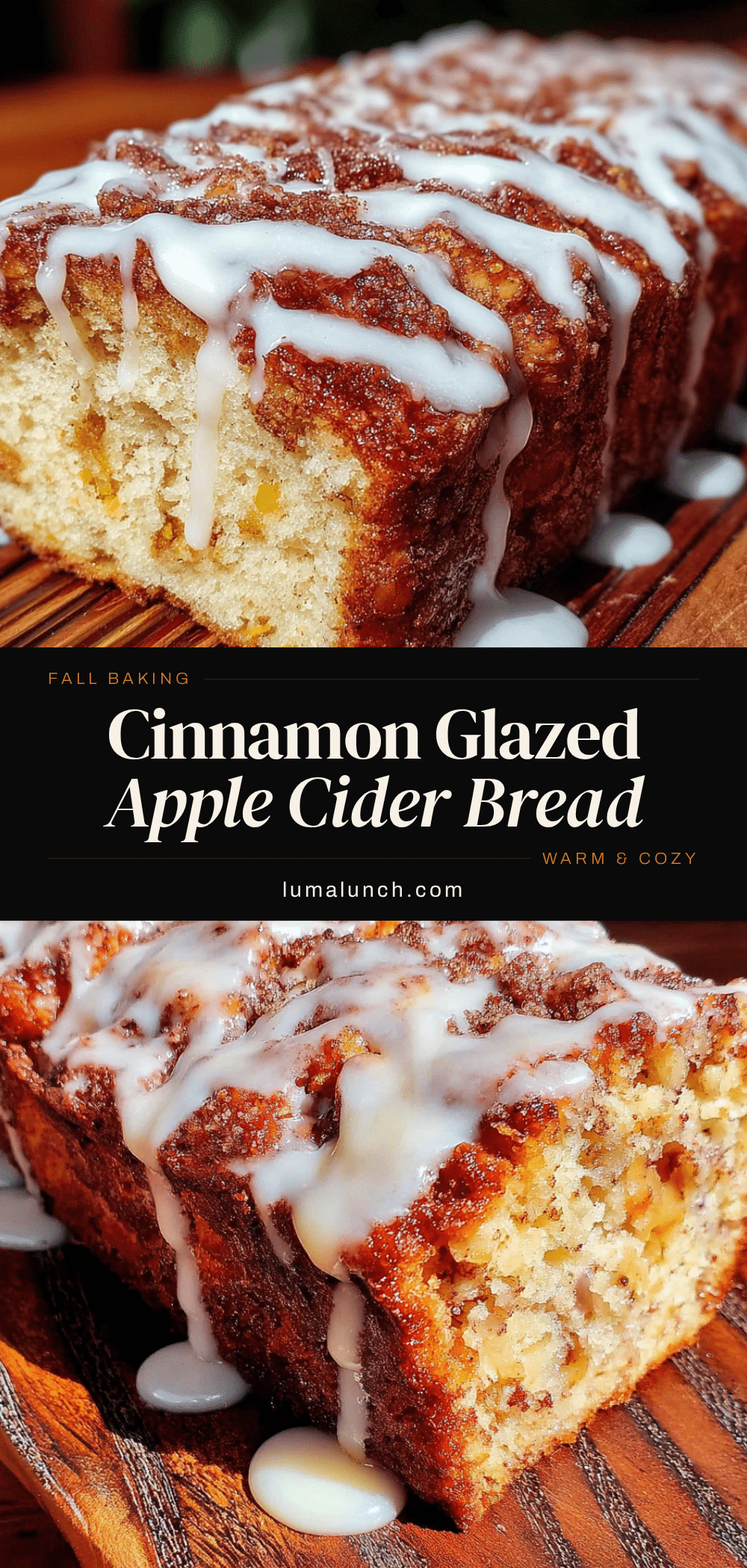
Best Easy Cinnamon Glazed Apple Cider Donut Bread Recipe
This moist, tender apple cider donut bread features a concentrated apple cider flavor, a cinnamon sugar coating, and a crackly cinnamon glaze. It’s an easy, one-bowl recipe that tastes like a fall morning at the orchard.
- Prep Time: 15 minutes
- Cook Time: 50 minutes
- Total Time: 1 hour 5 minutes
- Yield: 10 servings 1x
- Category: Dessert
- Cuisine: American
Ingredients
- 2 cups all-purpose flour (spooned and leveled)
- 1 teaspoon baking powder
- 1/2 teaspoon baking soda
- 1/2 teaspoon salt
- 1 1/2 teaspoons ground cinnamon (preferably Saigon cinnamon)
- 1/4 teaspoon ground nutmeg (freshly grated if possible)
- 1/8 teaspoon ground cloves
- 1/2 cup unsalted butter, softened to room temperature
- 2/3 cup granulated sugar
- 1/3 cup light brown sugar, packed
- 2 large eggs, room temperature
- 1 teaspoon vanilla extract
- 2/3 cup apple cider, reduced to 1/3 cup (see note)
- 1/3 cup buttermilk, room temperature (or 1/3 cup milk + 1 teaspoon lemon juice, let sit 5 minutes)
- 1 1/2 cups powdered sugar, sifted
- 2 tablespoons apple cider
- 1/2 teaspoon ground cinnamon
- 1 tablespoon unsalted butter, melted
- Pinch of salt
- 1/4 cup granulated sugar (for coating)
- 1 teaspoon ground cinnamon (for coating)
- 2 tablespoons unsalted butter, melted (for brushing)
Instructions
- Preheat oven to 350°F (175°C). Grease a 9×5-inch loaf pan and line with parchment paper, leaving overhang on the long sides.
- Reduce the apple cider: Pour 2/3 cup apple cider into a small saucepan. Simmer over medium heat until reduced to 1/3 cup, about 8-10 minutes. Set aside to cool completely.
- In a medium bowl, whisk together flour, baking powder, baking soda, salt, cinnamon, nutmeg, and cloves.
- In a large bowl, beat softened butter, granulated sugar, and brown sugar together until light and fluffy, about 3-4 minutes with a hand mixer on medium speed.
- Beat in eggs one at a time, then add vanilla extract and mix until combined.
- In a small bowl or liquid measuring cup, whisk together cooled reduced apple cider and buttermilk.
- With mixer on low speed, add about one-third of the flour mixture to the butter mixture, mixing until just combined. Add half of the liquid mixture and mix. Repeat with another third of flour, remaining liquid, and final third of flour. Mix until just combined; fold in any remaining streaks with a spatula.
- Pour batter into prepared loaf pan and spread evenly.
- Bake for 50-60 minutes, or until a toothpick inserted into the center comes out clean or with a few moist crumbs. If top browns too quickly, tent with foil at 40 minutes.
- Cool in pan on a wire rack for 15 minutes, then lift out using parchment paper and transfer to rack to cool completely.
- While bread cools, mix 1/4 cup granulated sugar and 1 teaspoon cinnamon in a small bowl. Melt 2 tablespoons butter in another small bowl.
- Once bread is cool enough to handle but still warm (about 20 minutes out of pan), brush top and sides with melted butter, then sprinkle or roll in cinnamon sugar mixture.
- Make the glaze: In a small bowl, whisk together powdered sugar, 2 tablespoons apple cider, 1/2 teaspoon cinnamon, 1 tablespoon melted butter, and a pinch of salt until smooth. Adjust consistency with more cider or powdered sugar if needed.
- Drizzle glaze over coated bread. Let set for about 10 minutes before slicing.
Notes
Don’t skip reducing the apple cider—it concentrates flavor and prevents sogginess. Room temperature ingredients are crucial for proper mixing. Check oven temperature with an oven thermometer for best results. For the toothpick test, insert into the thickest part of the loaf, not the center crack. Let bread cool completely before glazing to avoid a gummy texture. Double the glaze if desired. Store in an airtight container at room temperature for up to 3 days; do not refrigerate. Freeze unglazed bread for up to 3 months.
Nutrition
- Serving Size: 1 slice
- Calories: 320
- Sugar: 32
- Sodium: 220
- Fat: 14
- Saturated Fat: 8
- Carbohydrates: 48
- Fiber: 1
- Protein: 4
Keywords: apple cider donut bread, cinnamon glaze, fall baking, easy bread recipe, apple cider recipe, donut bread, autumn dessert