Love this? Save it for later!
Share the inspiration with your friends
My brother-in-law Mark swore he hated squash. For thirty-seven years. The man would push a butternut around his plate like it was a science experiment, and don’t even get me started on what he’d do if he spotted a zucchini. So when I volunteered to host Thanksgiving a few years back, I knew I had a problem. I’d already planned this gorgeous stuffed acorn squash recipe as the vegetarian main—the one with the quinoa and cranberries that I’d been perfecting for months. And there was Mark, eyeing the menu card I’d printed out like I’d personally insulted his ancestors.
Then dinner happened. I’m not saying I watched him the whole time, but I definitely watched him the whole time. He took a polite spoonful, probably planning to push it around until he could discreetly feed it to the dog. Instead, I caught him mid-bite, fork frozen, eyes slightly wide. “Wait,” he said, looking at the squash like it had just told him a secret. “This is actually… really good.” He went back for thirds. Thirds. My mother-in-law still brings it up, and honestly? I let her. This stuffed acorn squash has that effect on people. It’s the dish that converts squash skeptics into squash fanatics, one beautiful roasted half at a time.
Maybe you’ve got a Mark at your table—someone who claims to hate a whole category of food until you prove them wrong. Or maybe you’re just looking for a show-stopping vegetarian main that actually satisfies everyone, meat-eaters included. Either way, this recipe is for you. It’s festive enough for a holiday table, simple enough for a Tuesday, and packed with enough flavor to make even the most devoted squash-hater reconsider their life choices.
Why You’ll Love This Recipe
Let me be honest with you—I’ve tested a lot of stuffed squash recipes over the years. Some were soggy disasters. Others were so dry you’d need a glass of water with every bite. This one? It’s the Goldilocks of stuffed squash, and here’s why it works so beautifully for entertaining:
- Prep-Ahead Friendly: You can roast the squash and make the filling a day in advance. When your guests arrive, you’re just stuffing and reheating. No stress, all impress.
- Naturally Vegetarian & Gluten-Free: This dish handles dietary restrictions like a champ. Everyone can eat it, and no one will feel like they’re missing out.
- Visually Stunning: The deep orange squash boats filled with jewel-toned quinoa, ruby cranberries, and toasted pecans? It’s basically edible art. Your table will look like a magazine spread.
- Perfect for Crowds: Each squash half is its own perfect serving. No slicing, no guessing portions—just beautiful individual portions ready to go.
- Satisfies Everyone: I’ve served this to vegans, paleo friends, and steak-loving uncles. They all ask for the recipe. It’s that good.
What makes this version different from all the others? It’s the texture game. The quinoa is cooked in vegetable broth with a bay leaf for depth. The squash is roasted until tender but not mushy—you want it to hold its shape. And the cranberries? They’re not just tossed in. They’re simmered first with orange juice and a touch of maple syrup until they plump up like little flavor bombs. Every bite has that perfect balance of savory, sweet, tart, and nutty. It’s the kind of dish that makes people close their eyes on the first bite. I’ve seen it happen more times than I can count.
What Ingredients You Will Need
This recipe relies on simple, whole ingredients that come together to create something genuinely spectacular. Most of these are pantry staples or easy to find at any grocery store. Here’s what you’ll need and why each ingredient matters:
For the Squash
- 2 medium acorn squash (about 1.5 pounds each) — Look for squash that feels heavy for its size with no soft spots. The green-striped ones are classic, but golden acorn squash works beautifully too. I prefer medium ones because they’re easier to cut and serve.
- 2 tablespoons olive oil — For brushing the cut sides. It helps the squash caramelize and keeps it from drying out.
- Salt and black pepper — A generous sprinkle on the cut sides before roasting is non-negotiable.
For the Quinoa Filling
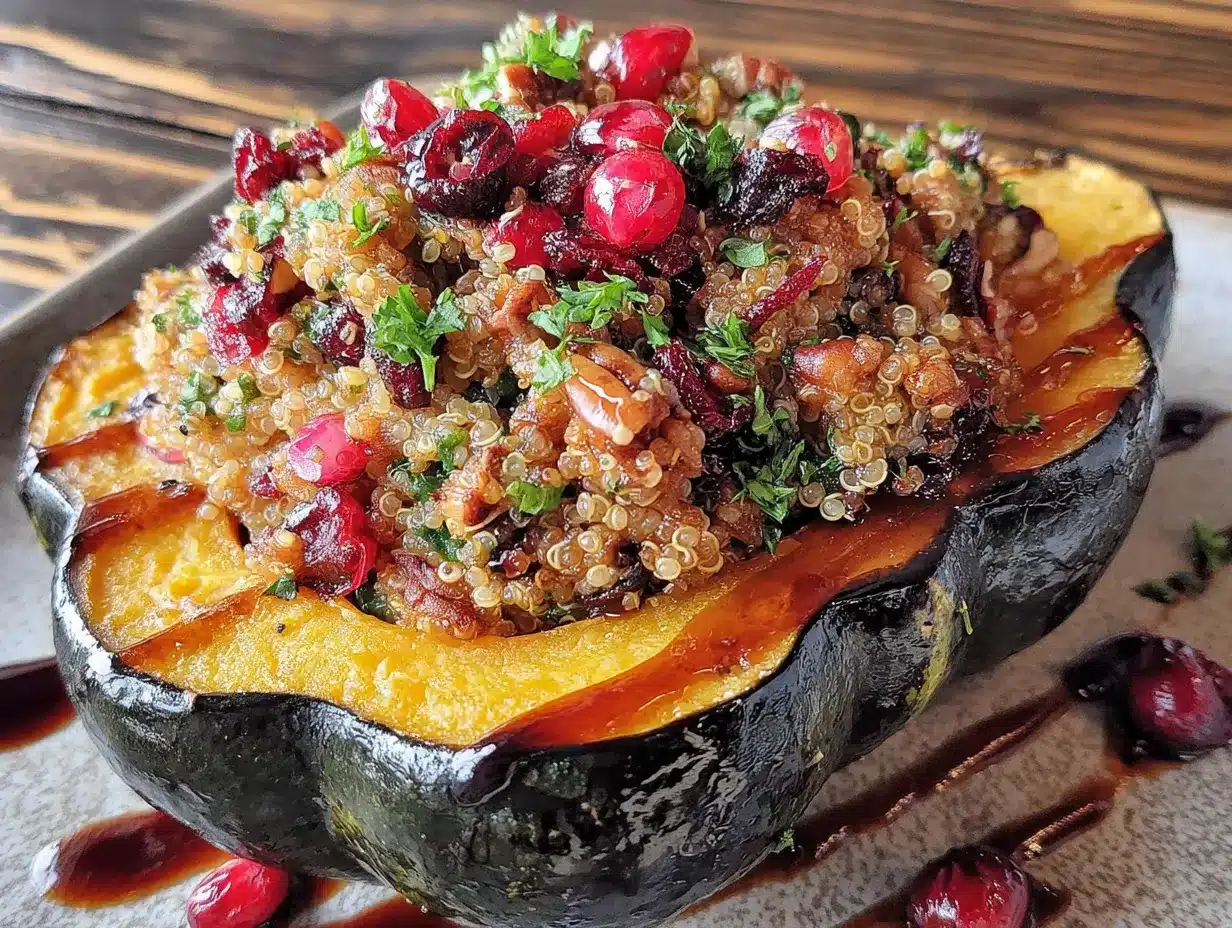
- 1 cup quinoa (rinsed well) — I use white quinoa for its fluffier texture, but tri-color works great for extra visual interest. Rinsing removes the bitter saponins—don’t skip this step.
- 2 cups vegetable broth — Use a good-quality broth here. I like Better Than Bouillon vegetable base because the flavor is rich without being overpowering. Water works in a pinch, but broth adds so much more depth.
- 1 bay leaf — A small addition that makes a surprising difference. It adds an earthy, almost floral note to the quinoa.
- 1 tablespoon olive oil — For sautéing the aromatics.
- 1 medium yellow onion, diced — About 1 cup. Sweet onions work too if that’s what you have.
- 3 cloves garlic, minced — Fresh garlic is non-negotiable here. The jarred stuff won’t give you the same punch.
- 1 medium apple, diced — I prefer Honeycrisp or Fuji for their sweetness and ability to hold their shape. The apple adds a fresh crunch and natural sweetness that balances the savory elements.
- 1 cup dried cranberries — Look for unsweetened or reduced-sugar varieties if you want to control the sweetness. Regular Craisins work perfectly too.
- 1/2 cup orange juice — Fresh-squeezed is lovely, but store-bought is fine. This is used to plump the cranberries.
- 2 tablespoons maple syrup — Pure maple syrup, not pancake syrup. Grade A dark amber has a richer flavor that stands up to the squash.
- 1 teaspoon dried thyme — Or 1 tablespoon fresh thyme leaves. The earthiness of thyme is a classic pairing with winter squash.
- 1 teaspoon dried sage — Sage and squash are best friends. It adds that almost savory, slightly peppery note that makes this taste like a holiday dish.
- 1/2 teaspoon cinnamon — Just enough to warm things up without making it taste like dessert.
- 1/2 cup toasted pecans, roughly chopped — Toast them in a dry pan over medium heat for 3-4 minutes until fragrant. Watch them carefully—they burn fast. Walnuts or pepitas work as substitutes.
- Salt and pepper to taste
For the Garnish (Optional but Recommended)
- Fresh parsley or sage leaves — A sprinkle of green makes the dish pop visually.
- Drizzle of balsamic glaze — This adds a tangy-sweet finish that ties everything together. Store-bought is fine, or you can reduce 1/2 cup balsamic vinegar with 1 tablespoon honey until syrupy.
- Crumbled goat cheese or feta — If you’re not serving this to vegans, a little tangy cheese takes it over the top.
Equipment Needed
You don’t need a fancy kitchen to pull this off, but having the right tools makes the process smoother. Here’s what I use:
- Large baking sheet (half-sheet pan) — A rimmed baking sheet catches any juices from the squash. I prefer Nordic Ware aluminum sheets because they conduct heat evenly without warping.
- Parchment paper or silicone baking mat — Makes cleanup a breeze and prevents sticking.
- Sharp chef’s knife — Acorn squash is dense. A dull knife is dangerous here. I use my trusty 8-inch Wusthof, but any sharp, sturdy knife works.
- Large spoon or ice cream scoop — For scooping out the seeds and strings. An ice cream scoop with a sharp edge makes quick work of this.
- Medium saucepan with lid — For cooking the quinoa.
- Large skillet — For sautéing the filling ingredients. A 12-inch skillet gives you plenty of room.
- Small saucepan — For plumping the cranberries.
- Mixing bowls — One medium for the filling, one small for the cranberry mixture.
- Measuring cups and spoons — Accurate measurements matter in baking and grain cooking.
- Pastry brush — For brushing oil onto the squash. A silicone brush is easy to clean and doesn’t shed bristles.
If you don’t have a pastry brush, just use a paper towel dipped in oil. If your skillet isn’t large enough, cook the aromatics in batches. And if you’re short on time, you can microwave the squash for 3-4 minutes before cutting to soften it slightly—just be careful, it’ll be hot.
Preparation Method
Let me walk you through this step by step. I’ve made this recipe dozens of times, and these are the exact techniques that give you the best results every single time.
Step 1: Plump the Cranberries
In a small saucepan, combine the dried cranberries, orange juice, and maple syrup. Bring to a gentle simmer over medium heat. Once it’s bubbling, reduce the heat to low and let it cook for 5-7 minutes, stirring occasionally. The cranberries will plump up and absorb all that citrusy sweetness. Remove from heat and set aside. Don’t drain them—you’ll use the liquid too.
Step 2: Prep and Roast the Squash
Preheat your oven to 400°F (200°C). Line your baking sheet with parchment paper. Using a sharp knife, carefully cut each acorn squash in half from stem to tip. The skin is tough, so take your time. Scoop out the seeds and stringy bits with your spoon—a serrated grapefruit spoon actually works great for this if you have one. Brush the cut sides and cavities with olive oil, then season generously with salt and pepper. Place the squash halves cut-side down on the prepared baking sheet. Roast for 30-35 minutes, until the flesh is tender when pierced with a fork. The edges should be lightly caramelized. Set aside to cool slightly—you’ll handle them soon.
Step 3: Cook the Quinoa
While the squash roasts, rinse your quinoa in a fine-mesh strainer under cold water for about 30 seconds. This is important—unrinsed quinoa tastes bitter. In a medium saucepan, combine the rinsed quinoa, vegetable broth, and bay leaf. Bring to a boil over high heat, then reduce to low, cover, and simmer for 15 minutes. Remove from heat and let it sit, covered, for 5 more minutes. Fluff with a fork and remove the bay leaf. Set aside.
Step 4: Sauté the Filling Aromatics
In your large skillet, heat 1 tablespoon of olive oil over medium heat. Add the diced onion and cook for 4-5 minutes until translucent and starting to brown at the edges. Add the minced garlic and cook for 30 seconds until fragrant—don’t let it burn. Add the diced apple and cook for 2-3 minutes until it softens slightly but still has some bite. The kitchen will smell amazing at this point.
Step 5: Combine the Filling
Reduce the heat to low. Add the cooked quinoa to the skillet with the onions and apples. Stir in the plumped cranberries (with any remaining liquid), toasted pecans, dried thyme, dried sage, and cinnamon. Mix everything together until well combined. Taste and adjust seasoning with salt and pepper. The filling should be savory with a hint of sweetness and warmth from the spices. If it seems dry, add a splash of vegetable broth or orange juice.
Step 6: Stuff the Squash
Carefully flip the roasted squash halves cut-side up on the baking sheet. Using a spoon, divide the quinoa filling evenly among the four halves, mounding it slightly in the center. Don’t pack it too tightly—you want some texture. If you’re making these ahead, stop here, cover loosely with foil, and refrigerate for up to 24 hours.
Step 7: Final Bake
Return the stuffed squash to the oven and bake for 15-20 minutes, until the filling is heated through and the tops are slightly crispy. If you want a golden top, switch to broil for the last 2-3 minutes—watch carefully so it doesn’t burn.
Step 8: Garnish and Serve
Remove from the oven and let rest for 5 minutes. Garnish with fresh parsley or sage leaves, a drizzle of balsamic glaze, and crumbled goat cheese if using. Serve warm, with extra balsamic glaze on the side.
Cooking Tips & Techniques
After making this recipe more times than I can count, I’ve learned a few things the hard way. Here are my best tips for stuffed acorn squash success:
Cutting acorn squash safely — This is the most dangerous part of the recipe. Place the squash on a damp paper towel to keep it from slipping. Insert your knife at the top and rock it gently back and forth as you press down. If you’re struggling, microwave the whole squash for 2-3 minutes to soften the skin slightly. I once had a knife slip and nearly lost a fingertip—please be careful.
Don’t over-roast the squash — You want it tender but still firm enough to hold its shape when stuffed. If it’s too soft, it’ll collapse under the filling. Test with a fork at the 30-minute mark; it should slide in easily but the squash should still feel sturdy.
Toast your nuts — I cannot stress this enough. Raw pecans in this dish are a sad, rubbery disappointment. Toasted pecans add crunch and a deep, buttery flavor that transforms the filling. Toast them in a dry skillet over medium heat, stirring constantly, for 3-4 minutes. You’ll smell them when they’re ready.
Make extra filling — The filling is honestly good enough to eat on its own as a salad or grain bowl. I always make a little extra and serve it on the side for seconds. It’s also great stuffed into bell peppers or portobello mushrooms later in the week.
Multitask like a pro — While the squash roasts, cook the quinoa and plump the cranberries. While the quinoa simmers, sauté the aromatics. The timing works out perfectly if you follow the order I’ve laid out. Set a timer for the squash and the quinoa simultaneously.
Variations & Adaptations
One of the things I love about this recipe is how flexible it is. Here are some ways to make it your own:
Vegan-Friendly: The recipe is already vegan as written if you skip the goat cheese garnish. Use 100% pure maple syrup and check your balsamic glaze for any honey-based ingredients.
Protein-Packed Version: Add 1 cup of cooked chickpeas or white beans to the filling for extra protein and fiber. Crumble in some extra-firm tofu that’s been pressed and crumbled for a texture similar to ground meat. My friend Sarah adds cooked lentils and swears it’s even better than the original.
Seasonal Swaps: In the fall, use fresh cranberries instead of dried—just increase the maple syrup to 3 tablespoons to balance the tartness. In summer, swap the apple for diced peaches or pears. In winter, add 1/2 cup of roasted Brussels sprouts leaves for extra texture.
Grain Alternatives: Not a quinoa fan? Use cooked farro, wild rice, or brown rice instead. Each grain brings its own texture—farro is chewy, wild rice is nutty, and brown rice is hearty. Adjust cooking times according to the grain you choose.
Spice It Up: Add 1/4 teaspoon of cayenne pepper or red pepper flakes to the filling for a subtle heat that contrasts beautifully with the sweet squash. My brother-in-law Mark actually prefers it this way now—the man who hated squash now adds hot sauce to his leftovers.
Nut-Free Option: Replace the pecans with toasted pumpkin seeds (pepitas) or sunflower seeds. Both add crunch without the allergen concerns.
Serving & Storage Suggestions
This stuffed acorn squash is a showstopper on any table, but here’s how to serve it like a pro:
Temperature: Serve warm, not piping hot. Let the stuffed squash rest for 5 minutes after the final bake. This allows the filling to settle and the flavors to meld. The squash should be warm enough that the butter (if you’re using it) melts, but not so hot that it burns your mouth.
Presentation: Place each stuffed squash half on a small plate or shallow bowl. Drizzle with balsamic glaze in a zigzag pattern. Sprinkle fresh herbs and crumbled cheese over the top. A sprig of fresh rosemary on the side adds a beautiful holiday touch. For a dinner party, arrange all four halves on a large wooden board with extra garnishes in small bowls—it makes for a gorgeous centerpiece.
What to Serve Alongside: This dish is hearty enough to be a main course, but it pairs beautifully with a simple green salad dressed with lemon vinaigrette. For a holiday spread, serve with roasted Brussels sprouts, mashed potatoes, or a crusty loaf of bread to soak up any extra balsamic glaze. A crisp white wine like Sauvignon Blanc or a dry Riesling complements the sweetness of the squash perfectly.
Storage: Leftover stuffed squash keeps well in the refrigerator for up to 4 days. Store in an airtight container. The flavors actually deepen overnight—the cranberries infuse the quinoa, and the spices meld together beautifully.
Reheating: The best way to reheat is in the oven at 350°F (175°C) for 10-15 minutes, covered with foil to prevent drying. You can also microwave individual halves for 2-3 minutes, but the squash will be softer. For a crispy top, finish under the broiler for 1-2 minutes.
Freezing: You can freeze the unbaked stuffed squash for up to 3 months. Assemble the squash in a freezer-safe dish, wrap tightly with plastic wrap and foil. Thaw overnight in the refrigerator, then bake as directed, adding 10 minutes to the final bake time. The texture of the squash will be slightly softer after freezing, but the flavor is still fantastic.
Nutritional Information & Benefits
This stuffed acorn squash isn’t just delicious—it’s genuinely good for you. Here’s the breakdown per serving (one stuffed squash half, without goat cheese garnish):
- Calories: Approximately 380-420
- Protein: 10g
- Carbohydrates: 65g
- Fiber: 10g
- Fat: 12g (mostly healthy fats from olive oil and pecans)
- Vitamin A: 45% of the Daily Value (from the squash)
- Vitamin C: 35% of the Daily Value (from the squash and cranberries)
- Iron: 20% of the Daily Value (from the quinoa)
Health Benefits: Acorn squash is packed with beta-carotene, which supports eye health and immune function. Quinoa is a complete protein, meaning it contains all nine essential amino acids—rare for a plant food. Cranberries are rich in antioxidants and have been shown to support urinary tract health. Pecans provide healthy monounsaturated fats and magnesium. This dish is naturally gluten-free, dairy-free (if you skip the cheese), and vegan-friendly.
Dietary Considerations: This recipe is naturally vegetarian, vegan, and gluten-free. It’s also nut-free if you substitute the pecans with seeds. The only potential allergen is the pecans, so if you’re serving a crowd, make a nut-free version and label it clearly.
Conclusion
This stuffed acorn squash has become my go-to dish for fall gatherings, Thanksgiving dinners, and cozy Sunday suppers. It’s the recipe that converted a squash-hater into a squash-lover, and it’s won over everyone from picky toddlers to foodie friends. There’s something magical about the combination of tender roasted squash, fluffy quinoa, sweet-tart cranberries, and crunchy pecans—it’s comfort food that feels special without being complicated.
I love this recipe because it’s forgiving. You can prep it ahead, swap ingredients based on what you have, and it still turns out gorgeous. It’s the kind of dish that makes you look like a hero in the kitchen without spending all day there. And honestly? That’s my favorite kind of recipe.
Now I want to hear from you! Have you made stuffed squash before? What’s your favorite filling combination? Drop a comment below and let me know how this recipe turned out for you. And if you’ve got a Mark in your life—someone who claims to hate a certain food—tell me their conversion story. I love a good food redemption arc.
Happy cooking, friends. Your table is about to get a whole lot more delicious.
Frequently Asked Questions
Can I use a different type of squash?
Absolutely! Butternut squash, delicata squash, or even small sugar pumpkins work well. Adjust roasting times based on the squash variety—delicata cooks faster (about 20-25 minutes), while butternut may need 35-40 minutes. Cut them in half and scoop out the seeds just like you would with acorn squash.
How do I prevent the squash from becoming mushy?
The key is not over-roasting the squash before stuffing. Roast until just tender when pierced with a fork—it should still hold its shape. Also, don’t skip the step of roasting the squash cut-side down; this helps it cook evenly without steaming. If you’re prepping ahead, slightly undercook the squash so it finishes perfectly during the final bake.
Can I make this recipe completely nut-free?
Yes! Simply replace the pecans with roasted pumpkin seeds (pepitas) or sunflower seeds. Both add a similar crunch and nutty flavor. If you’re serving a crowd, it’s easy to make a nut-free version and a regular version—just label them clearly so guests know which is which.
What can I use instead of quinoa?
Cooked farro, wild rice, brown rice, or even couscous work beautifully. Each grain brings its own texture—farro is chewy and earthy, wild rice is nutty and firm, brown rice is hearty, and couscous is light and fluffy. Adjust cooking times according to the grain you choose, and make sure it’s fully cooked before mixing into the filling.
How far in advance can I prepare this dish?
You can roast the squash and prepare the filling up to 24 hours in advance. Store the roasted squash halves and filling separately in the refrigerator. When you’re ready to serve, stuff the squash and bake as directed, adding 5-10 minutes to the final bake time since you’re starting from cold. You can also freeze the unbaked stuffed squash for up to 3 months—just thaw overnight in the fridge before baking.
Pin This Recipe!
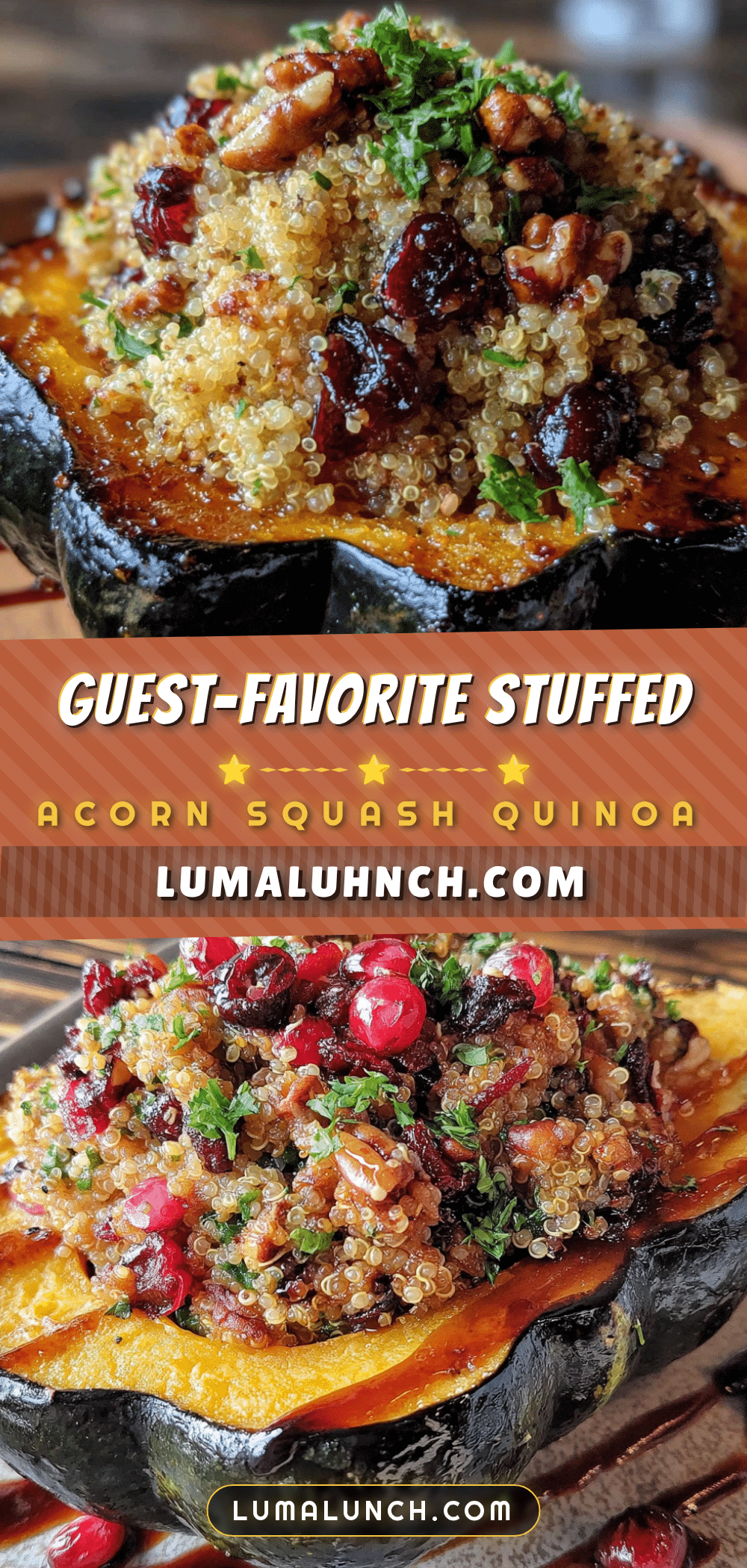
Guest-Favorite Stuffed Acorn Squash with Quinoa and Cranberries
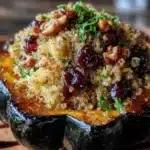
This stuffed acorn squash is a show-stopping vegetarian main that converts even the most devoted squash skeptics. Packed with fluffy quinoa, sweet-tart cranberries, and crunchy pecans, it’s festive enough for a holiday table and simple enough for a Tuesday.
- Prep Time: 20 minutes
- Cook Time: 50 minutes
- Total Time: 1 hour 10 minutes
- Yield: 4 servings 1x
- Category: Main Course
- Cuisine: American
Ingredients
- 2 medium acorn squash (about 1.5 pounds each)
- 2 tablespoons olive oil
- Salt and black pepper
- 1 cup quinoa (rinsed well)
- 2 cups vegetable broth
- 1 bay leaf
- 1 tablespoon olive oil
- 1 medium yellow onion, diced
- 3 cloves garlic, minced
- 1 medium apple, diced (Honeycrisp or Fuji)
- 1 cup dried cranberries
- 1/2 cup orange juice
- 2 tablespoons maple syrup
- 1 teaspoon dried thyme
- 1 teaspoon dried sage
- 1/2 teaspoon cinnamon
- 1/2 cup toasted pecans, roughly chopped
- Salt and pepper to taste
- Fresh parsley or sage leaves (for garnish)
- Drizzle of balsamic glaze (for garnish)
- Crumbled goat cheese or feta (optional, for garnish)
Instructions
- In a small saucepan, combine dried cranberries, orange juice, and maple syrup. Bring to a gentle simmer over medium heat, then reduce to low and cook for 5-7 minutes, stirring occasionally, until cranberries plump. Set aside.
- Preheat oven to 400°F (200°C). Line a baking sheet with parchment paper. Cut each acorn squash in half from stem to tip. Scoop out seeds and strings. Brush cut sides and cavities with olive oil, season with salt and pepper. Place cut-side down on baking sheet. Roast for 30-35 minutes until tender. Set aside to cool slightly.
- Rinse quinoa in a fine-mesh strainer under cold water for 30 seconds. In a medium saucepan, combine quinoa, vegetable broth, and bay leaf. Bring to a boil, then reduce to low, cover, and simmer for 15 minutes. Remove from heat, let sit covered for 5 minutes. Fluff with a fork and remove bay leaf.
- In a large skillet, heat 1 tablespoon olive oil over medium heat. Add diced onion and cook for 4-5 minutes until translucent. Add minced garlic and cook for 30 seconds. Add diced apple and cook for 2-3 minutes until slightly softened.
- Reduce heat to low. Add cooked quinoa to the skillet. Stir in plumped cranberries (with any remaining liquid), toasted pecans, dried thyme, dried sage, and cinnamon. Mix well. Season with salt and pepper to taste.
- Flip roasted squash halves cut-side up on the baking sheet. Divide quinoa filling evenly among the four halves, mounding slightly. (If making ahead, cover loosely with foil and refrigerate for up to 24 hours.)
- Return stuffed squash to oven and bake for 15-20 minutes until heated through. For a golden top, broil for the last 2-3 minutes.
- Remove from oven and let rest for 5 minutes. Garnish with fresh parsley or sage leaves, a drizzle of balsamic glaze, and crumbled goat cheese if using. Serve warm.
Notes
You can roast the squash and make the filling a day in advance. For a nut-free version, replace pecans with roasted pumpkin seeds or sunflower seeds. To prevent squash from becoming mushy, do not over-roast before stuffing. The filling is also great stuffed into bell peppers or portobello mushrooms.
Nutrition
- Serving Size: 1 stuffed squash hal
- Calories: 400
- Sugar: 24
- Sodium: 480
- Fat: 12
- Saturated Fat: 1.5
- Carbohydrates: 65
- Fiber: 10
- Protein: 10
Keywords: stuffed acorn squash, vegetarian main, quinoa, cranberries, Thanksgiving, gluten-free, vegan option, fall recipe