Love this? Save it for later!
Share the inspiration with your friends
Introduction
“I never thought a bunch of parsley could cause such a mess,” my friend Lisa confessed last Sunday while we were prepping dinner. She had bought a fresh bundle from the farmer’s market, but by the time we got around to using it, half the leaves were wilted or slimy. Sound familiar? Honestly, I’ve been there more times than I care to admit.
It wasn’t until a rainy Saturday afternoon, while chatting with an old gardener at the local community garden, that I learned a few surprisingly simple tricks to keep fresh herbs vibrant and flavorful for way longer. She showed me how a little bit of care and a couple of clever hacks could turn those sad, droopy bunches into kitchen heroes that last through weeknight dinners and weekend feasts alike.
Maybe you’ve been there—the excitement of buying fresh herbs only to forget them in the back of the fridge, or worse, tossing them in the compost after a few days. I mean, herbs are one of those things that can either make or break a dish, and wasting them feels like a little culinary heartbreak.
Well, let me tell you, these fresh herb storage hacks have changed the game for me. From keeping basil leaves perky to preserving cilantro’s bright zing, these methods are practical, easy, and totally doable even if you don’t have a green thumb. Plus, I’ve included some tips I picked up after accidentally flooding my fridge drawer (lesson learned!). So whether you’re cooking up a storm or just want your herbs to stay fresh longer, stick around—this guide is for you.
This isn’t just about prolonging shelf life; it’s about savoring that fresh, garden-picked flavor every single time you cook.
Why You’ll Love This Recipe
After countless experiments and a fair share of wasted herbs, I can confidently say these fresh herb storage hacks are a must-try for anyone who loves cooking with fresh flavors. Here’s why this simple guide has become a kitchen staple for me:
- Quick & Easy: These hacks take less than 5 minutes to set up, perfect for busy weeknights or whenever you bring home fresh herbs.
- Simple Ingredients: No special products needed—just everyday items you probably already have at home like jars, paper towels, and plastic bags.
- Perfect for Every Herb: Whether it’s delicate dill, hearty rosemary, or fragrant mint, these tips work across the board.
- Crowd-Pleaser: Fresh herbs make any dish pop, and keeping them fresh means you’re always ready to impress dinner guests or family.
- Unbelievably Effective: I’ve seen herbs stay crisp and vibrant for up to two weeks, which honestly feels like kitchen magic.
What sets these storage hacks apart is the balance between moisture control and airflow—two things most people overlook. Plus, I’ll share some insider tips, like how a simple glass of water can be a herb’s best friend or why wrapping leaves in paper towels can save you trips to the store.
At the end of the day, this isn’t just about saving money or reducing waste—though that’s a nice bonus. It’s about making your cooking experience more enjoyable, knowing your herbs will taste fresh and lively every single time. And trust me, once you get the hang of these hacks, you’ll wonder how you ever lived without them.
What Ingredients You Will Need
This guide uses everyday kitchen items and fresh herbs to bring out the best in your cooking. No fancy gadgets required—just practical tools and a handful of your favorite herbs.
- Fresh herbs: Choose firm, vibrant leaves without brown spots. Common options include:
- Basil (fresh, whole leaves)
- Cilantro (stems and leaves)
- Parsley (curly or flat-leaf)
- Mint (bright green leaves)
- Dill (feathery fronds)
- Rosemary and thyme (woody stems)
- Water: Clean, cold water for keeping herbs hydrated.
- Paper towels: Preferably unbleached to avoid chemicals, they help absorb excess moisture.
- Plastic bags or reusable produce bags: For creating a controlled humidity environment.
- Glass jars or drinking glasses: Wide mouth preferred for easy herb placement and removal.
- Rubber bands or string: To secure herb bunches or wraps.
Pro tip: For best results, buy herbs from trusted sources like your local farmer’s market or organic grocery store. I usually grab mine at the Saturday market near Elm Street—the freshness makes a noticeable difference.
If you want to try a gluten-free or dairy-free option in your cooking alongside these herbs, check out some of my other recipes that use fresh herbs creatively, such as citrus herb roasted chicken or garlic herb pasta.
Equipment Needed
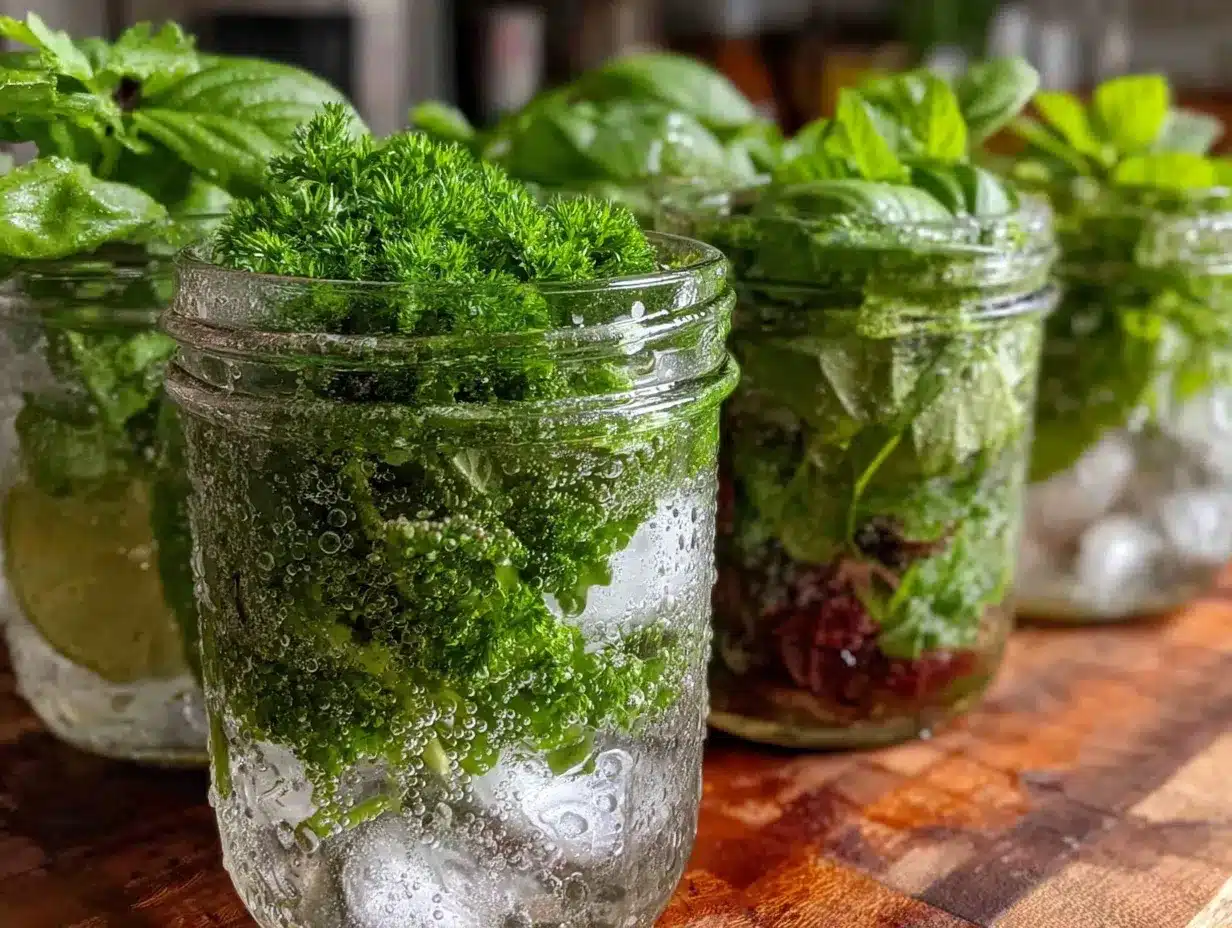
- Glass jars or drinking glasses: Essential for storing herbs upright in water. I find wide-mouth jars easier for quick herb swaps.
- Plastic bags or reusable produce bags: Useful for trapping moisture without suffocating herbs. Reusable bags are great for reducing waste.
- Paper towels: A simple must-have to keep herbs dry and crisp. Unbleached ones are better if you’re sensitive to chemicals.
- Kitchen scissors or herb shears: For trimming stems neatly to keep herbs fresh longer.
- Rubber bands or kitchen string: Handy for securing wrapped herbs or bunches inside jars.
Honestly, you don’t need to invest in anything fancy. I started with old jam jars and plastic sandwich bags from the pantry. Over time, I upgraded to some pretty glass containers that look nice on the counter but function just the same. If you’re tight on budget, glass drinking glasses and clean sandwich bags work perfectly fine.
One tip: if you use glass jars daily, rinse them out regularly to prevent any bacterial growth. I learned the hard way after herbs got funky once because my jar was a little too neglected!
Preparation Method
- Inspect and trim your herbs (5 minutes): Remove any wilted or discolored leaves. Trim about half an inch off the stems with kitchen scissors to refresh their ability to absorb water. For woody herbs like rosemary, just strip off the lower leaves to expose a clean stem.
- Choose the right storage method depending on the herb:
- For soft herbs like parsley, cilantro, and mint: Fill a glass jar with about 1-2 inches (2.5–5 cm) of cold water. Place the trimmed stems in the jar like a bouquet, making sure leaves don’t touch water to prevent rot.
- For delicate herbs like basil: Avoid the fridge. Instead, treat basil like fresh flowers: keep stems in water at room temperature, away from direct sunlight.
- For woody herbs like rosemary and thyme: Wrap them loosely in a damp paper towel, then place inside a perforated plastic bag or loosely sealed reusable bag.
- Cover and secure: Lightly cover the soft herbs in jars with a plastic bag to maintain humidity but allow airflow. Secure with a rubber band around the jar neck to keep the bag in place.
- Store in the right spot: Soft herbs go into the fridge’s crisper drawer, ideally at 36-40°F (2-4°C). Woody herbs wrapped in paper towels do well in the same spot but can also handle slightly warmer fridge areas.
- Refresh water and check herbs every 2-3 days: Change the water to keep it clean and trim stems again if needed. Remove any damaged leaves promptly to avoid spoilage spreading.
- For longer-term storage: Freeze chopped herbs in ice cube trays with olive oil or water. These cubes are perfect for tossing into soups and sauces.
When I first tried this, I forgot to change the water and ended up with a smelly jar. Lesson learned fast! Also, watch out for too-tight plastic bags—herbs need to breathe a little.
With practice, you’ll start to notice subtle cues: the slight curl of leaves means time to trim, or a cloudy jar water signals a refresh. These little signals make all the difference.
Cooking Tips & Techniques
Here are some tricks that have helped me save herbs and keep their flavor bright every time:
- Don’t wash herbs until you’re ready to store: Excess moisture causes faster spoilage. Only rinse just before prepping or storing.
- Use kitchen shears for trimming: They cut cleanly without bruising stems, which keeps herbs healthier longer.
- Know your herbs’ personalities: Basil hates cold and turns black in the fridge. Rosemary and thyme are hardier and love a little wrappings of damp paper towel.
- Change water frequently: I try for every 2-3 days; it keeps bacteria and slime at bay.
- Freeze extras: If you have too many herbs, chop and freeze in olive oil cubes. It’s a lifesaver for winter soups.
- Don’t overcrowd your storage containers: Give herbs enough space to breathe to avoid crushing and bruising.
One time I left a bunch of mint in a sealed plastic bag without any paper towel, and it turned into a sad, slimy mess overnight. Now I always wrap loosely. It’s little things like this that make or break your herb game.
Also, consider timing your herb purchase. If you’re planning a big meal, buy herbs the same day or the day before. They simply won’t last as long if you buy too early.
Variations & Adaptations
These storage hacks are flexible depending on your herbs and kitchen setup:
- For tropical or tender herbs like basil or cilantro: Store at room temperature in water rather than the fridge to avoid chilling damage.
- Use cloth produce bags instead of plastic: For eco-friendly storage, breathable cloth bags with a damp paper towel keep herbs crisp.
- Herb butters and pestos: If you have too many herbs, blend them into flavored butters or pestos and freeze for later use.
- Allergen-free substitutions: If you’re sensitive to certain herbs, try milder ones like parsley or chervil, which store similarly.
- Herb-infused vinegar or oils: Preserve flavor for months by steeping fresh herbs in vinegar or olive oil.
Once, I tried storing cilantro in a glass with a damp paper towel instead of water—didn’t work as well. Now I stick to water for soft herbs. But I love experimenting with herb pestos when I have an overflow; they freeze beautifully and make quick sauces for pasta or grilled meats.
Serving & Storage Suggestions
When you’re ready to use your herbs, remove them from storage and give them a gentle rinse if needed. Pat dry with a paper towel before chopping or tearing to avoid soggy textures.
Fresh herbs are perfect for garnishing soups, sprinkling over salads, or adding a bright note to roasted vegetables. For instance, a sprinkle of fresh dill over roasted salmon or a handful of chopped parsley on creamy mashed potatoes can transform the dish.
Store leftover herbs wrapped in dry paper towels inside airtight containers in the fridge for up to a week. For longer storage, freezing is your best bet.
Reheating dishes with fresh herbs? Add chopped herbs at the end to keep their flavor lively. Cooking herbs too long can dull their taste and aroma.
Over time, herbs stored using these hacks tend to develop a deeper, more mellow flavor—especially rosemary and thyme. It’s a nice bonus if you like a slightly earthier taste.
Nutritional Information & Benefits
Fresh herbs are not just flavor powerhouses—they also pack a nutritional punch. Here’s what you get when adding herbs like parsley, basil, and cilantro to your meals:
- Rich in antioxidants that help fight inflammation and support immune health.
- Good sources of vitamins A, C, and K, which promote skin, eye, and bone health.
- Low in calories and carbs, making them perfect for any diet, including gluten-free and low-carb plans.
- Herbs like dill and mint aid digestion and freshen breath naturally.
One thing to note: if you have allergies to certain plants, always check before adding large amounts of fresh herbs. For most people, these little green leaves are a wonderful way to boost the nutritional profile of everyday meals.
Conclusion
Keeping fresh herbs vibrant and flavorful doesn’t have to be a mystery or a chore. With these simple fresh herb storage hacks, you’ll save money, reduce waste, and add that garden-fresh touch to your cooking every day. I love how these tips make herbs feel like an easy, go-to ingredient rather than something that disappears too fast.
Feel free to customize these methods based on your favorite herbs and kitchen habits. The key is to find what works best for you and stick with it. I’d love to hear how these hacks work in your kitchen or any clever twists you come up with—drop a comment below and share your experience!
Here’s to fresher, tastier meals and less wasted herbs. Happy cooking!
FAQs
- How long can fresh herbs last with these storage hacks? Typically, herbs stored using these methods last between one to two weeks, depending on the herb type.
- Can I store all herbs in the fridge? Most herbs do well in the fridge, but delicate ones like basil prefer room temperature to avoid browning.
- Should I wash herbs before storing them? It’s better to wash herbs just before use to prevent excess moisture that speeds up spoilage.
- What’s the best way to freeze fresh herbs? Chop herbs and freeze them in ice cube trays filled with olive oil or water for easy portioning.
- Can I use plastic bags for herb storage? Yes, but make sure to leave them slightly open or poke small holes to allow airflow and prevent mold.
Pin This Recipe!
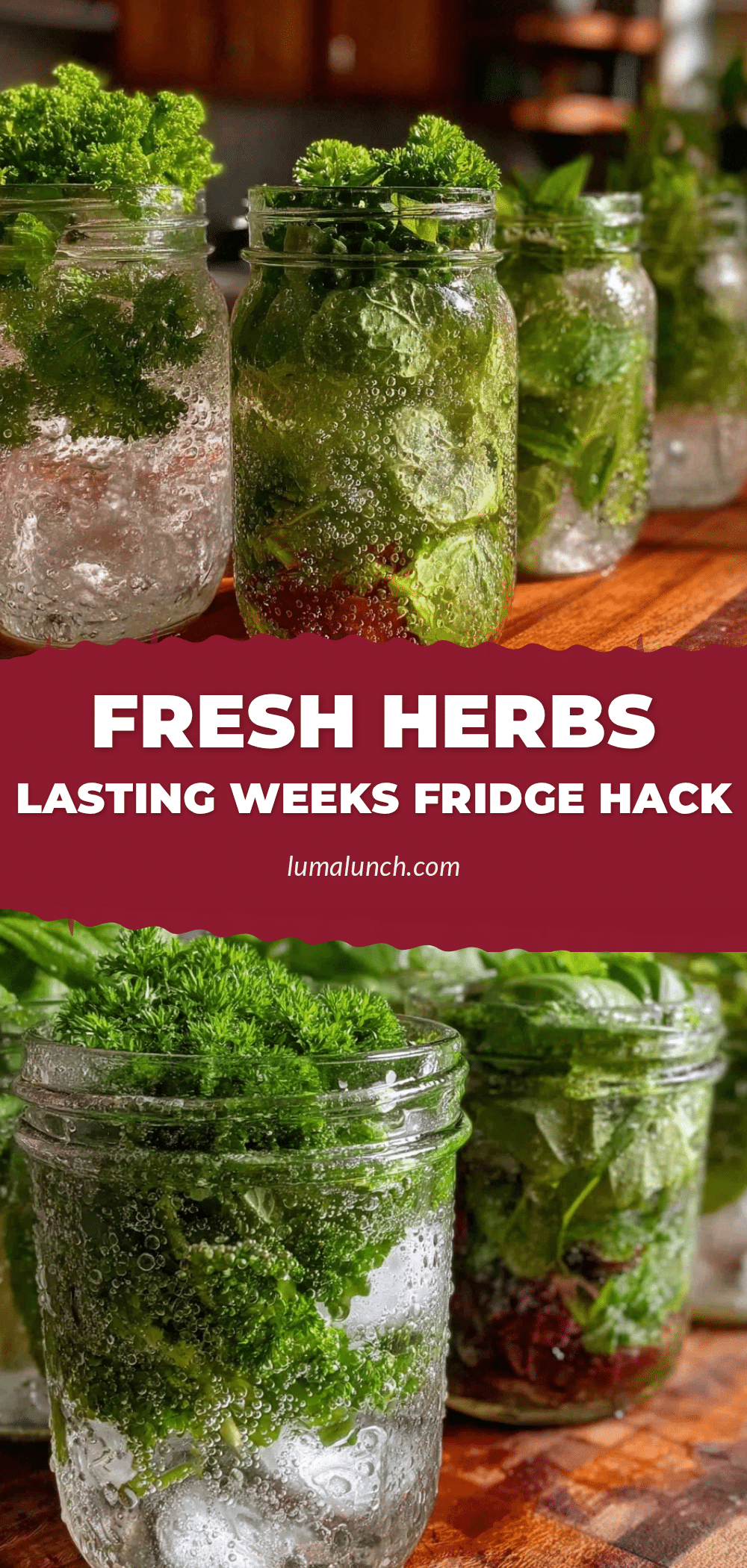
Fresh Herb Storage Hacks Easy Tips to Keep Herbs Fresh Longer
Learn simple and effective hacks to keep fresh herbs vibrant and flavorful for up to two weeks using everyday kitchen items.
- Prep Time: 5 minutes
- Cook Time: 0 minutes
- Total Time: 5 minutes
- Yield: Varies (depends on amount of herbs stored)
- Category: Storage Tips
- Cuisine: General
Ingredients
- Fresh herbs: basil (fresh, whole leaves), cilantro (stems and leaves), parsley (curly or flat-leaf), mint (bright green leaves), dill (feathery fronds), rosemary and thyme (woody stems)
- Water: clean, cold water for keeping herbs hydrated
- Paper towels: preferably unbleached to avoid chemicals
- Plastic bags or reusable produce bags: for creating a controlled humidity environment
- Glass jars or drinking glasses: wide mouth preferred for easy herb placement and removal
- Rubber bands or string: to secure herb bunches or wraps
Instructions
- Inspect and trim your herbs: Remove any wilted or discolored leaves. Trim about half an inch off the stems with kitchen scissors to refresh their ability to absorb water. For woody herbs like rosemary, strip off the lower leaves to expose a clean stem.
- Choose the right storage method depending on the herb:
- – For soft herbs like parsley, cilantro, and mint: Fill a glass jar with about 1-2 inches (2.5–5 cm) of cold water. Place the trimmed stems in the jar like a bouquet, making sure leaves don’t touch water to prevent rot.
- – For delicate herbs like basil: Avoid the fridge. Treat basil like fresh flowers by keeping stems in water at room temperature, away from direct sunlight.
- – For woody herbs like rosemary and thyme: Wrap them loosely in a damp paper towel, then place inside a perforated plastic bag or loosely sealed reusable bag.
- Cover and secure: Lightly cover the soft herbs in jars with a plastic bag to maintain humidity but allow airflow. Secure with a rubber band around the jar neck to keep the bag in place.
- Store in the right spot: Soft herbs go into the fridge’s crisper drawer, ideally at 36-40°F (2-4°C). Woody herbs wrapped in paper towels do well in the same spot but can also handle slightly warmer fridge areas.
- Refresh water and check herbs every 2-3 days: Change the water to keep it clean and trim stems again if needed. Remove any damaged leaves promptly to avoid spoilage spreading.
- For longer-term storage: Freeze chopped herbs in ice cube trays with olive oil or water. These cubes are perfect for tossing into soups and sauces.
Notes
Do not wash herbs until ready to store to avoid excess moisture. Change water every 2-3 days to prevent bacteria and slime. Avoid overcrowding herbs in storage containers. Basil should be stored at room temperature to avoid blackening. Woody herbs like rosemary and thyme prefer damp paper towel wrapping. Freeze excess herbs in olive oil or water ice cube trays for long-term use.
Nutrition
- Serving Size: Varies depending on
- Carbohydrates: 0.5
- Fiber: 0.3
- Protein: 0.1
Keywords: fresh herbs, herb storage, keep herbs fresh, parsley storage, basil storage, cilantro storage, rosemary storage, herb hacks, kitchen tips