Love this? Save it for later!
Share the inspiration with your friends
Introduction
“I used to dread peeling boiled eggs,” I admit. There’s this tiny but mighty kitchen frustration: the stubborn shell clinging to the white, leaving behind a pocked, ragged mess. One Saturday morning, while juggling breakfast chaos and a toddler’s endless questions, I realized I needed a better way. I mean, who has time to nick half the egg to get it peeled? So, I grabbed my old reliable pot, a pinch of patience, and a bit of trial and error. That’s when the magic happened—my first batch of eggs peeled perfectly, smooth as silk, every single time.
You know that feeling when you crack open an egg and it’s just right? No bits of shell stuck, no frustrating pokes to rescue the white? Honestly, it’s a small victory, but one that brightens up a rushed morning or a fancy salad prep. Maybe you’ve been there, wrestling with eggs that look like they survived a battle more than breakfast. That’s why I’m sharing my easy perfect peel boiled eggs method—five no-nonsense tips I learned the hard way, so you don’t have to.
There’s something oddly satisfying about the smooth, glossy surface of a flawlessly peeled boiled egg. It’s like the kitchen gods smiled down just for a moment. Plus, letting go of that peeling struggle means more time to enjoy your meal or get ready for the day. Whether you’re prepping for a picnic, a protein-packed snack, or a classic deviled egg spread, these steps will have you cracking shells like a pro.
Why You’ll Love This Recipe
After countless attempts and a few kitchen slip-ups (yes, I once boiled eggs for too long and ended up with a sulfur smell disaster), I’ve nailed down a foolproof method that’s simple and fast. This easy perfect peel boiled eggs recipe is a game changer, and here’s why:
- Quick & Easy: From start to finish in under 15 minutes—ideal for busy mornings or last-minute meal prep.
- Simple Ingredients: Just eggs, water, and a few pantry staples you already have. No fancy tools required.
- Perfect for Any Occasion: Great for breakfast, packed lunches, potlucks, or that classic Cobb salad.
- Crowd-Pleaser: Everyone loves eggs that peel cleanly—no more complaints about messy shells or broken whites.
- Unbelievably Delicious: The texture stays tender and smooth, making your eggs taste fresh and perfectly cooked.
This isn’t one of those recipes where you end up with eggs that look like they’ve been through a war zone. Instead, it’s about getting that clean, smooth finish that makes your dish look as good as it tastes. The secret lies in simple techniques—like adding a pinch of baking soda to the water or shocking the eggs in ice water—that I’ve tested over time.
Honestly, it’s the kind of recipe that makes you stop and smile after your first bite, knowing you’ve mastered a kitchen skill that many find tricky. Whether you’re a beginner or a seasoned cook, you’ll appreciate how these tips take the guesswork out of boiling eggs.
What Ingredients You Will Need
This easy perfect peel boiled eggs recipe uses straightforward ingredients that you probably have right now. Each one plays a role in helping those eggs slip out of their shells without a fight.
- Large eggs: Fresh but not too fresh—eggs that have been in your fridge for about a week peel best.
- Water: Enough to cover the eggs by at least an inch (about 4-6 cups / 1-1.5 liters depending on your pot size).
- Baking soda or baking powder (optional): Just 1/2 teaspoon added to the boiling water helps loosen the shell’s grip.
- Salt (optional): A teaspoon in the boiling water can also help with peeling and flavor.
- Ice cubes: For the ice water bath to stop cooking immediately and firm up the eggs.
If you want to swap baking soda with white vinegar, that works too—both create a slightly alkaline environment that makes peeling easier. I prefer baking soda because it’s milder and less likely to affect taste. For eggs, I recommend brands like Vital Farms or any local farm eggs if you want a richer flavor, but honestly, regular store-bought eggs work just fine.
Sometimes I’ve used pasture-raised eggs when I found them at the farmer’s market, and they peeled just as well once they rested a few days. In summer, you might notice eggs stored at room temperature peel better than fresh-out-of-the-fridge ones, but this method smooths out those differences.
Equipment Needed
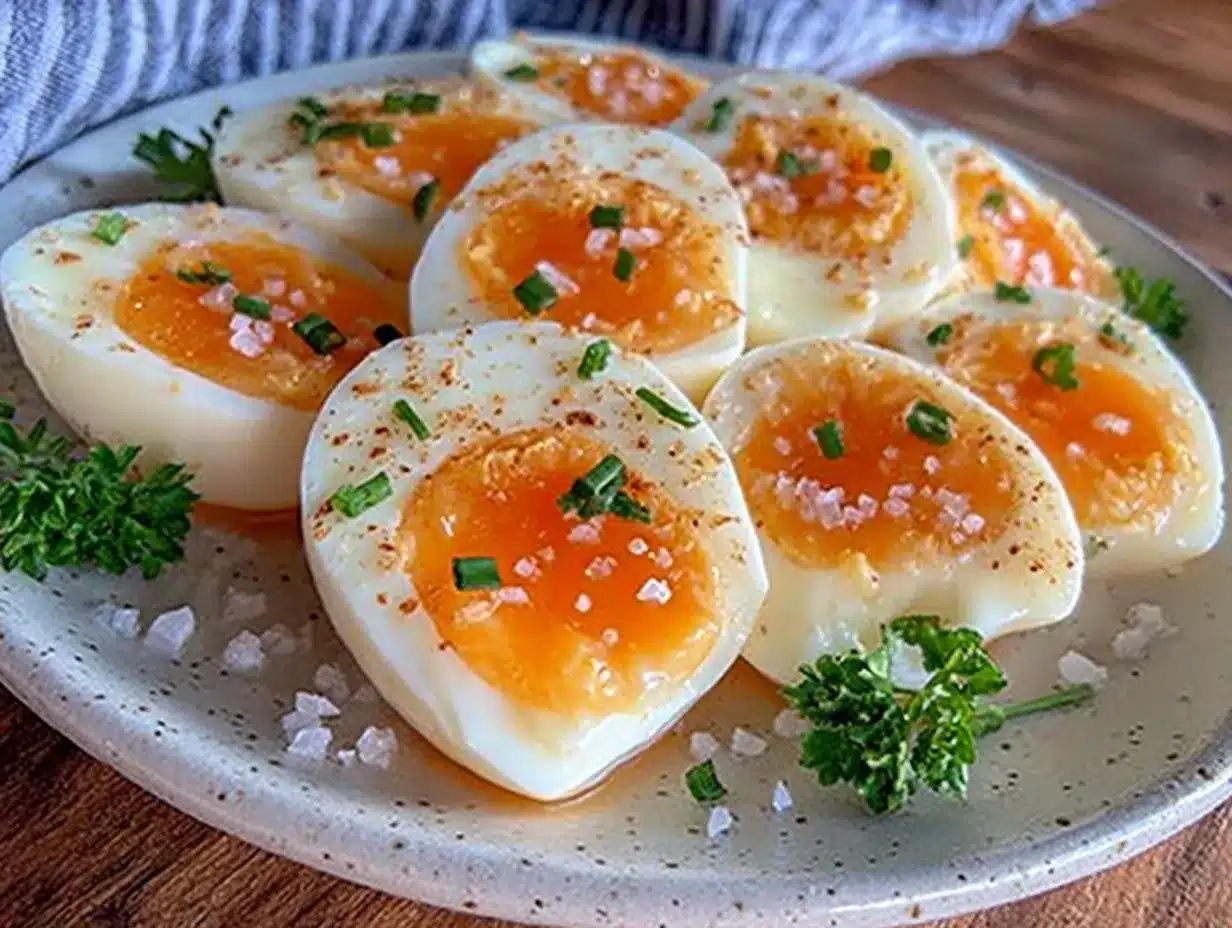
For this recipe, you don’t need anything fancy. Just basic kitchen tools that you probably already own:
- Medium to large pot: Big enough to hold eggs in a single layer with some room for water.
- Slotted spoon or tongs: To safely transfer eggs from hot water to the ice bath without cracking.
- Large bowl: For the ice water bath—this helps cool the eggs quickly and stops cooking.
- Timer or clock: Accurate timing is key. I use my phone timer, but a kitchen timer works wonders too.
If you don’t have a slotted spoon, a regular spoon works fine—just be gentle. For budget-conscious cooks, any sturdy pot and bowl combo will do; no need for specialty egg cookers or steamers. I’ve tried electric egg cookers before, but honestly, the stovetop method gives me more control and better peeling results.
Preparation Method
- Bring eggs to room temperature: Take your eggs out of the fridge about 10-15 minutes before boiling. This helps prevent cracking from temperature shock. If you’re in a rush, run them under warm water for a minute.
- Fill your pot with cold water: Place the eggs in a single layer at the bottom, then add enough cold water to cover them by about an inch (2.5 cm). Cold water helps cook eggs evenly from the start.
- Add baking soda and salt: Stir in 1/2 teaspoon of baking soda and 1 teaspoon of salt. These help loosen the shell and add flavor.
- Bring water to a rolling boil: Place the pot over medium-high heat and bring to a full boil. Watch carefully so you don’t overboil and risk cracking.
- Turn off heat and cover: Once boiling, remove the pot from heat and cover it with a tight-fitting lid. Let eggs sit for 9-12 minutes depending on size and desired yolk doneness. For large eggs, 10 minutes usually hits that perfectly firm but creamy yolk.
- Prepare an ice bath: While eggs cook, fill a large bowl with ice and cold water. This will stop the cooking immediately and make peeling easier.
- Transfer eggs to ice bath: Use a slotted spoon or tongs to carefully move eggs from hot water to ice bath. Let them chill for at least 5 minutes. This cool down tightens the egg whites and pulls them away from the shell.
- Crack and peel: Gently tap eggs on a hard surface to crack the shell all over, then roll it lightly with your palm. Start peeling from the wider end where the air pocket usually makes a natural gap.
- Rinse peeled eggs: If needed, rinse under cool running water to remove any small shell bits. Pat dry with a paper towel.
A quick note: If you find the shell still clings sometimes, peel under running water or peel while the egg is slightly warm. I’ve had days where eggs just refused to behave, but these steps usually save the day.
Cooking Tips & Techniques
Getting perfect peel boiled eggs is as much about technique as timing. Here are some tips I’ve picked up along the way:
- Use older eggs when possible: Fresh eggs tend to stick more. If you buy your eggs fresh from the store or farm, let them sit in the fridge for about a week before boiling.
- Don’t skip the ice bath: It’s a game changer. It stops the cooking instantly and helps shrink the egg white from the shell.
- Gentle cracking helps: Instead of smashing the egg shell, tenderly tap and roll—it prevents jagged edges that make peeling tricky.
- Peel under water if needed: Peeling eggs submerged in water helps loosen shell bits and keeps your fingers clean.
- Avoid overcooking: Overcooked eggs get that greenish ring around the yolk and a sulfur smell. Timing is key—set a timer and stick to it.
- Try steaming as an alternative: If boiling is a pain, steaming eggs for about 12-14 minutes can yield similar easy-peel results.
I remember one time I forgot to set my timer and ended up with eggs that were borderline rubbery. Lesson learned: don’t multitask too much during this step!
Variations & Adaptations
While this recipe nails the classic perfect peel boiled egg, there are plenty of ways to tweak it:
- For soft-boiled eggs: Reduce the sitting time in hot water to 6-7 minutes, then ice bath as usual for runny yolks with firm whites.
- Vegan alternative: If you’re curious, try our vegan “egg” recipe that uses tofu and spices for a similar texture.
- Flavor-infused eggs: After peeling, soak eggs in soy sauce, beet juice, or turmeric water for a flavorful twist and colorful presentation.
- Gluten-free and paleo-friendly: Eggs are naturally free of gluten and paleo-approved, making this recipe a safe protein choice for many diets.
- Personal twist: I once added a splash of white vinegar to the boiling water instead of baking soda—it worked nicely but added a slight tang, so I use baking soda for neutral flavor.
For different cooking methods, some folks swear by pressure cookers or instant pots for easy peel eggs, but I prefer the stovetop for its simplicity and control.
Serving & Storage Suggestions
Perfect peel boiled eggs are versatile. Serve them warm or cold, whole, halved, or sliced:
- Serving ideas: Sprinkle with salt, pepper, and paprika for a classic snack. Or top with everything bagel seasoning for a trendy twist.
- Complementary dishes: Pair with fresh avocado toast, crisp salads, or hearty grain bowls like a quinoa salad.
- Storage: Keep peeled eggs in an airtight container with a damp paper towel in the fridge for up to 3 days.
- Reheating: Warm peeled eggs gently in hot water for a few minutes if you prefer warm eggs, but avoid microwaving to prevent rubberiness.
- Flavor development: Peeled eggs tend to stay stable in texture, but if marinated or dressed, flavors deepen after a few hours in the fridge.
Nutritional Information & Benefits
One large boiled egg contains roughly 70 calories, 6 grams of protein, 5 grams of healthy fats, and essential vitamins like B12 and D. Perfect peel boiled eggs are an excellent source of high-quality protein that supports muscle repair and keeps you full longer.
Eggs also provide choline, important for brain health, and antioxidants like lutein that promote eye health. For those watching carbs, eggs are naturally low-carb and gluten-free, fitting well into many diet plans.
Just a heads up: if you have an egg allergy, obviously best to avoid. But for most people, these are a nutrient-dense, affordable, and easy-to-prepare food staple.
Conclusion
Getting easy perfect peel boiled eggs every time is no longer a kitchen mystery. With just a few simple tips and a little practice, you can say goodbye to frustrating peeling and hello to smooth, beautiful eggs that look great and taste even better.
Feel free to experiment with timing and flavor infusions to make this recipe truly your own. I keep coming back to these eggs because they’re reliable, quick, and honestly, satisfying in a way that makes breakfast feel special.
If you try these tips, I’d love to hear how they worked for you! Drop a comment below or share your favorite egg hacks. Remember, every kitchen has its quirks, but a perfect peel boiled egg shouldn’t be one of them.
Happy cooking, and here’s to more flawless eggs on your table!
FAQs About Easy Perfect Peel Boiled Eggs
How long should I boil eggs for perfect peeling?
For large eggs, bring to a boil, then remove from heat and let sit covered for 10 minutes. Adjust 1-2 minutes less or more for smaller or extra-large eggs.
Why do some boiled eggs stick to the shell?
Very fresh eggs tend to stick because the pH is lower. Older eggs have a higher pH, which helps the membrane separate from the shell easier.
Can I peel boiled eggs right after cooking?
It’s best to cool eggs in an ice bath for at least 5 minutes first. This cools them quickly and prevents overcooking, making shells easier to peel.
Does adding baking soda really help with peeling eggs?
Yes, baking soda raises the water’s pH, loosening the bond between egg whites and the shell, making peeling smoother and faster.
What if I accidentally overcook my eggs?
Overcooked eggs get a greenish ring and a sulfur smell. While safe to eat, to avoid this, stick closely to timing and use an ice bath to stop cooking promptly.
Pin This Recipe!
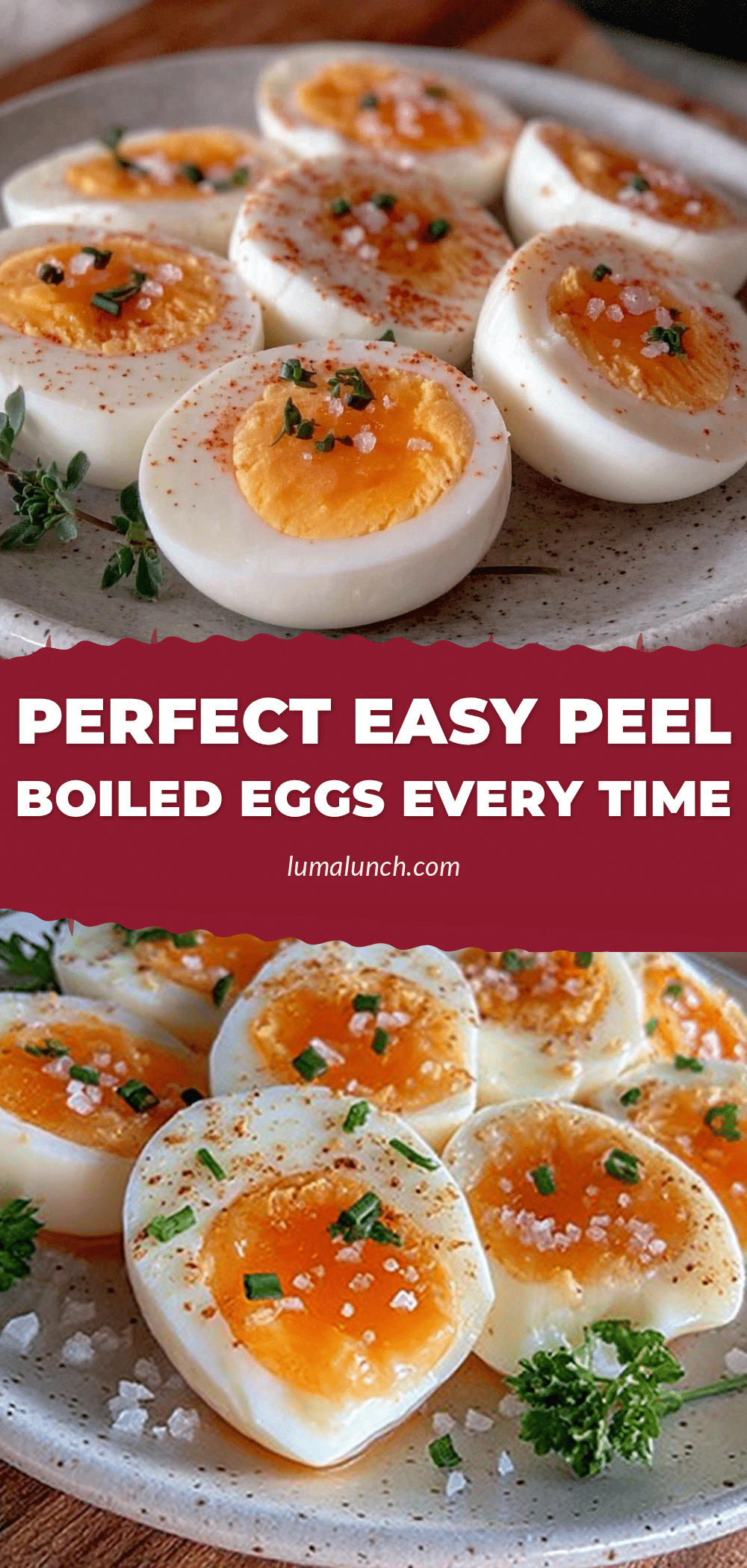
Easy Perfect Peel Boiled Eggs Every Time

A foolproof method to boil eggs that peel perfectly every time using simple ingredients and easy steps. Ideal for quick breakfasts, snacks, or salads.
- Prep Time: 15 minutes
- Cook Time: 12 minutes
- Total Time: 27 minutes
- Yield: 6 servings 1x
- Category: Breakfast
- Cuisine: American
Ingredients
- Large eggs (preferably about a week old)
- Water (enough to cover eggs by at least 1 inch, about 4-6 cups / 1-1.5 liters)
- 1/2 teaspoon baking soda or baking powder (optional)
- 1 teaspoon salt (optional)
- Ice cubes (for ice water bath)
Instructions
- Bring eggs to room temperature by taking them out of the fridge about 10-15 minutes before boiling or running under warm water for a minute if in a rush.
- Fill a medium to large pot with cold water, place eggs in a single layer, and cover by about 1 inch (2.5 cm).
- Add 1/2 teaspoon baking soda and 1 teaspoon salt to the water and stir.
- Place pot over medium-high heat and bring water to a rolling boil.
- Once boiling, remove pot from heat and cover with a tight-fitting lid. Let eggs sit for 9-12 minutes (10 minutes for large eggs).
- While eggs cook, prepare an ice bath by filling a large bowl with ice and cold water.
- Use a slotted spoon or tongs to transfer eggs from hot water to the ice bath. Chill for at least 5 minutes.
- Gently tap eggs on a hard surface to crack the shell all over, then roll lightly with your palm. Peel starting from the wider end.
- Rinse peeled eggs under cool running water if needed to remove shell bits and pat dry.
Notes
Use eggs that are about a week old for best peeling results. Do not skip the ice bath to stop cooking immediately and help peel easily. Peel eggs gently and consider peeling under running water if shells cling. Avoid overcooking to prevent greenish yolk and sulfur smell. Steaming eggs for 12-14 minutes is an alternative method.
Nutrition
- Serving Size: 1 large boiled egg
- Calories: 70
- Sugar: 1
- Sodium: 70
- Fat: 5
- Saturated Fat: 1.5
- Carbohydrates: 1
- Protein: 6
Keywords: boiled eggs, perfect peel eggs, easy boiled eggs, egg peeling tips, quick breakfast, protein snack