Love this? Save it for later!
Share the inspiration with your friends
Introduction
“You know that feeling when you suddenly realize you’ve got a basket full of rhubarb but no clear plan for it?” Well, that was me last Wednesday evening. I had just picked up a bunch of rhubarb stalks from the local farmers’ market—bright pink, crisp, and begging to be transformed. Honestly, I was halfway through making a different dessert when I noticed the ends were wilting and thought, ‘Let’s not waste a single bit.’
My kitchen quickly turned into a rhubarb lab, with bits chopped here and there, juice squeezing out, and a ton of sticky spills (classic me). What started as a bit of a mess became this wholesome zero-waste rhubarb jam and syrup recipe that I’ve been coming back to ever since. I mean, let’s face it, there’s something deeply satisfying about turning every last piece of produce into something delicious and useful. Maybe you’ve been there too—standing in your kitchen, wondering what to do with odds and ends that refuse to wait.
This jam and syrup combo isn’t just another sweet condiment. It’s about honoring the fruit, cutting down waste, and packing flavor into every jar. It’s the kind of recipe that makes you smile when you spread it on toast, drizzle it over pancakes, or stir it into sparkling water. And honestly, it’s just fun to make. I keep a cracked bowl nearby for the inevitable drips and swear by my old wooden spoon that’s seen more jams than I can count. This recipe stuck with me because it’s simple, thoughtful, and turns humble rhubarb into something truly special.
Why You’ll Love This Recipe
From my many kitchen trials (and occasional sticky mishaps), this zero-waste rhubarb jam recipe stands out because it’s:
- Quick & Easy: Comes together in about 45 minutes, perfect for those spontaneous rhubarb moments.
- Simple Ingredients: Uses pantry staples and rhubarb—no exotic add-ons required.
- Perfect for Breakfast & Beyond: Ideal for brunch spreads, topping yogurts, or sweetening cocktails.
- Crowd-Pleaser: The tangy-sweet balance wins over kids and adults alike, even the skeptics.
- Zero-Waste Friendly: The recipe uses every part of the rhubarb, making it both eco-conscious and economical.
What makes this jam and syrup different? Well, instead of tossing the fibrous ends or overripe stalks, I incorporate them into a rich syrup that complements the jam perfectly. Plus, I’ve fine-tuned the sugar and lemon balance so it’s not overly sweet but bright and fresh. It’s not just jam; it’s a little jar of sunshine that you can feel good about making and eating.
This recipe isn’t just a condiment—it’s a way to reconnect with your food, reduce waste, and enjoy something homemade that feels both nostalgic and new. Trust me, once you try it, you’ll understand why it’s become a staple in my kitchen.
What Ingredients You Will Need
This recipe uses simple, wholesome ingredients to deliver bold flavor and satisfying texture without the fuss. Most are pantry staples, and the rhubarb is, of course, the star of the show. Here’s what you’ll need:
- Fresh rhubarb stalks (about 4 cups chopped, including the thinner ends and firmer pieces)—using the whole stalk keeps waste to a minimum.
- Granulated sugar (1 cup / 200 g) — adjust based on your sweetness preference; I prefer organic cane sugar for a cleaner taste.
- Fresh lemon juice (2 tablespoons) — adds brightness and helps with natural pectin activation.
- Water (1/2 cup / 120 ml) — for the syrup and to help soften the rhubarb.
- Vanilla bean or extract (1 teaspoon) — optional but adds a lovely depth to the flavor.
- Optional: A pinch of ground ginger or cinnamon — for a warm, spicy note that pairs wonderfully with rhubarb.
Ingredient tips: Look for firm, bright-colored rhubarb stalks without blemishes. If you can’t find fresh rhubarb, frozen works fine too, just thaw and drain excess liquid. For a vegan version, make sure your sugar is bone-char free, which most organic brands are.
Substitution suggestions: You can swap granulated sugar with coconut sugar or honey (reduce amount slightly with honey). For a low-sugar version, try adding a natural sweetener like stevia or monk fruit, but keep in mind it may affect the jam’s texture.
Equipment Needed
- Large heavy-bottomed saucepan: Essential for even heat distribution and preventing the jam from scorching.
- Wooden spoon or heatproof silicone spatula: For stirring—my go-to is a worn wooden spoon that somehow makes the jam taste better (or so I tell myself).
- Fine mesh strainer or cheesecloth: To separate the syrup from the pulp if you want a smooth syrup.
- Measuring cups and spoons: For precise ingredient amounts.
- Clean glass jars with lids: For storing the jam and syrup—recycled jars work perfectly and add character.
If you don’t have a strainer, a clean kitchen towel or coffee filter can work in a pinch. I’ve also used a handheld immersion blender for a smoother jam texture, but it’s totally optional. For budget-friendly options, thrift stores often have perfect glass jars and sturdy wooden spoons.
Preparation Method
- Prepare the rhubarb: Wash the stalks thoroughly. Chop all the rhubarb, including the thinner ends and any fibrous bits you might usually toss. Aim for roughly 1-inch pieces. This step takes about 10 minutes.
- Mix rhubarb and sugar: In your large saucepan, combine the chopped rhubarb and sugar. Stir well to coat all the pieces. Let it sit for 20 minutes. This maceration softens the rhubarb and helps release its juices.
- Add lemon juice and water: Pour in the fresh lemon juice and water. Stir to combine. This acidity brightens the flavor and helps the jam set.
- Cook the mixture: Place the saucepan over medium heat. Bring to a gentle boil, then reduce to low. Let it simmer uncovered for 25–30 minutes, stirring frequently. The rhubarb should break down, turning soft and jammy. If you notice any foam forming, skim it off with a spoon.
- Add vanilla and spices: Stir in vanilla bean seeds or extract and optional spices during the last 5 minutes of cooking. This subtle addition rounds out the flavors.
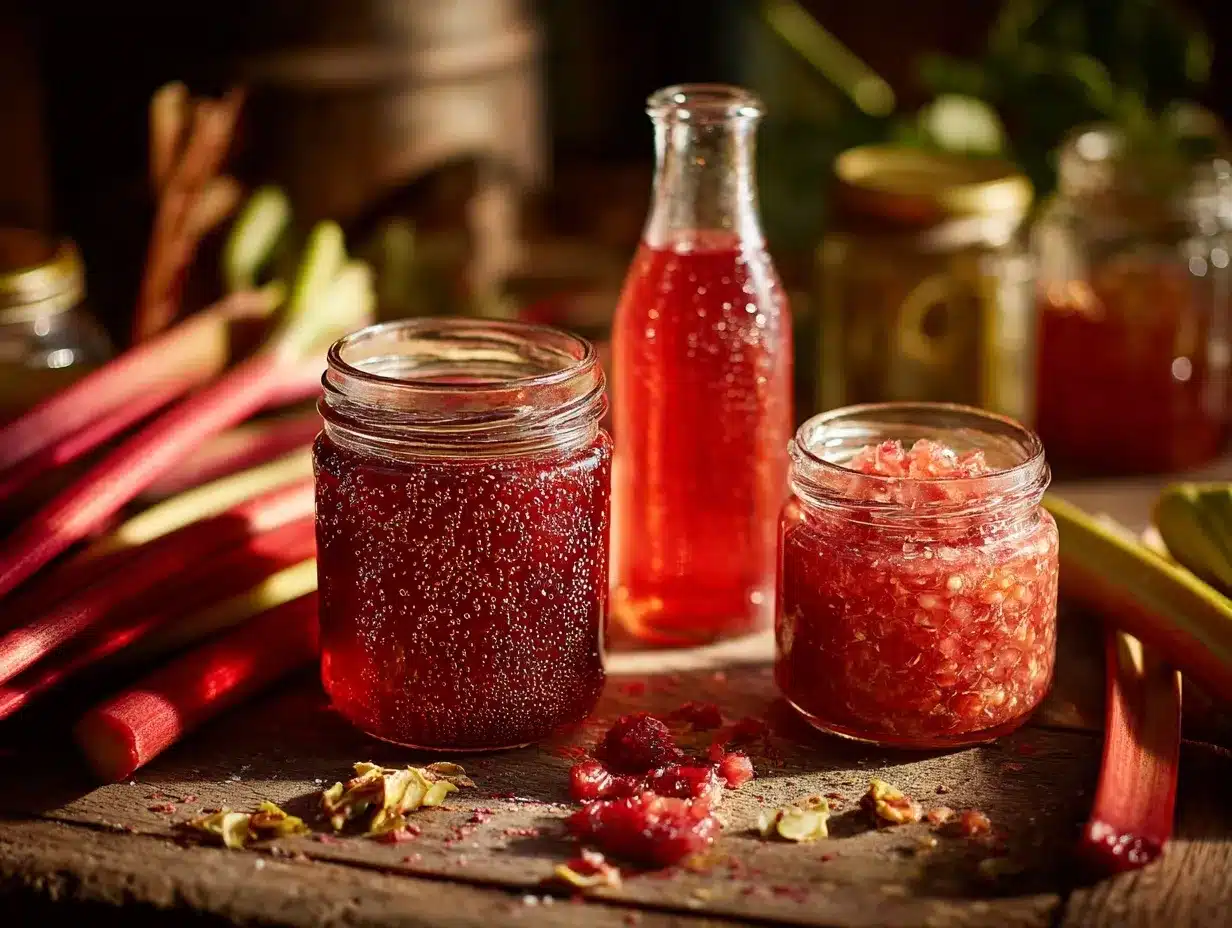
- Separate syrup and pulp: Once the jam has thickened, remove from heat. Use a fine mesh strainer or cheesecloth to strain the mixture into a bowl, pressing gently to extract syrup. Keep the syrup separate for use as a sweetener or topping.
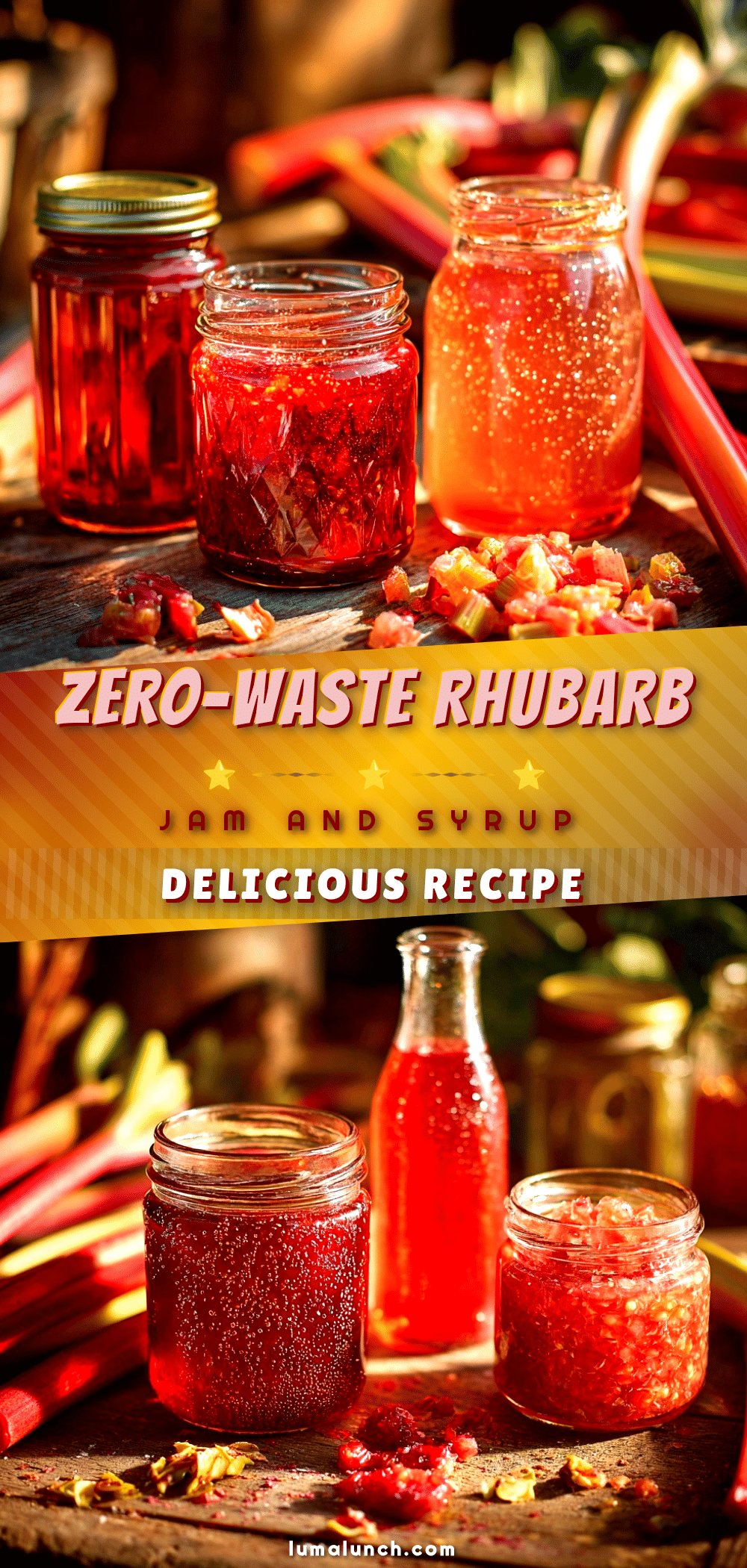
- Jar the jam and syrup: Spoon the thick rhubarb jam into clean jars. Pour the syrup into smaller bottles or jars. Allow both to cool to room temperature before sealing and refrigerating. They’ll keep for up to 2 weeks.
Tips: Keep an eye on the heat to avoid burning. The jam should be thick but still spreadable. If it seems too runny, cook a few minutes longer. The syrup can be diluted with water or sparkling water for a refreshing drink.
Cooking Tips & Techniques
From my many attempts, here’s what I’ve learned to nail this recipe consistently:
- Don’t rush the maceration: Letting the rhubarb sit with sugar before cooking helps it release juices naturally. Skipping this can make the jam less flavorful and more fibrous.
- Watch the simmer: A low and slow simmer prevents scorching and allows the rhubarb to soften evenly. Stir often, especially near the end.
- Skim the foam: It’s harmless but can make your jam cloudy. Removing it creates a clearer, prettier final product.
- Test the set: Use the classic “plate test”: chill a small plate, spoon a bit of jam on it, and tilt. If it wrinkles and doesn’t run, it’s ready.
- Be patient with texture: If you prefer smoother jam, briefly blend with an immersion blender before straining. But I actually love the chunky bits for texture contrast.
- Save your syrup: Don’t toss the strained liquid! It’s packed with flavor and perfect for cocktails, lemonades, or drizzling over ice cream.
Honestly, the first time I tried this, I forgot to stir for a while and ended up with a caramelized bottom layer. It was a happy accident though—gave a lovely depth! But generally, keep an eye and stir frequently.
Variations & Adaptations
This recipe invites creativity. Here are some ways to switch things up:
- Berry Boost: Add 1 cup of fresh or frozen strawberries or raspberries during cooking for a mixed fruit jam.
- Herbal Infusion: Toss in fresh thyme or rosemary sprigs while simmering for a savory hint. Remove before jarring.
- Spiced Up: Increase cinnamon or add a dash of cayenne for a warming, spicy kick.
- Low-Sugar Version: Use natural sweeteners like honey or maple syrup and reduce quantity to taste.
- Gluten-Free Friendly: This recipe is naturally gluten-free, making it a great option for those with sensitivities.
I once tried adding a splash of balsamic vinegar to the syrup—unexpected but delicious! It gave a tangy complexity that paired well with savory dishes.
Serving & Storage Suggestions
This rhubarb jam is best served slightly chilled or at room temperature. Spread it thickly on warm toast, swirl into plain yogurt, or use as a topping for pancakes and waffles. The syrup is fantastic drizzled over vanilla ice cream or stirred into sparkling water for a refreshing drink.
Store both jam and syrup in airtight glass jars in the refrigerator. They keep well for up to two weeks. For longer storage, consider freezing the jam in small portions—just thaw overnight in the fridge before using.
Reheating the jam gently on the stove or microwave brings out that fresh-picked flavor again. Over time, the flavors meld and deepen, often tasting even better a day or two after making.
Nutritional Information & Benefits
A typical serving (1 tablespoon) of this rhubarb jam provides roughly:
| Calories | 35 kcal |
|---|---|
| Carbohydrates | 9 g (mostly natural sugars) |
| Fiber | 1 g |
| Vitamin C | 5% of daily value |
Rhubarb is a great source of antioxidants and vitamin K, supporting bone health and reducing inflammation. Using lemon juice adds vitamin C and helps preserve the jam naturally. This recipe is naturally gluten-free and can be adapted for low-sugar diets.
From a wellness perspective, making jam at home means you avoid preservatives and excess additives often found in store-bought versions. Plus, reducing food waste feels good for the planet and your soul.
Conclusion
This wholesome zero-waste rhubarb jam and syrup recipe is more than just a way to use up your rhubarb—it’s a reminder that simple ingredients can create something truly special. Whether you’re new to jam-making or a seasoned pro, this recipe is approachable, satisfying, and kind to the environment.
Don’t hesitate to tweak it to suit your tastes or pantry. I love how it brings a little tangy sweetness to my mornings and adds flair to desserts. I’d love to hear how you make it your own—drop a comment below and share your versions or questions!
Give it a try this rhubarb season, and let it become your new kitchen favorite. Happy cooking!
FAQs
Can I use frozen rhubarb for this recipe?
Absolutely! Just thaw it completely and drain any excess liquid before proceeding. The jam may cook a bit quicker since frozen rhubarb is softer.
How long does this rhubarb jam last in the fridge?
Stored in airtight jars, it keeps well for up to two weeks. Always check for any signs of spoilage before eating.
Can I make this jam without added sugar?
You can reduce or omit sugar, but keep in mind it helps with preservation and texture. Using natural sweeteners or stevia may change the consistency.
Is this recipe suitable for canning?
This recipe is designed for refrigeration and short-term storage. For canning, you’ll need to follow proper sterilizing and preserving guidelines to ensure safety.
What’s the best way to use the rhubarb syrup?
Try it drizzled over ice cream, mixed into sparkling water for a refreshing drink, or as a glaze for roasted meats or desserts. It adds a lovely tangy sweetness wherever you use it.
For more inspiration on homemade preserves, you might enjoy my classic strawberry jam recipe or the rich flavors of homemade vanilla bean syrup. Both pair beautifully with this rhubarb jam for a versatile pantry.
Pin This Recipe!
Wholesome Zero-Waste Rhubarb Jam Recipe Easy Homemade Syrup Guide
A simple, zero-waste rhubarb jam and syrup recipe that uses every part of the rhubarb stalk to create a tangy-sweet spread and versatile syrup perfect for breakfast and beyond.
- Prep Time: 10 minutes
- Cook Time: 35 minutes
- Total Time: 45 minutes
- Yield: About 4 cups jam and 1 cup syrup (approximately 12 servings) 1x
- Category: Condiment
- Cuisine: American
Ingredients
- 4 cups fresh rhubarb stalks, chopped (including thinner ends and firmer pieces)
- 1 cup granulated sugar (200 g), adjust to taste
- 2 tablespoons fresh lemon juice
- 1/2 cup water (120 ml)
- 1 teaspoon vanilla bean seeds or vanilla extract (optional)
- Pinch of ground ginger or cinnamon (optional)
Instructions
- Wash the rhubarb stalks thoroughly and chop into roughly 1-inch pieces, including thinner ends and fibrous bits.
- In a large heavy-bottomed saucepan, combine the chopped rhubarb and sugar. Stir well to coat and let sit for 20 minutes to macerate.
- Add fresh lemon juice and water to the saucepan and stir to combine.
- Place the saucepan over medium heat and bring to a gentle boil. Reduce heat to low and simmer uncovered for 25–30 minutes, stirring frequently and skimming off any foam.
- During the last 5 minutes of cooking, stir in vanilla bean seeds or extract and optional spices.
- Remove from heat and strain the mixture through a fine mesh strainer or cheesecloth into a bowl, pressing gently to separate syrup from pulp.
- Spoon the thick rhubarb jam into clean jars and pour the syrup into smaller bottles or jars. Allow both to cool to room temperature before sealing and refrigerating.
Notes
Let the rhubarb macerate with sugar before cooking to release juices and improve flavor. Stir frequently during simmering to prevent scorching and skim off foam for a clearer jam. Use an immersion blender for smoother texture if desired. The syrup can be diluted with water or sparkling water for drinks or used as a glaze.
Nutrition
- Serving Size: 1 tablespoon (about
- Calories: 35
- Sugar: 8
- Carbohydrates: 9
- Fiber: 1
Keywords: rhubarb jam, zero waste, homemade syrup, easy jam recipe, rhubarb syrup, breakfast spread, gluten-free jam, low sugar jam