Love this? Save it for later!
Share the inspiration with your friends
“You have to try this soup,” my coworker insisted, sliding a steaming bowl across the table. I eyed the rich, aromatic broth suspiciously—it looked like something too fancy for my usual weeknight routine. But honestly, one spoonful of that flavorful homemade ramen noodle soup with rich pork broth changed everything. It wasn’t just soup; it was like a warm hug in a bowl after a long day.
The first time I made ramen at home, I wasn’t aiming for perfection. I just wanted something comforting without ordering takeout. What started as a simple attempt turned into a weekly obsession. I discovered how layering flavors slowly in that pork broth made all the difference—and how fresh ramen noodles soak up every bit of that goodness. It’s funny how a recipe born from a busy night transformed into a go-to comfort food I crave, especially when the kitchen feels like a sanctuary.
What stuck with me was the balance—deep, meaty broth paired with tender noodles and just the right toppings. It’s not just about filling up; it’s about savoring each bite, feeling grounded. I’ve tweaked and tested this recipe enough to trust it will bring that same cozy feeling to your table.
So, if you’re curious about making ramen soup that actually tastes like something you’d find in a little Tokyo ramen shop (without the trek), this recipe’s got your back. It’s simple enough for a weeknight but rich and satisfying enough to slow down and enjoy.
Why You’ll Love This Recipe
This homemade ramen noodle soup recipe with rich pork broth isn’t just any soup—it’s a game changer for anyone who’s ever thought, “I wish I could make ramen at home like the pros.” Here’s why it stands out:
- Quick & Easy: While the broth does take some simmering time (around 3 hours), the active prep is minimal, and the results are totally worth it. Perfect for planning ahead or weekend cooking marathons.
- Simple Ingredients: No need for exotic items—you’ll mostly find these in your local grocery or Asian market. I personally like using pork bones from my trusted butcher for the deepest flavor.
- Perfect for Cozy Dinners: Whether you’re feeding family or just craving a solo dinner that hits the spot, this recipe brings warmth and comfort with every spoonful.
- Crowd-Pleaser: I’ve served this at casual gatherings and it always disappears fast. Kids and adults alike love slurping the noodles and savoring the broth.
- Unbelievably Delicious: The secret is slow-simmered pork broth layered with aromatics and a touch of soy and mirin—giving you that authentic, deeply satisfying flavor.
This isn’t just another ramen recipe; it’s the one I come back to when I want something that tastes homemade, heartfelt, and a little indulgent without being complicated. It’s the kind of soup that makes you pause and appreciate the art of simple ingredients coming together just right.
What Ingredients You Will Need
This recipe uses simple, wholesome ingredients to deliver bold flavor and satisfying texture without the fuss. Most are pantry staples or easy-to-find fresh items, making it accessible for any home cook.
- Pork Bones (neck or femur): About 3 pounds (1.4 kg) – the base of your rich broth. I recommend asking your butcher for meaty bones with some marrow.
- Water: 12 cups (2.8 liters) – to simmer the broth.
- Ginger: 3-inch piece, sliced – adds warmth and depth.
- Garlic: 6 cloves, smashed – for that savory punch.
- Green Onions: 4 stalks, cut into thirds – use whites for broth, save greens for garnish.
- Dried Shiitake Mushrooms: 4-5 pieces – boosts umami flavor (optional but highly recommended).
- Soy Sauce: ½ cup (120 ml) – I trust Kikkoman for consistent flavor.
- Mirin: ¼ cup (60 ml) – adds a subtle sweetness and balances salt.
- Miso Paste: 2 tablespoons – white or yellow miso works best for gentle flavor.
- Fresh Ramen Noodles: 12 ounces (340 grams) – fresh is best, but dried works in a pinch.
- Soft-Boiled Eggs: 2-3, halved – classic ramen topping.
- Chashu Pork: Thinly sliced braised pork belly (optional, but worth the extra effort).
- Bean Sprouts, Nori Sheets, Bamboo Shoots: For garnish and texture contrast.
For substitutions: you can swap pork bones with chicken for a lighter broth or use gluten-free soy sauce for dietary needs. If you can’t find fresh ramen noodles, try homemade udon noodles recipe for a chewy alternative.
Equipment Needed
- Large Stockpot (at least 6 quarts/5.7 liters): Essential for simmering the broth without spills.
- Fine Mesh Strainer or Cheesecloth: To strain the broth, ensuring a clear, clean soup.
- Large Mixing Bowl: For prepping ingredients and resting noodles.
- Slotted Spoon or Spider Strainer: Handy for removing bones and solids from the broth.
- Medium Saucepan: For cooking ramen noodles separately.
- Timer: Useful to track broth simmering and egg boiling times accurately.
If you don’t have a stockpot, a heavy-duty Dutch oven works just as well. For straining, a clean kitchen towel can substitute cheesecloth. These tools aren’t fancy but make the process much smoother.
Preparation Method
- Prepare the pork bones: Rinse the bones under cold water. Place them in the stockpot, cover with cold water, and bring to a boil over high heat. Boil for 10 minutes, then drain and rinse bones to remove impurities. This step prevents cloudy broth.
- Simmer the broth: Return cleaned bones to the pot. Add 12 cups (2.8 liters) fresh cold water, sliced ginger, smashed garlic, green onion whites, and dried shiitake mushrooms. Bring to a gentle boil, then reduce heat to low. Simmer uncovered for 3 hours, skimming any foam or fat that rises every 30 minutes. The broth should turn milky and fragrant.
- Strain the broth: Using a fine mesh strainer or cheesecloth, strain the broth into another pot or large bowl. Discard solids. Return broth to stockpot and keep warm on low heat.
- Season the broth: Stir in soy sauce, mirin, and miso paste. Adjust seasoning to taste—this is where the broth develops its signature balance of salty, sweet, and umami.
- Cook the noodles: Bring a large pot of water to boil. Add fresh ramen noodles and cook for 2-3 minutes until tender but still firm. Drain and rinse briefly under cold water to stop cooking. Set aside.
- Prepare toppings: Soft-boil eggs by boiling for 6-7 minutes, then shock in ice water before peeling. Slice chashu pork thinly. Prepare bean sprouts, nori, and bamboo shoots for garnish.
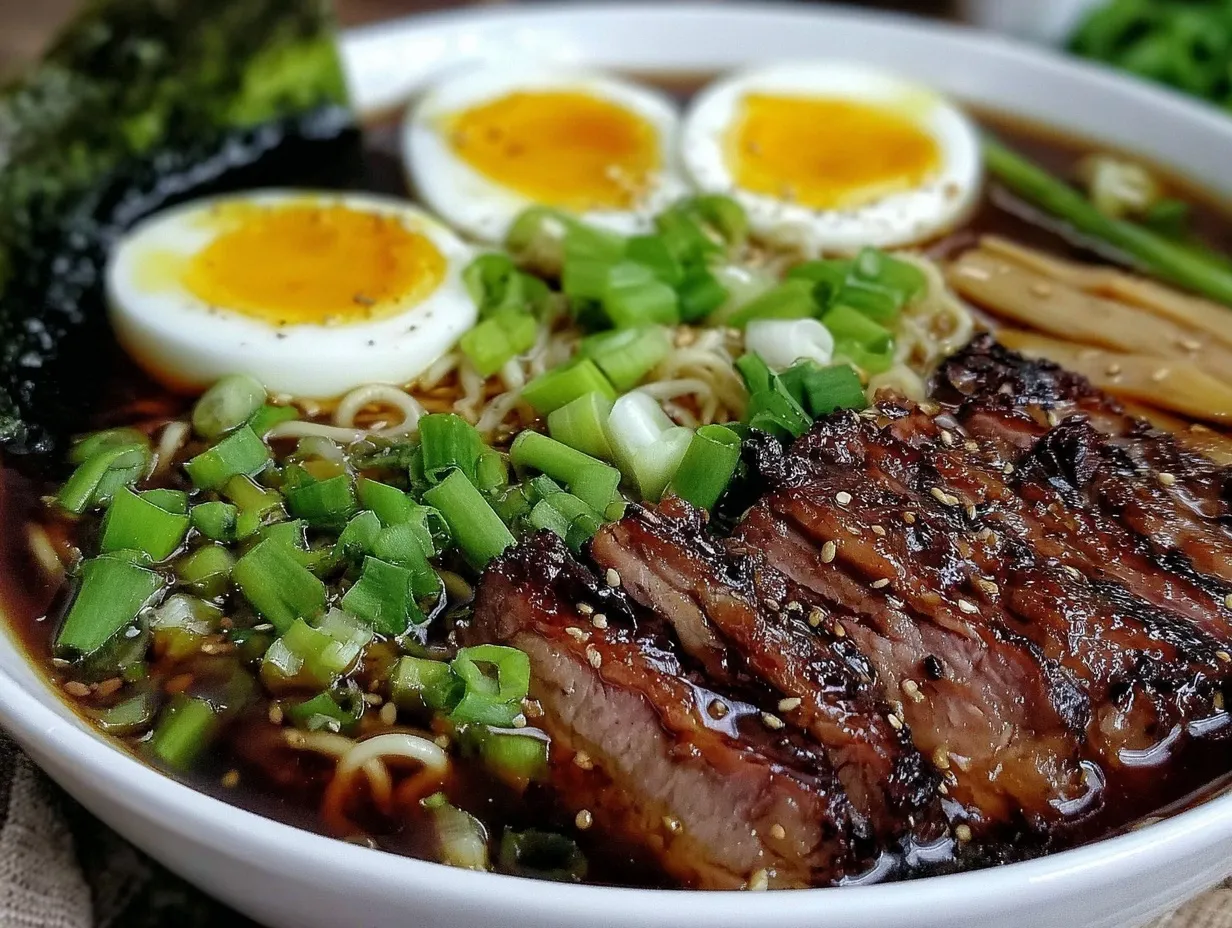
- Assemble bowls: Divide noodles between bowls. Ladle hot pork broth over noodles. Top with halved eggs, chashu, green onion greens, bean sprouts, nori sheets, and bamboo shoots.
Tip: Keep broth simmering gently—not rolling—to avoid cloudy soup. If broth tastes too strong, add a splash of water. The aroma should be inviting, with hints of garlic and pork richness filling your kitchen.
Cooking Tips & Techniques
Here are some nuggets I picked up through trial and error—things I wish someone told me before my first pork broth attempt:
- Don’t rush the broth: Low and slow simmering extracts the deepest flavor. Resist the urge to crank the heat.
- Skim often: Removing scum and fat keeps broth clean and less greasy. It might seem tedious but makes a difference.
- Use fresh bones: Frozen bones work, but fresh ones produce a clearer, richer broth.
- Balance your seasoning: Taste as you go when adding soy, mirin, and miso. You want layers, not salt overload.
- Don’t overcook noodles: They’ll continue softening in the broth. Slightly undercooked noodles hold up better.
- Prepare toppings in advance: Setting up your garnishes before assembly saves stress when the broth is ready.
- Multitask: While broth simmers, prep toppings or even try your hand at crispy garlic chicken for a hearty side.
Variations & Adaptations
This recipe is pretty flexible, so you can tailor it depending on your cravings or dietary needs:
- Vegetarian version: Swap pork bones for a mushroom and kombu broth. Use miso and soy to build umami.
- Spicy ramen: Add chili oil or fresh sliced chilies to the broth or as a finishing drizzle.
- Low-carb option: Replace noodles with spiralized zucchini or shirataki noodles for fewer carbs without losing texture.
- Seafood twist: Add cooked shrimp or soft-shell crab as topping for a coastal flair.
- Personal favorite: I sometimes throw in a spoonful of peanut butter to the broth for a subtle nutty undertone—unusual but surprisingly good!
Serving & Storage Suggestions
The soup is best served hot, right after assembling, so the noodles remain springy and broth steamy. Garnish with fresh green onions and a sprinkle of toasted sesame seeds for extra aroma.
Pair this ramen with a crisp cucumber salad or pickled vegetables to cut through the richness. For drinks, a chilled green tea or cold sake complements nicely.
Leftover broth can be refrigerated for up to 3 days or frozen for 2 months. Store noodles separately to avoid sogginess. When reheating, warm broth gently and add freshly cooked noodles and toppings for the best experience.
Flavors tend to deepen over time, so if you make broth in advance, it’ll taste even richer the next day—perfect for meal prepping.
Nutritional Information & Benefits
Here’s an approximate breakdown per serving (1 bowl): 450 calories, 30g protein, 15g fat, 40g carbohydrates.
This ramen is rich in collagen and minerals from pork bones, which may support joint health and skin elasticity. The broth’s ginger and garlic offer anti-inflammatory benefits, while miso provides probiotics aiding digestion.
Gluten-free soy sauce and noodles can be swapped for gluten-free alternatives, making this recipe adaptable for various diets. Just watch the toppings for allergens like eggs or seafood.
Personally, I appreciate this soup as a satisfying comfort meal that nourishes body and soul without feeling heavy or greasy.
Conclusion
This homemade ramen noodle soup with rich pork broth is a recipe I keep returning to when I want real comfort food that feels special but isn’t complicated. It’s a bowl that invites slow, mindful eating and the kind of satisfaction you don’t get from takeout.
Feel free to adjust toppings and seasoning to suit your taste—you might find your own signature spin on it. For me, this recipe is a little piece of calm in a busy week, and I hope it becomes that for you too.
If you make it, I’d love to hear how you customized your bowl or any tips you picked up along the way. Cooking is always better when shared.
Here’s to many cozy evenings with a bowl of warm, flavorful ramen!
FAQs
- Can I make the broth ahead of time? Absolutely! The broth actually tastes better after resting overnight. Just store it in the fridge and reheat gently before serving.
- What if I can’t find fresh ramen noodles? Dried ramen noodles work fine. Cook according to package instructions and avoid overcooking.
- Is it okay to use chicken bones instead of pork? Yes, but the broth will be lighter and less rich. You might want to add extra soy and miso for depth.
- How do I make soft-boiled eggs perfectly? Boil eggs for 6-7 minutes, then immediately transfer to an ice bath to stop cooking. Peel carefully and slice in half.
- Can I freeze the assembled ramen soup? It’s best to freeze the broth only. Noodles and toppings don’t freeze well and can turn mushy.
Pin This Recipe!
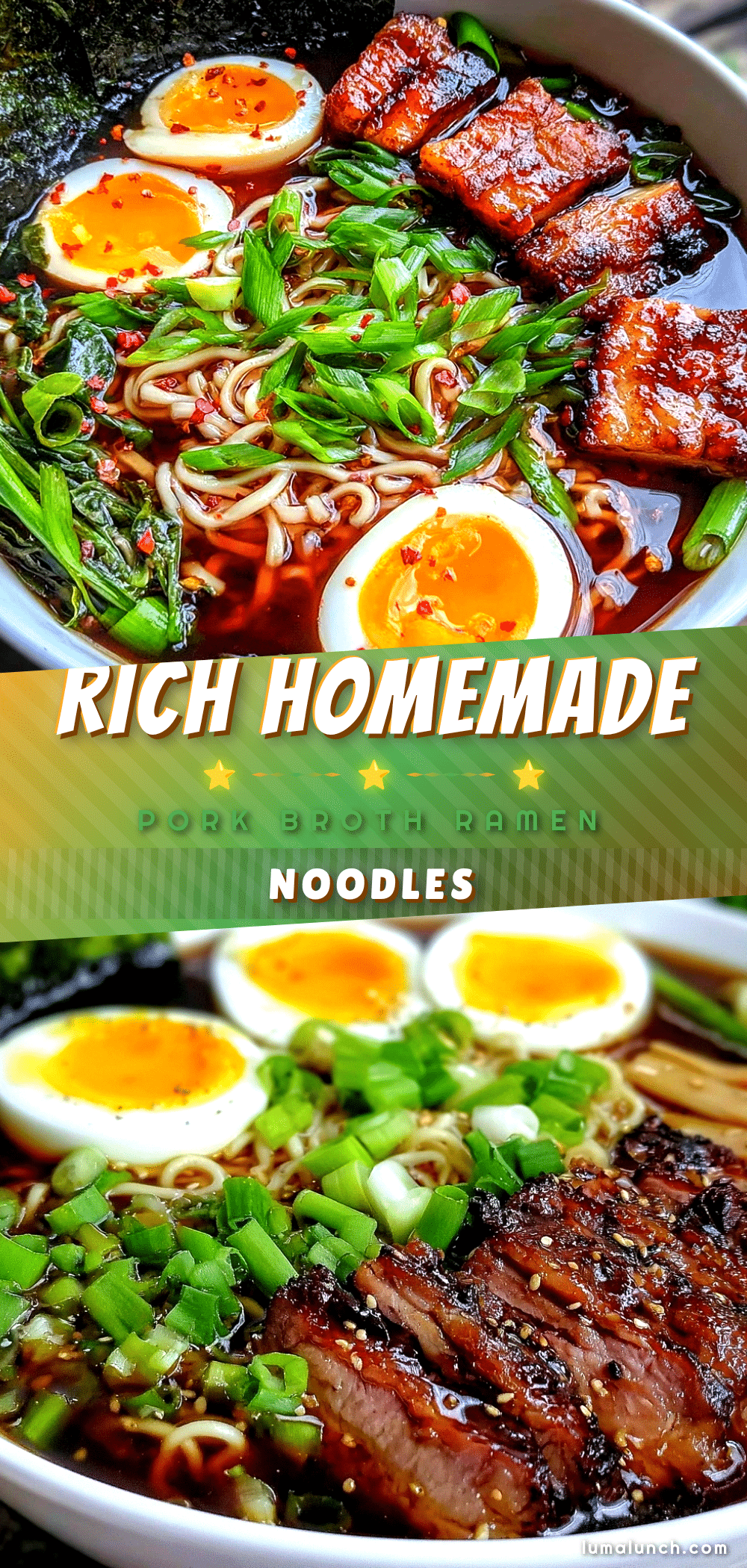
Homemade Ramen Noodle Soup Recipe Easy Rich Pork Broth Guide

A comforting homemade ramen noodle soup featuring a rich, slow-simmered pork broth paired with fresh noodles and classic toppings. Perfect for cozy dinners and easy enough for weeknight cooking.
- Prep Time: 20 minutes
- Cook Time: 3 hours 15 minutes
- Total Time: 3 hours 35 minutes
- Yield: 4 servings 1x
- Category: Main Course
- Cuisine: Japanese
Ingredients
- 3 pounds pork bones (neck or femur)
- 12 cups water
- 3-inch piece ginger, sliced
- 6 cloves garlic, smashed
- 4 stalks green onions, cut into thirds (whites for broth, greens for garnish)
- 4–5 dried shiitake mushrooms (optional)
- ½ cup soy sauce
- ¼ cup mirin
- 2 tablespoons miso paste (white or yellow)
- 12 ounces fresh ramen noodles
- 2–3 soft-boiled eggs, halved
- Thinly sliced chashu pork belly (optional)
- Bean sprouts (for garnish)
- Nori sheets (for garnish)
- Bamboo shoots (for garnish)
Instructions
- Rinse the pork bones under cold water. Place them in a stockpot, cover with cold water, and bring to a boil over high heat. Boil for 10 minutes, then drain and rinse bones to remove impurities.
- Return cleaned bones to the pot. Add 12 cups fresh cold water, sliced ginger, smashed garlic, green onion whites, and dried shiitake mushrooms. Bring to a gentle boil, then reduce heat to low. Simmer uncovered for 3 hours, skimming foam or fat every 30 minutes until broth is milky and fragrant.
- Strain the broth through a fine mesh strainer or cheesecloth into another pot or large bowl. Discard solids. Return broth to stockpot and keep warm on low heat.
- Stir in soy sauce, mirin, and miso paste. Adjust seasoning to taste.
- Bring a large pot of water to boil. Add fresh ramen noodles and cook for 2-3 minutes until tender but firm. Drain and rinse briefly under cold water to stop cooking. Set aside.
- Soft-boil eggs by boiling for 6-7 minutes, then shock in ice water before peeling. Slice chashu pork thinly. Prepare bean sprouts, nori, and bamboo shoots for garnish.
- Divide noodles between bowls. Ladle hot pork broth over noodles. Top with halved eggs, chashu, green onion greens, bean sprouts, nori sheets, and bamboo shoots.
Notes
Keep broth simmering gently to avoid cloudiness. Skim foam and fat regularly for a clean broth. Slightly undercook noodles as they soften in broth. Store broth separately from noodles to avoid sogginess. Broth tastes better after resting overnight. Use gluten-free soy sauce and noodles for gluten-free adaptation.
Nutrition
- Serving Size: 1 bowl
- Calories: 450
- Fat: 15
- Carbohydrates: 40
- Protein: 30
Keywords: ramen, homemade ramen, pork broth, noodle soup, Japanese soup, comfort food, easy ramen recipe