Love this? Save it for later!
Share the inspiration with your friends
“You’ve got to try these burnt ends,” my buddy Jeff said over the phone, almost whispering like he’d uncovered some sacred BBQ secret. Honestly, I was skeptical—burnt ends? I’d heard the name tossed around at cookouts, but I always assumed they were just the crispy scraps no one really wanted. That was until Jeff insisted I swing by his place one Saturday afternoon, promising these were unlike anything I’d tasted before.
When I arrived, the smell hit me first—a rich, smoky scent that clung to the air, thick and inviting. Jeff was standing by his smoker, proudly sliding trays of glistening, caramelized cubes onto the table. The burnt ends were glossy with this insane, sticky Kansas City-style BBQ glaze that caught the light like candy. One bite, and I was hooked. The tender, smoky beef paired with that sweet, tangy glaze was honest-to-goodness comfort food with a little serious swagger.
Since that day, I’ve found myself making these flavorful smoked beef brisket burnt ends with sticky KC BBQ glaze more times than I care to admit—sometimes twice in a week. They’re my go-to when friends come over or when I just need that slow-smoked, saucy goodness to remind me why BBQ is a love language. It’s not just about the meat; it’s the patience, the smoke, and that perfect glaze that turns simple brisket pieces into something truly special.
What’s funny is how this recipe stuck with me—not because it was complicated, but because it felt like a little reward after hours of slow cooking. It’s a quiet sort of joy, the kind you savor bite by bite, leaving a sticky, smoky trace on your fingers and a warm smile on your face.
Why You’ll Love This Recipe
After plenty of trial and error, I can confidently say this flavorful smoked beef brisket burnt ends recipe with sticky KC BBQ glaze stands out for several reasons:
- Slow-Smoked Perfection: The low-and-slow smoking method transforms tough brisket edges into tender, melt-in-your-mouth bites.
- Sticky KC BBQ Glaze: This isn’t just any glaze—the Kansas City-style sauce adds a perfect balance of sweet, smoky, and tangy notes that cling to each burnt end.
- Great for Gatherings: Whether it’s a backyard BBQ or a casual hangout, these burnt ends always get people talking. They’re easy to serve and even easier to devour.
- Hands-Off Cooking: The smoker does most of the work, so you can relax and enjoy the process (and the anticipation).
- Flavor That Soaks In: The seasoning and smoke penetrate deeply, giving each bite layers of rich, complex flavor.
What makes this recipe different? It’s the combination of a carefully trimmed brisket point, a homemade rub that respects tradition without overcomplicating, and a glaze that’s sticky but not cloying. I’ve tweaked the timing and sauce ratios to get that perfect bark and saucy finish that’ll make you close your eyes after the first bite—pure BBQ bliss.
Honestly, this recipe is my shortcut to impressing guests without the stress. It’s comfort food with soul, a smoky hug that’s surprisingly easy to make once you get the rhythm down.
What Ingredients You Will Need
This recipe uses simple, wholesome ingredients to deliver bold flavor and satisfying texture without the fuss. Most are staples you likely have on hand, with a few classic BBQ essentials for that authentic Kansas City taste.
- Beef Brisket Point (about 4-5 pounds) – This cut has the perfect fat marbling for burnt ends; ask your butcher for the point cut specifically.
- Yellow Mustard
- BBQ Dry Rub:
- Paprika (smoked if possible) – 2 tablespoons
- Brown sugar (light or dark, whichever you prefer) – 2 tablespoons
- Coarse black pepper – 1 tablespoon
- Salt (kosher or sea salt) – 1 tablespoon
- Garlic powder – 1 teaspoon
- Onion powder – 1 teaspoon
- Cayenne pepper – 1/2 teaspoon (adjust to your heat preference)
- Kansas City-Style BBQ Sauce:
- Ketchup – 1 cup
- Molasses – 1/4 cup (for deep sweetness)
- Apple cider vinegar – 2 tablespoons (adds tang)
- Worcestershire sauce – 1 tablespoon
- Honey – 2 tablespoons
- Smoked paprika – 1 teaspoon
- Garlic powder – 1/2 teaspoon
- Onion powder – 1/2 teaspoon
- Mustard powder – 1/2 teaspoon
- Black pepper – 1/4 teaspoon
- Butter – 2 tablespoons, cut into small pieces (helps create that sticky glaze)
- Wood Chips or Chunks – Hickory or oak are great choices for smoking.
Pro tip: I prefer using Kosmos Q rub for my dry mix when I want a shortcut, but making your own is just as rewarding. For a gluten-free option, double-check your BBQ sauce ingredients or swap with a certified gluten-free brand.
Equipment Needed
- Smoker or Charcoal Grill with Lid: Essential for that authentic smoky flavor. I find a Weber Smokey Mountain or a Traeger pellet grill works great, but even a charcoal kettle grill with indirect heat can do the trick.
- Meat Thermometer: A digital instant-read thermometer is a must to hit the right internal temperature without guesswork.
- Sharp Knife: For trimming the brisket point into cubes before smoking.
- Mixing Bowls: For combining rub ingredients and tossing the burnt ends with glaze.
- Foil or Pans: Disposable aluminum pans help contain the burnt ends during the saucing and final cooking phase.
- Heat-Resistant Gloves: Trust me, handling hot trays and coals is much safer and more comfortable.
If you don’t have a smoker, no worries—you can improvise with a charcoal grill and wood chunks for smoke. Just keep the temperature steady around 225°F (107°C). Also, keep your thermometer handy; it’s the difference between “almost done” and “perfectly tender.”
Preparation Method
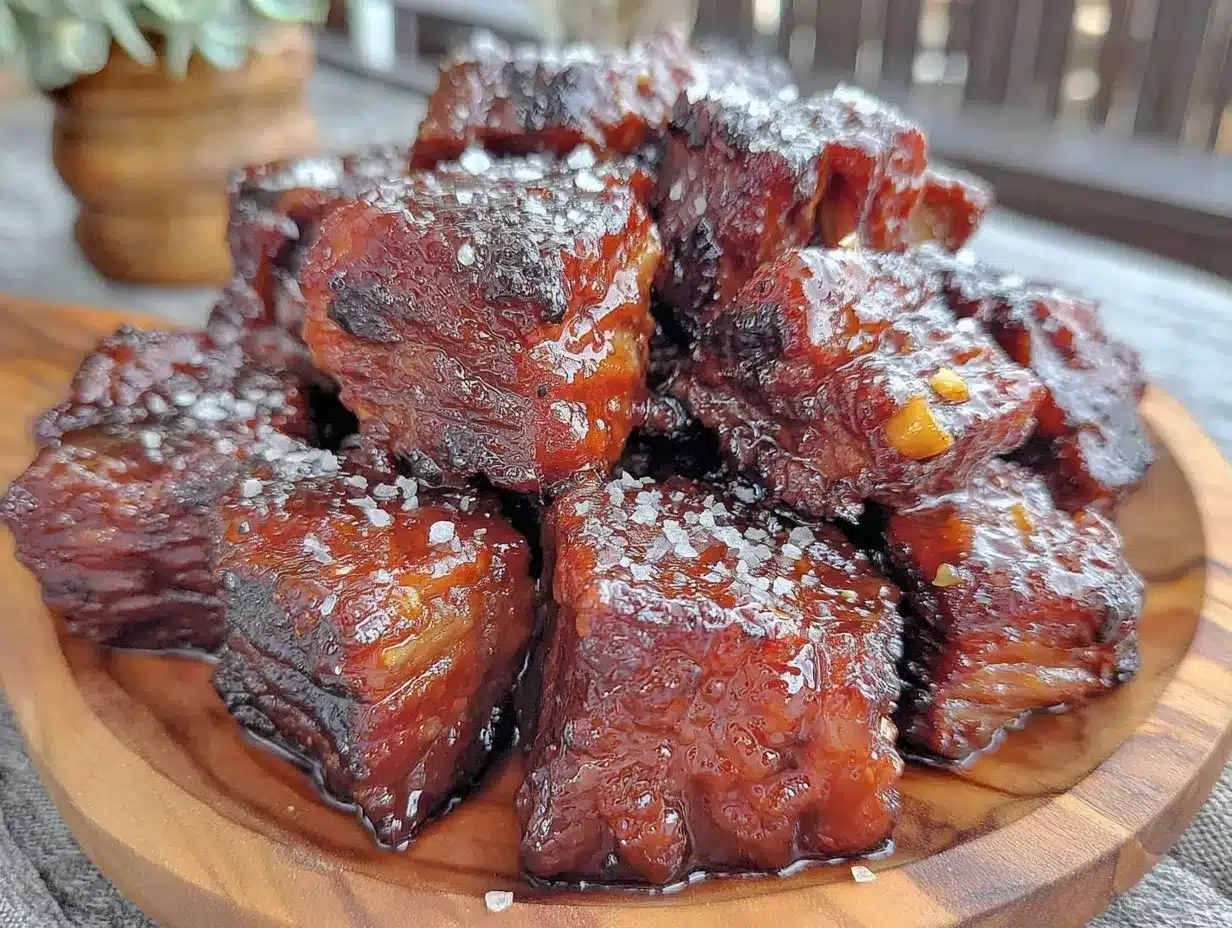
- Trim and Cube the Brisket Point: Start by trimming excess fat, leaving about 1/4 inch for flavor. Cut the brisket point into roughly 1.5-inch cubes. This size helps the pieces smoke evenly and develop a great bark. (Time estimate: 15-20 minutes)
- Apply the Mustard and Rub: Coat the brisket cubes lightly with yellow mustard—this acts as a binder, nothing more. Then, generously sprinkle the dry rub all over, making sure each piece is well-coated. Let the seasoned cubes rest while you prepare the smoker. (Time estimate: 10 minutes)
- Preheat Your Smoker: Bring your smoker or grill to a steady 225°F (107°C). Add hickory or oak wood chunks for a balanced smoke flavor. Maintain consistent temperature throughout the cook. (Time estimate: 30 minutes to stabilize)
- Smoke the Brisket Cubes: Place the cubes on the smoker grate spaced apart so smoke circulates freely. Smoke for about 2.5 to 3 hours until a deep mahogany bark forms and internal temperature reaches around 190°F (88°C). This is where patience pays off—the bark should be firm but not burnt. (Watch for flare-ups.)
- Toss in Glaze and Butter: Transfer smoked cubes into an aluminum pan. Pour your homemade KC BBQ sauce over the burnt ends, then scatter small butter pieces on top. Stir gently to coat everything and return the pan to the smoker. (Time estimate: 10 minutes)
- Final Cook for Caramelization: Smoke the sauced burnt ends for an additional 1 hour, stirring every 20 minutes to let the sauce thicken and become sticky. The butter melts into the sauce, creating that luscious glaze that clings to each piece.
- Rest and Serve: Once the burnt ends are sticky and bubbling, remove from smoker and let rest for 10 minutes. Serve warm, and prepare for compliments. (Resting lets the juices redistribute.)
Tip: Keep a spray bottle with apple juice or water nearby to control flare-ups without washing away the smoky bark. Also, avoid lifting the smoker lid too often to maintain steady temperature and smoke flow.
Cooking Tips & Techniques
Smoking beef brisket burnt ends is as much about technique as it is about patience. Here are some nuggets I’ve picked up along the way:
- Trim Carefully: Too much fat and the burnt ends become greasy; too little and they dry out. Aim for a balance with around 1/4 inch of fat cap.
- Consistent Temperature: Fluctuating heat is the enemy. Use a reliable smoker thermometer and adjust vents gradually.
- Use Wood Wisely: Hickory and oak provide that classic BBQ smoke without overpowering. Avoid resinous woods like pine—they taste nasty.
- Don’t Rush the Bark: The crust takes time to develop. Resist the urge to wrap or move the meat early.
- Glaze at the Right Time: Adding sauce too soon makes it runny; too late and it won’t stick. The last hour of smoking is ideal for glazing.
- Multi-tasking: While the burnt ends smoke, prep sides or make a fresh batch of sauce. This keeps the workflow smooth and stress-free.
- Personal Mistake: I once over-sauced my burnt ends early and ended up with a soggy mess. Lesson learned: patience with the glaze is key.
Variations & Adaptations
Feel free to mix things up with these variations that I’ve enjoyed or thought about trying:
- Spicy Kick: Add chipotle powder or cayenne to the rub and swap honey in the glaze for maple syrup to balance heat with sweetness.
- Gluten-Free Glaze: Use tamari instead of Worcestershire sauce and ensure your ketchup is gluten-free to keep the sauce safe for gluten-sensitive eaters.
- Smokeless Version: If you don’t have a smoker, try oven-roasting the cubed brisket at 275°F (135°C) with a smoke-flavored seasoning and finish with the BBQ glaze under the broiler for caramelization.
- Sweet & Tangy Twist: Incorporate pineapple juice into the glaze for a tropical note that brightens the dish.
- Personal Try: Once, I swapped butter for rendered bacon fat in the glaze—added an extra layer of smoky richness that blew my mind.
Serving & Storage Suggestions
These burnt ends are best served warm, right off the smoker or after a quick reheating. I like to plate them with some classic BBQ sides like baked beans, coleslaw, or creamy macaroni and cheese for a real down-home feast.
For storage, cool the burnt ends completely before placing them in an airtight container. They keep well in the refrigerator for up to 4 days. Reheat gently in the oven at 300°F (150°C) covered with foil to prevent drying out, or microwave covered in short bursts. I’ve even frozen leftovers in portioned bags for up to 3 months—just thaw overnight in the fridge before reheating.
Interestingly, the flavors deepen after a day or two as the sauce seeps further into the meat. So, if you’re not in a rush, make them ahead—you won’t regret it.
Nutritional Information & Benefits
This flavorful smoked beef brisket burnt ends recipe packs protein and satisfying fats, making it a hearty option for meat lovers. A typical 3-ounce (85g) serving contains approximately:
| Calories | 290 |
|---|---|
| Protein | 22g |
| Fat | 20g |
| Carbohydrates | 6g |
| Sugar | 4g |
The brisket provides essential nutrients like iron, zinc, and B vitamins, supporting energy and muscle health. The homemade BBQ sauce uses natural sweeteners like molasses and honey, which offer minerals and antioxidants in small amounts.
If you’re mindful of carbs, watch the amount of sauce used or try a low-sugar BBQ sauce alternative. For those avoiding dairy, simply omit the butter in the glaze or replace it with a plant-based fat.
Conclusion
There’s something quietly satisfying about sinking your teeth into these flavorful smoked beef brisket burnt ends with sticky KC BBQ glaze. It’s not just a recipe; it’s a slow-smoked moment of joy that rewards patience and promises a mouthful of smoky, sweet goodness every time.
Feel free to tweak the rub or sauce to suit your taste buds—that’s part of the fun! For me, these burnt ends are a reminder of good friends, long afternoons, and that simple pleasure of food made with care.
Give them a try, and don’t be surprised if they become your new favorite BBQ obsession. And hey, if you experiment with the glaze or discover your own twist, I’d love to hear about it in the comments below—sharing these smoky secrets is what good BBQ is all about.
FAQs
What cut of brisket is best for burnt ends?
The brisket point cut is the best choice because of its marbling and fat content, which helps keep the burnt ends tender and flavorful.
How long does it take to smoke burnt ends?
Plan for about 3 to 4 hours total—2.5 to 3 hours smoking the brisket cubes first, then about 1 hour with the BBQ glaze to caramelize.
Can I make burnt ends without a smoker?
Yes, you can use your oven or a charcoal grill with indirect heat and smoke-flavored seasoning, but the authentic smoky taste may be less intense.
What type of wood chips work best for this recipe?
Hickory and oak are classic choices that provide a balanced smoke flavor perfect for beef brisket burnt ends.
How do I store leftover burnt ends?
Store leftovers in an airtight container in the fridge for up to 4 days or freeze up to 3 months. Reheat gently to maintain moisture and flavor.
Pin This Recipe!
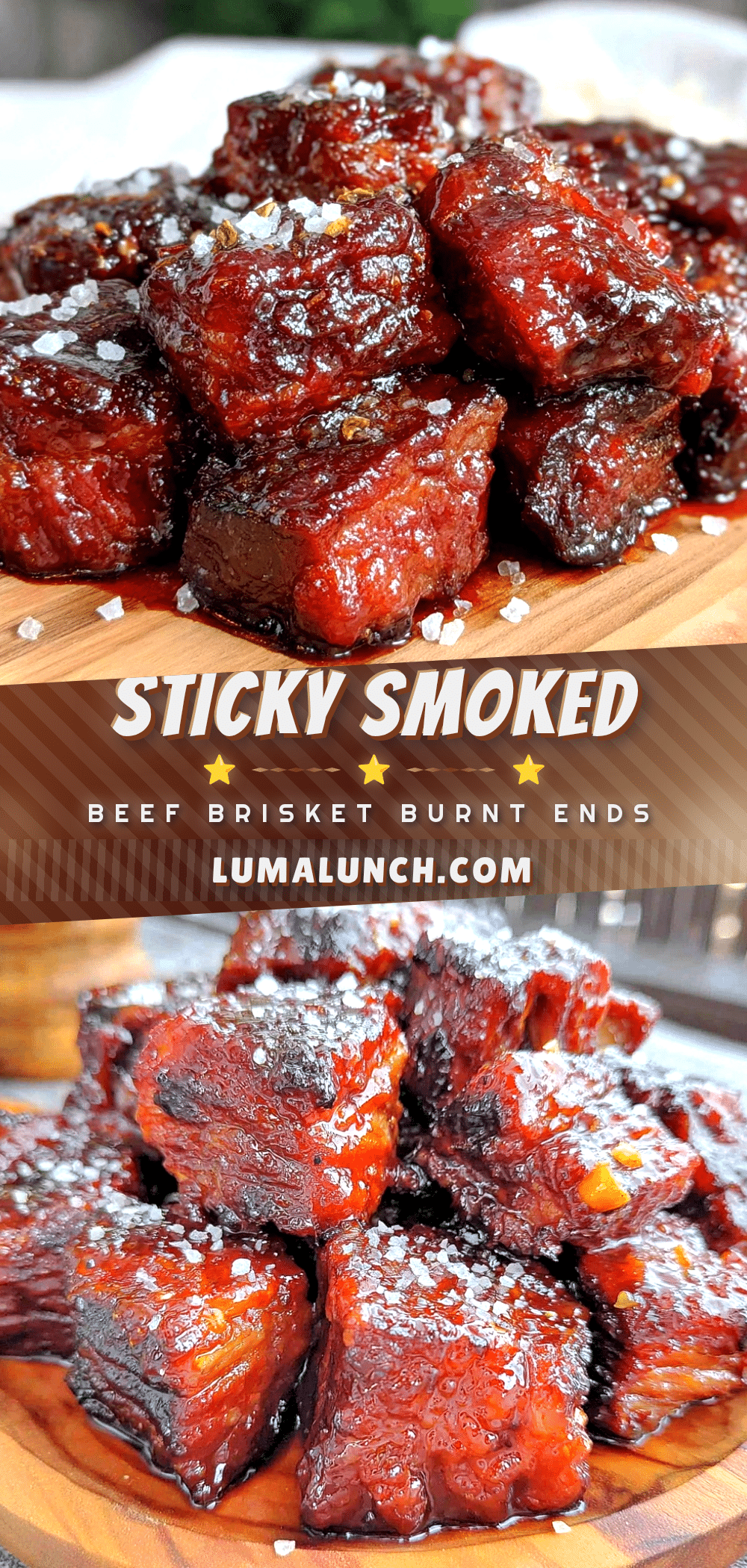
Flavorful Smoked Beef Brisket Burnt Ends Recipe with Sticky KC BBQ Glaze
Tender, smoky beef brisket burnt ends glazed with a sticky Kansas City-style BBQ sauce, slow-smoked to perfection for a melt-in-your-mouth BBQ experience.
- Prep Time: 30 minutes
- Cook Time: 4 hours
- Total Time: 4 hours 30 minutes
- Yield: 6-8 servings 1x
- Category: Main Course
- Cuisine: American, BBQ
Ingredients
- 4–5 pounds beef brisket point
- Yellow mustard (enough to lightly coat brisket cubes)
- BBQ Dry Rub:
- 2 tablespoons paprika (smoked if possible)
- 2 tablespoons brown sugar (light or dark)
- 1 tablespoon coarse black pepper
- 1 tablespoon salt (kosher or sea salt)
- 1 teaspoon garlic powder
- 1 teaspoon onion powder
- 1/2 teaspoon cayenne pepper (adjust to heat preference)
- Kansas City-Style BBQ Sauce:
- 1 cup ketchup
- 1/4 cup molasses
- 2 tablespoons apple cider vinegar
- 1 tablespoon Worcestershire sauce
- 2 tablespoons honey
- 1 teaspoon smoked paprika
- 1/2 teaspoon garlic powder
- 1/2 teaspoon onion powder
- 1/2 teaspoon mustard powder
- 1/4 teaspoon black pepper
- 2 tablespoons butter, cut into small pieces
- Wood chips or chunks (hickory or oak preferred)
Instructions
- Trim excess fat from the brisket point, leaving about 1/4 inch of fat for flavor. Cut the brisket into roughly 1.5-inch cubes.
- Lightly coat the brisket cubes with yellow mustard as a binder.
- Generously sprinkle the dry rub over the brisket cubes, ensuring each piece is well-coated. Let rest while preparing the smoker.
- Preheat your smoker or grill to a steady 225°F (107°C). Add hickory or oak wood chunks for smoke flavor.
- Place the brisket cubes spaced apart on the smoker grate. Smoke for 2.5 to 3 hours until a deep mahogany bark forms and internal temperature reaches about 190°F (88°C).
- Transfer the smoked cubes to an aluminum pan. Pour the homemade KC BBQ sauce over the burnt ends and scatter butter pieces on top. Stir gently to coat.
- Return the pan to the smoker and smoke for an additional 1 hour, stirring every 20 minutes to thicken the sauce and create a sticky glaze.
- Remove from smoker and let rest for 10 minutes before serving warm.
Notes
Keep a spray bottle with apple juice or water nearby to control flare-ups without washing away the bark. Avoid lifting the smoker lid too often to maintain steady temperature and smoke flow. For dairy-free, omit butter or substitute with plant-based fat. Use gluten-free BBQ sauce for gluten-free diet.
Nutrition
- Serving Size: 3 ounces (85 grams)
- Calories: 290
- Sugar: 4
- Fat: 20
- Carbohydrates: 6
- Protein: 22
Keywords: smoked beef brisket, burnt ends, Kansas City BBQ, BBQ glaze, smoked meat, slow smoked brisket, BBQ recipe