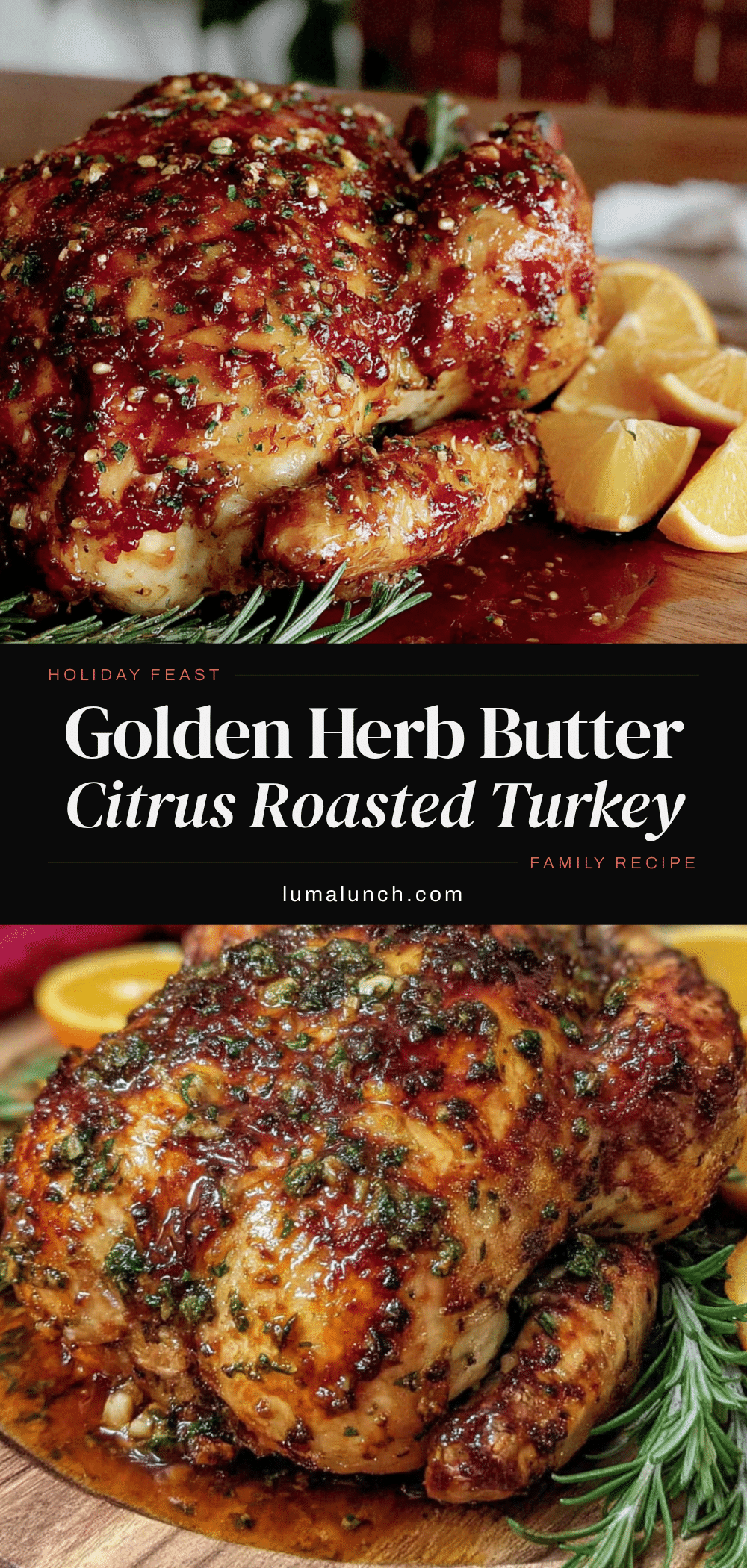
Love this? Save it for later!
Share the inspiration with your friends
Pat wasn’t trying to impress anyone. I’d stopped by her place to drop off a casserole dish I’d borrowed, and that smell hit me before I even made it past the screen door. Her kitchen was warm, a little steamy, and there she was, basting this massive turkey like it was the most normal Tuesday afternoon thing in the world.
“Oh, it’s just a bird,” she said when I asked, waving a spoon at it. “Nothing fancy.”
But the thing was, it was fancy. The skin was this ridiculous shade of deep gold, almost bronze, and I could see little flecks of herbs and what looked like thin slices of citrus tucked under the skin. It smelled like butter and rosemary and something bright, like lemon but better. I stood there in her doorway, still holding the casserole dish, completely mesmerized by a turkey. Maybe you’ve been there—where a smell just stops you cold and you know you’re about to ask for a recipe before you even taste it.
Pat plated a little slice for me, just a taste, and honestly, it was the best turkey I’d ever had. The meat was juicy in a way that seemed impossible for white meat, and that herb butter had seeped right into every bite. The citrus gave it this lift, this freshness that cut through the richness without taking anything away. I asked her how she did it, and she just shrugged. “Butter, herbs, oranges, lemons. The usual.”
It wasn’t the usual, though. I’ve been making this Golden Herb Butter Citrus Roasted Turkey ever since, and every time I pull it out of the oven, I think of Pat’s nonchalant shrug. That’s the magic of this recipe—it looks like you spent all day on it, but the technique is so simple, so forgiving, that it feels like cheating. This is the turkey that makes people close their eyes after the first bite. And honestly, that never gets old.
Why You’ll Love This Recipe
This isn’t just another turkey recipe. I’ve roasted a lot of birds over the years, and this one is special. It’s the one I turn to when I want to feel like a rockstar in the kitchen without the stress.
- Foolproof Juiciness: The herb butter acts as a protective layer, locking in moisture while the citrus infuses the meat from the inside out. You won’t get dry breast meat here—I promise.
- Simple, Everyday Ingredients: You don’t need a specialty store or a second mortgage. Butter, fresh herbs, lemons, oranges, garlic, salt, and pepper. That’s the whole grocery list.
- Perfect for Holidays or Any Special Meal: Whether it’s Thanksgiving, Christmas, Easter, or just a Sunday dinner you want to make memorable, this turkey delivers.
- Impressive Without the Stress: The technique is straightforward, but the result looks like it came from a professional kitchen. Your guests will think you slaved away for hours.
- Next-Level Flavor: The combination of herby, buttery richness with bright, citrusy notes is honestly addictive. It’s comfort food that feels fresh and bright.
What makes this recipe different from the rest? It’s the balance. So many roasted turkeys are either too dry or too greasy. This one hits the sweet spot. The butter and citrus work together to create a gravy in the pan that’s out of this world, and the skin gets perfectly crisp while the meat stays tender. It’s the kind of dish that makes you grateful for the people around your table.
What Ingredients You Will Need
This Golden Herb Butter Citrus Roasted Turkey uses a handful of simple, high-quality ingredients to create something truly spectacular. The magic is in the combination and the technique.
- Whole Turkey (10-14 lbs / 4.5-6.3 kg): Make sure it’s fully thawed if frozen. I prefer a fresh bird when possible for the best texture. Remove the giblets and neck from the cavity before you start.
- Unsalted Butter (1 cup / 2 sticks / 226 g), softened: Using unsalted butter lets you control the salt level. Make sure it’s at room temperature so it blends smoothly with the herbs.
- Fresh Rosemary (3 tbsp, finely chopped): Don’t use dried here if you can help it—fresh rosemary brings a piney, aromatic quality that’s essential.
- Fresh Thyme (2 tbsp leaves, chopped): Thyme is earthy and a little floral. It pairs beautifully with the citrus.
- Fresh Sage (2 tbsp, finely chopped): Sage is the classic turkey herb. It adds a slightly peppery, savory note.
- Garlic (4-5 cloves, minced): Fresh garlic is non-negotiable. It melts into the butter and perfumes the whole bird.
- Lemons (2 large): One lemon will be zested and juiced for the butter, the other will be quartered and stuffed inside the cavity.
- Oranges (2 large): One orange for zest and juice in the butter, one quartered for the cavity. The sweetness of the orange balances the tart lemon.
- Kosher Salt (2 tbsp): Use a coarse salt for even seasoning. I recommend Diamond Crystal or Morton’s.
- Black Pepper (1 tbsp, freshly ground): Freshly ground pepper makes a difference in flavor.
- Onion (1 large, quartered): Adds sweetness and depth to the cavity and the pan drippings.
- Chicken or Turkey Broth (1 cup / 240 ml): For the bottom of the roasting pan. This creates steam and prevents the drippings from burning.
Ingredient Selection Tips: Look for a turkey that has a good fat cap under the skin—that fat will render and baste the meat as it roasts. For the citrus, choose firm, heavy fruits; they’ll be juicier. If you can find Meyer lemons, they’re a bit sweeter and less acidic, which is lovely here.
Substitution Guidance: If you’re dairy-free, you can use a high-quality vegan butter stick in place of the regular butter. For a different herb profile, try adding a tablespoon of fresh tarragon or marjoram. If you don’t have fresh herbs, you can use dried—just reduce the amount by half.
Equipment Needed
You don’t need a ton of fancy gear for this recipe, but having the right tools makes the process smoother.
- Roasting Pan with a Rack: A sturdy pan is key. The rack lifts the turkey so hot air can circulate, giving you even cooking and crispier skin. If you don’t have a rack, you can use halved onions or celery stalks as a makeshift rack.
- Instant-Read Meat Thermometer: This is non-negotiable for poultry. It’s the only way to guarantee your turkey is cooked perfectly without being dry. I love my Thermapen for its speed and accuracy.
- Kitchen Twine: For trussing the legs. It helps the turkey cook evenly and keeps the stuffing (if you use it) inside. You can skip this, but the presentation is nicer with it.
- Pastry Brush or Basting Brush: For slathering that herb butter all over the skin. A silicone brush is easy to clean.
- Large Cutting Board: You’ll need a sturdy board for carving. One with a groove to catch juices is ideal.
- Aluminum Foil: For tenting the turkey if the skin gets too brown before it’s done, and for resting the bird after it comes out of the oven.
- Basting Bulb or Ladle: For spooning pan juices over the turkey during roasting. A bulb baster is easier, but a ladle works fine too.
Budget-Friendly Tip: You don’t need to spend a lot on a roasting pan. A heavy-duty disposable aluminum pan works in a pinch, just be careful when lifting it out of the oven—it can be flimsy.
Preparation Method
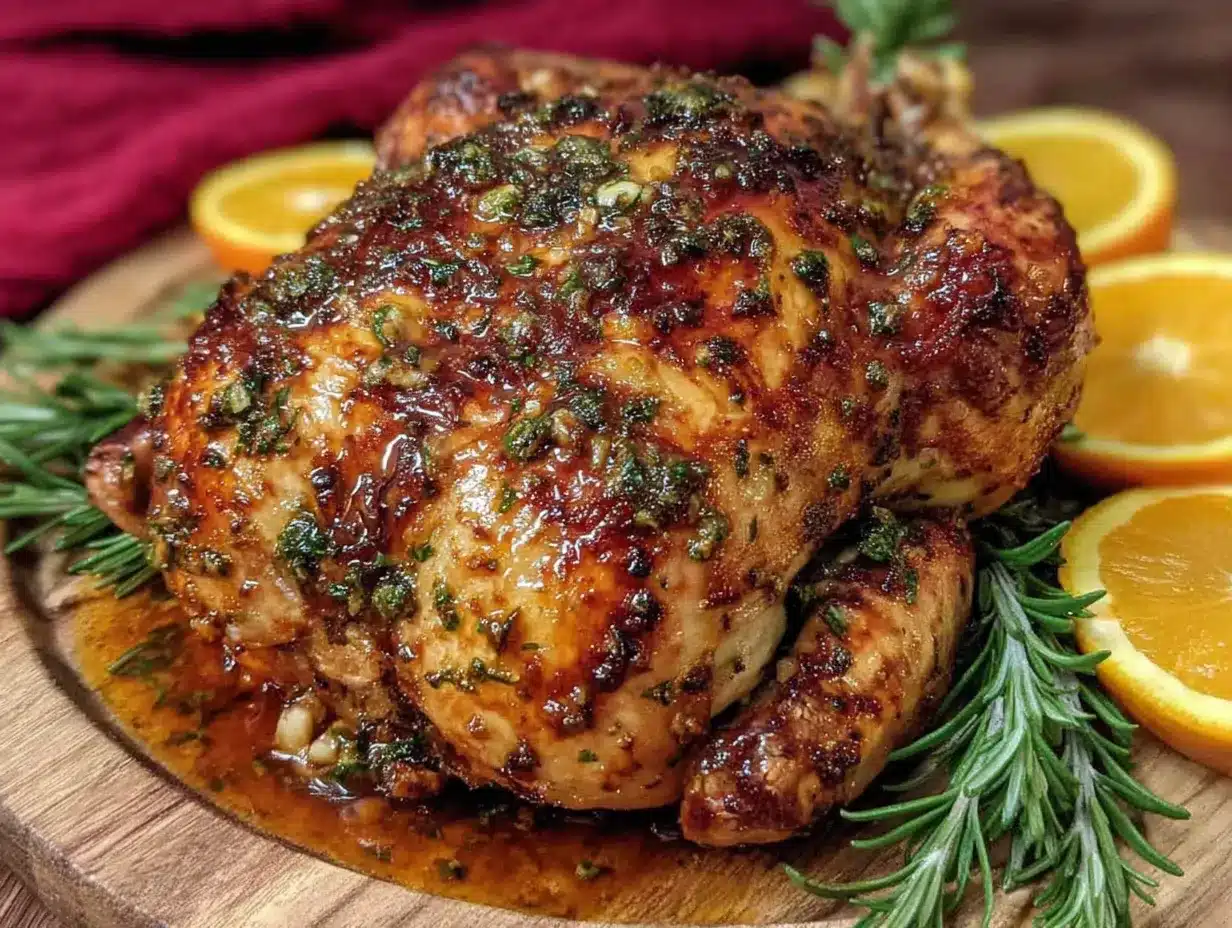
Let’s get that turkey in the oven. This method is straightforward, but I’ll walk you through every step so you feel confident.
- Prep the Turkey: Take your turkey out of the fridge about 1 hour before roasting. Pat it completely dry with paper towels—inside and out. This is the most important step for crispy skin. Let it sit on a rimmed baking sheet on the counter to come up to room temperature slightly.
- Make the Herb Butter: In a medium bowl, combine the softened butter, chopped rosemary, thyme, sage, minced garlic, the zest of one lemon and one orange, and the juice of half the lemon and half the orange. Add 1 teaspoon of salt and 1/2 teaspoon of pepper. Mix everything together until it’s well combined. Taste a tiny bit on your finger—it should be bright and savory.
- Loosen the Skin: Using your fingers, gently work your way under the skin of the turkey breast. Start at the neck cavity and slowly separate the skin from the meat, being careful not to tear it. Work your way down over the breast and onto the tops of the legs.
- Apply the Butter: Take about two-thirds of the herb butter and push it under the loosened skin directly onto the breast meat. Spread it as evenly as you can with your fingers. Then, rub the remaining butter all over the outside of the turkey skin. Don’t forget the wings and the back.
- Season the Bird: Sprinkle the remaining salt and pepper all over the outside of the turkey. Be generous—this is your main seasoning.
- Stuff the Cavity: Stuff the cavity with the quartered lemon, quartered orange, and quartered onion. Don’t pack it too tight; you just want the aromatics in there to perfume the meat from the inside.
- Truss the Turkey: Tuck the wing tips under the bird (this prevents them from burning). Tie the legs together with kitchen twine at the ankles. This helps the turkey cook evenly.
- Set Up the Pan: Place the turkey breast-side up on the rack in your roasting pan. Pour the 1 cup of broth into the bottom of the pan—not over the turkey.
- Roast: Preheat your oven to 425°F (220°C). Place the turkey in the oven and roast at this high temperature for 30 minutes. This high heat kick-starts the browning process.
- Reduce Heat and Baste: After 30 minutes, reduce the oven temperature to 350°F (175°C). Baste the turkey with the pan juices. Continue roasting, basting every 30-45 minutes with the pan juices. If the skin is getting too dark, tent a piece of aluminum foil loosely over the breast.
- Check for Doneness: Start checking the internal temperature about 1 hour and 45 minutes into the total roasting time (for a 12-lb bird). Insert your instant-read thermometer into the thickest part of the thigh, avoiding the bone. It should read 165°F (74°C). The breast should be around 160°F (71°C), as it will continue to rise while resting.
- Rest: Once the turkey is done, carefully transfer it to a cutting board. Tent it loosely with foil and let it rest for at least 30 minutes. This is crucial—it allows the juices to redistribute so every slice is moist.
Sensory Cue: When it’s done, the skin will be a deep, burnished gold, almost caramelized. The aroma will be intoxicating—herby, buttery, and sweetly citrusy. When you insert the thermometer, the juices should run clear, not pink.
Cooking Tips & Techniques
I’ve learned a few things the hard way over the years. Here are my best tips for making this turkey perfect every time.
Don’t Skip the Drying Step: I know it seems tedious, but patting that bird dry is the number one secret to crispy skin. Moisture is the enemy of browning. Let it air-dry in the fridge uncovered overnight if you have time—it’s a game-changer.
Use a Thermometer, Not a Timer: Ovens vary wildly. A 12-pound turkey might take 2.5 hours in one oven and 3 hours in another. The thermometer doesn’t lie. Pull it at the right temp, and you’ll never have dry turkey again.
Don’t Over-Baste: Basting is great for flavor, but every time you open the oven door, you lose heat and extend the cooking time. Stick to basting every 30-45 minutes, and work quickly.
My Biggest Failure: The first time I made this, I forgot to loosen the skin properly. I just slathered the butter on top. The skin was beautiful, but the breast meat underneath was bland. Getting that butter under the skin is what makes this recipe sing. Don’t skip it.
Make-Ahead Gravy: While the turkey rests, pour the pan drippings into a fat separator. Use the defatted juices to make a quick gravy. Whisk in a little flour or cornstarch slurry, simmer until thickened, and you’re golden.
Variations & Adaptations
This recipe is a fantastic base. Here are a few ways to make it your own.
- Spice It Up: Add 1 teaspoon of smoked paprika and 1/2 teaspoon of cayenne pepper to the herb butter for a smoky, slightly spicy twist. It’s incredible.
- Herb Swap: Not a fan of sage? Use 2 tablespoons of fresh tarragon instead. It has a lovely anise-like flavor that pairs beautifully with the citrus.
- Citrus Mix-Up: Try using a grapefruit in place of one of the oranges. It’s a little more bitter and complex, and it adds a beautiful pink hue to the pan juices.
- Gluten-Free Option: This recipe is naturally gluten-free. Just make sure your broth is certified gluten-free if you have celiac disease.
- Air Fryer Turkey Breast: If you’re cooking for a smaller crowd, you can adapt this for a bone-in turkey breast in an air fryer. Reduce the butter to 4 tablespoons, rub it under and over the skin, and cook at 375°F (190°C) for about 45-55 minutes, or until the internal temp hits 160°F (71°C).
Personal Variation: Last Thanksgiving, I added a tablespoon of honey to the herb butter. It gave the skin a gorgeous, glossy sheen and a hint of sweetness that balanced the citrus perfectly. I’ve done it every time since.
Serving & Storage Suggestions
This turkey is the star of the show, but it loves company.
Serving Temperature: Serve the turkey warm, not piping hot. After its 30-minute rest, it will be at the perfect temperature for carving. Arrange the slices on a warm platter and spoon a little of the pan juices over the top to keep everything moist.
What to Serve With It: This turkey pairs beautifully with classic sides. Try it with creamy mashed potatoes, a tangy cranberry sauce, roasted Brussels sprouts with balsamic glaze, or a simple green salad with a lemon vinaigrette. For a special touch, serve it with a side of crispy garlic chicken if you’re feeding a crowd that wants options.
Storage: Leftover turkey should be cooled completely, then stored in an airtight container in the refrigerator. It will keep for up to 4 days. The flavor actually gets better after a day or two as the herbs and citrus continue to meld.
Reheating: The best way to reheat turkey without drying it out is in a low oven. Place slices in a baking dish, add a splash of turkey broth or water, cover with foil, and warm at 300°F (150°C) for 10-15 minutes. You can also reheat it in a skillet with a little butter over medium-low heat.
Freezer: Shredded or sliced turkey freezes beautifully. Store it in a freezer-safe bag or container for up to 3 months. Thaw in the fridge overnight before reheating.
Nutritional Information & Benefits
This turkey is a wonderful source of lean protein, and the herbs and citrus add a boost of nutrients and antioxidants.
Estimated Per Serving (6 oz / 170g serving, skinless, without gravy):
- Calories: 350
- Protein: 45g
- Fat: 18g (mostly from the butter, some from the skin)
- Carbohydrates: 2g
- Fiber: 0g
- Sugar: 1g
Health Benefits: Turkey is an excellent source of tryptophan, which helps produce serotonin and melatonin, supporting mood and sleep. The herbs—rosemary, thyme, and sage—are packed with antioxidants and anti-inflammatory compounds. The citrus provides a good dose of vitamin C, which supports immune health.
Dietary Considerations: This recipe is naturally gluten-free, dairy-free (if you use a vegan butter), and low-carb. It’s also Whole30-friendly if you skip the honey variation. Potential allergens include dairy (butter) and, in some cases, citrus (for those with sensitivities).
Personal Wellness Perspective: I love that this dish feels indulgent but is actually built on whole, nutritious ingredients. It’s the kind of meal that nourishes your body and your soul at the same time.
Conclusion
This Golden Herb Butter Citrus Roasted Turkey is more than a recipe—it’s a centerpiece. It’s the dish that makes people pause, take a deep breath, and feel grateful to be gathered around the table. The combination of rich, herby butter and bright, sunny citrus is simply unforgettable.
I hope you give it a try for your next special meal. Don’t be afraid to make it your own—swap the herbs, try a different citrus, add a little honey. The beauty of this recipe is how forgiving and adaptable it is.
I’d love to hear how it turns out for you. Did you make any changes? Was it a hit with your family? Drop a comment below and let me know. And if you’re looking for another showstopper to round out your menu, don’t miss my take on crispy garlic chicken—it’s a weeknight miracle.
Happy roasting, friend. You’ve got this.
Frequently Asked Questions
Can I use dried herbs instead of fresh?
Yes, you can. If you’re using dried herbs, reduce the amount by about half. Fresh herbs give a brighter, more vibrant flavor, but dried will still work in a pinch. Just make sure they’re not too old—stale dried herbs can taste dusty.
How do I keep the turkey from drying out?
The herb butter under the skin is your best defense against dryness. It bastes the meat from the inside as it melts. Also, don’t overcook it—use a meat thermometer and pull it at the right temperature. Letting it rest for 30 minutes before carving is also crucial for moisture retention.
Can I prepare the herb butter ahead of time?
Absolutely. You can make the herb butter up to 3 days in advance. Store it in an airtight container in the refrigerator. Let it come to room temperature for about 30 minutes before using so it’s spreadable.
What if my turkey is frozen?
Thaw your turkey in the refrigerator. It takes about 24 hours for every 4-5 pounds of turkey. A 12-pound bird will need about 3 days to thaw completely. Never thaw a turkey on the counter—it’s a food safety risk.
Can I stuff the turkey with stuffing?
You can, but I don’t recommend it. Stuffed turkeys take much longer to cook, and the stuffing can become a food safety hazard if it doesn’t reach 165°F (74°C). It also dries out the breast meat. I prefer to bake my stuffing separately in a casserole dish and use the citrus and onion in the cavity for flavor.
Pin This Recipe!