Love this? Save it for later!
Share the inspiration with your friends
“Hey, you’ve got to try this chicken pad thai I whipped up last night,” my coworker texted me just as I was thinking about what to cook for dinner. Honestly, I was skeptical at first—pad thai always seemed like one of those dishes best left to street vendors in Bangkok or fancy Thai restaurants. But I was also tired and didn’t want to spend forever in the kitchen. So, I gave it a shot.
What I didn’t expect was how quickly the tangy tamarind sauce came together, brightening the entire dish with just the right balance of sweet, sour, and salty. The chicken cooked up tender and juicy, and those slippery rice noodles soaked up the sauce perfectly. The smell alone made me pause and savor the moment before digging in (and yes, I might have taken a bite before plating it—don’t judge!).
It wasn’t about fancy ingredients or complicated steps. This easy chicken pad thai with tangy tamarind sauce became that quiet, satisfying dinner that turned a hectic day into something a little less chaotic. It’s the kind of meal that makes you realize sometimes simple flavors are the best comfort food. And honestly, it stuck with me because it felt like a little Thai street food magic right in my own kitchen.
Why You’ll Love This Recipe
After testing this recipe multiple times (okay, maybe more than I should admit), I can say it’s a keeper for several reasons. Here’s why this easy chicken pad thai with tangy tamarind sauce has become my go-to:
- Quick & Easy: Ready in under 30 minutes, perfect for those busy evenings when you crave something flavorful without the fuss.
- Simple Ingredients: No need for exotic stores—most of these are pantry staples, and tamarind paste can be found in the international aisle or online.
- Perfect for Casual Dinners: Whether it’s a midweek meal or a casual weekend treat, it hits the spot every time.
- Crowd-Pleaser: Family and friends alike can’t get enough of the tangy, slightly sweet sauce paired with tender chicken and noodles.
- Flavor That Stands Out: The tangy tamarind sauce sets this apart from other pad thai recipes—it’s balanced, bright, and authentic without being intimidating.
What really makes this recipe different is the sauce—blending tamarind, fish sauce, and a touch of palm sugar gives it that unmistakable zing that makes you close your eyes with the first bite. Plus, I like to toss in crunchy peanuts and fresh lime at the end for that extra layer of texture and freshness. It’s comfort food that feels special but doesn’t demand hours in the kitchen. Honestly, if you’ve been hesitant about making pad thai at home, this recipe will change your mind.
What Ingredients You Will Need
This easy chicken pad thai recipe uses simple, wholesome ingredients to deliver bold flavor and satisfying texture without the fuss. Most are pantry staples or easy to find, and I’ll note a few swaps for dietary preferences below.
- Rice noodles: 8 ounces (225 grams) flat rice noodles, soaked or boiled until tender but still firm (I prefer the brand Three Ladies for consistent texture).
- Chicken breast: 1 pound (450 grams), thinly sliced into bite-sized strips.
- Tamarind paste: 3 tablespoons (adds that signature tang; I recommend Mae Ploy brand for authentic flavor).
- Fish sauce: 3 tablespoons (for umami depth; substitute with soy sauce for a vegetarian option).
- Palm sugar: 2 tablespoons, finely grated (balances the tang and saltiness; brown sugar works in a pinch).
- Garlic: 3 cloves, minced (aromatic base).
- Eggs: 2 large, lightly beaten.
- Green onions: 3, sliced thinly (adds freshness).
- Bean sprouts: 1 cup, rinsed and drained (for crunch).
- Roasted peanuts: ½ cup, chopped coarsely (essential for texture; you can toast them yourself for extra flavor).
- Lime wedges: For serving (brightens the dish).
- Vegetable oil: 2 tablespoons, for cooking (neutral flavor).
- Optional chili flakes: To taste, if you like a little kick.
If tamarind paste is hard to find, you can mix 1 tablespoon tamarind concentrate with 2 tablespoons warm water to mimic the flavor. For a gluten-free version, double-check your fish sauce or swap with coconut aminos. It’s all about making this recipe work for your kitchen and taste buds.
Equipment Needed
- Large skillet or wok: A good non-stick or well-seasoned wok is ideal for stir-frying the chicken and noodles evenly. I’ve used both, and while a wok heats faster, a large skillet works just fine if you don’t have one.
- Mixing bowls: For soaking noodles and beating eggs.
- Measuring spoons and cups: To keep the sauce balanced.
- Spatula or wooden spoon: For stirring without scratching your pans.
- Knife and cutting board: For prepping chicken and veggies.
If you don’t have a wok, a heavy-bottomed skillet will do just fine, and using a bamboo steamer basket to soften noodles before cooking can save time. I usually keep a dedicated wooden spatula for my non-stick pans to prevent any scratches.
Preparation Method
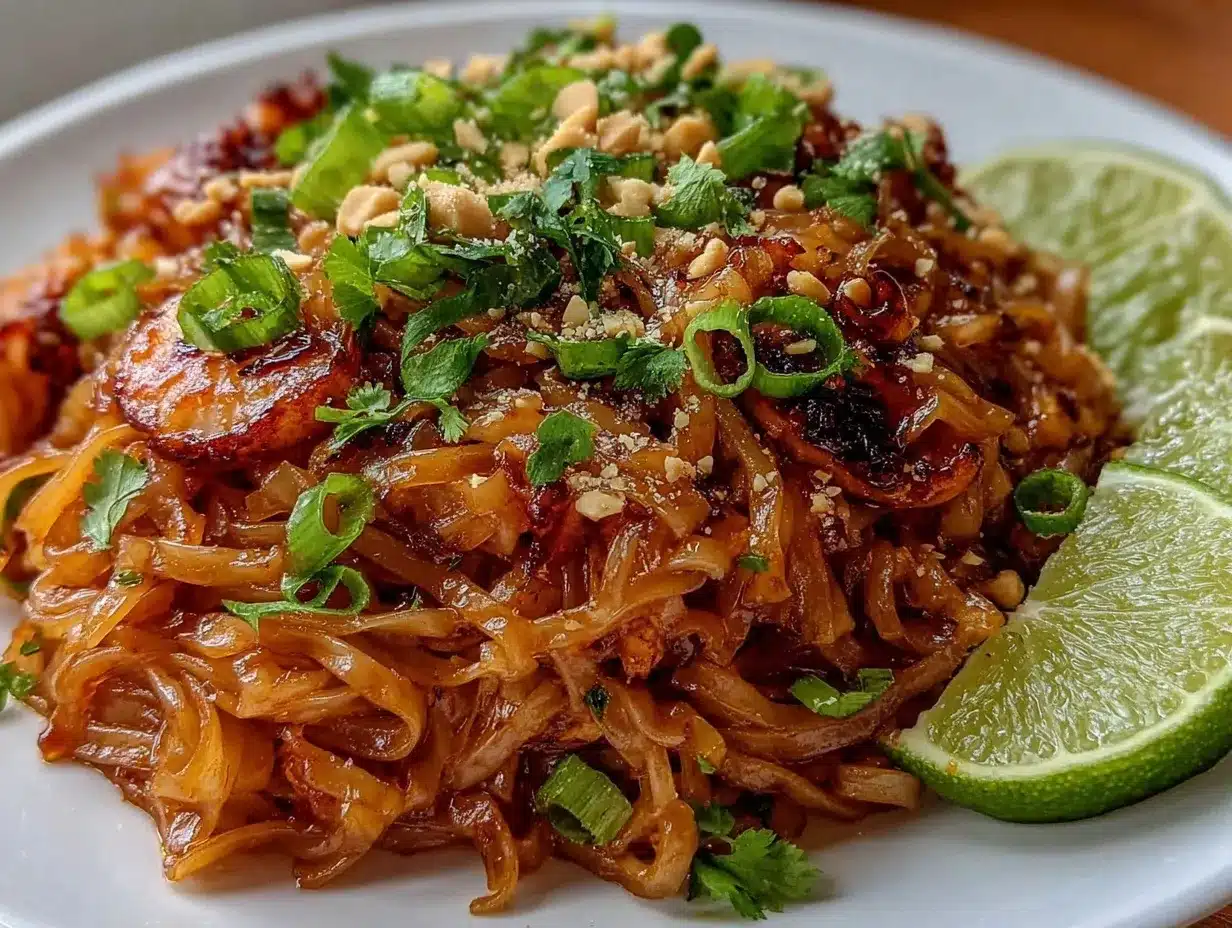
- Prepare the noodles: Soak 8 ounces (225 grams) of flat rice noodles in warm water for about 20 minutes until pliable but still firm to the bite. Drain and set aside. (If you’re short on time, boiling for 3-4 minutes also works, but watch carefully so they don’t overcook.)
- Mix the sauce: In a small bowl, combine 3 tablespoons tamarind paste, 3 tablespoons fish sauce, and 2 tablespoons grated palm sugar. Stir until sugar dissolves completely. Taste and adjust if needed—this sauce should be tangy, salty, and slightly sweet.
- Cook the chicken: Heat 2 tablespoons vegetable oil in a large skillet or wok over medium-high heat. Add thinly sliced 1 pound (450 grams) chicken breast and stir-fry for 4-5 minutes until cooked through and lightly golden. Remove chicken from the pan and set aside.
- Sauté garlic: In the same pan, add minced garlic (3 cloves) and cook for about 30 seconds until fragrant but not browned.
- Cook eggs: Pour in the 2 lightly beaten eggs. Stir gently to scramble, cooking until just set but still soft.
- Add noodles and sauce: Toss in the drained noodles and pour the tamarind sauce mixture over everything. Stir-fry quickly for 2-3 minutes, making sure noodles are evenly coated and heated through.
- Combine chicken and veggies: Return the cooked chicken to the pan along with 3 sliced green onions and 1 cup bean sprouts. Stir well to mix and warm everything together for another minute.
- Final touches: Remove from heat. Sprinkle chopped roasted peanuts over the top and serve with lime wedges on the side. Optionally, add chili flakes to taste.
If your noodles stick together, a quick splash of water or a drizzle of oil during stir-fry helps loosen them. The key is to keep the heat high and stir constantly for that perfect texture. Also, don’t overcook the eggs—soft scramble adds creaminess to the dish.
Cooking Tips & Techniques
Getting pad thai right at home requires a few little tricks I’ve learned the hard way. First, soaking rice noodles properly is crucial—they should be tender but still firm enough to hold up in the stir-fry. Over-soaking turns them mushy, which nobody wants.
When stir-frying, high heat is your friend. It helps seal in the chicken’s juices and gives the noodles that slightly smoky “wok hei” flavor. Also, don’t overcrowd the pan; cook in batches if needed to avoid steaming instead of frying.
For the sauce, balancing tamarind, fish sauce, and palm sugar is the heart of the dish. I always taste as I go—sometimes I add a pinch more sugar or a splash more fish sauce depending on the batch of tamarind paste. It’s not one-size-fits-all, so trust your palate.
Adding bean sprouts and green onions near the end keeps their crunch and freshness intact. And don’t skip the peanuts! Toasted peanuts bring texture and nutty flavor that contrasts beautifully with the tangy sauce.
Lastly, multitasking helps speed up cooking—while the noodles soak, prep your chicken and sauce. It’s a small step that saves precious time on busy nights.
Variations & Adaptations
One of the best things about this easy chicken pad thai is how adaptable it is. I’ve tweaked it plenty of times depending on what’s in my fridge or dietary needs.
- Vegetarian version: Swap chicken for firm tofu or extra vegetables like bell peppers and snap peas. Use soy sauce instead of fish sauce.
- Spicy twist: Add fresh Thai bird chilies or a dash of sriracha for heat. I sometimes sprinkle chili flakes at the table for guests to customize.
- Low-carb option: Substitute rice noodles with spiralized zucchini or shirataki noodles. The tamarind sauce still shines through.
- Seasonal swap: In summer, toss in fresh mango slices or julienned carrots for a bright, fresh contrast.
- Seafood version: Replace chicken with shrimp or scallops for a coastal vibe.
Once, I tried adding a splash of coconut milk to the sauce for creaminess, which was surprisingly good but veered away from the classic tangy flavor. It’s fun to experiment, but this original version remains my favorite for that perfect balance.
Serving & Storage Suggestions
This easy chicken pad thai is best served hot and fresh, right off the stove. Squeeze fresh lime over the top just before eating—it brightens the flavors in a way that feels like a little celebration on your plate.
For sides, I like to keep it simple: a light cucumber salad or steamed greens pair well without overwhelming the main dish. A cold Thai iced tea or crisp white wine also complements the tangy, savory notes beautifully.
If you have leftovers, store them in an airtight container in the refrigerator for up to 2 days. When reheating, add a splash of water or broth to loosen the noodles and warm gently over medium heat to avoid drying out. Flavors tend to meld and deepen overnight, so sometimes the next day tastes even better.
Nutritional Information & Benefits
This chicken pad thai recipe provides a balanced meal with lean protein, fiber-rich vegetables, and complex carbs from the rice noodles. Here’s an estimated breakdown per serving (makes about 4 servings):
| Calories | Approx. 450 kcal |
|---|---|
| Protein | 35 grams |
| Carbohydrates | 45 grams |
| Fat | 12 grams |
| Fiber | 3 grams |
Tamarind is a good source of antioxidants and aids digestion, while fresh lime adds vitamin C. Using lean chicken breast keeps the protein high and fat moderate. This dish can easily be made gluten-free by choosing tamari or coconut aminos instead of soy or fish sauce. Just watch out for peanut allergies and swap with toasted seeds if needed.
Conclusion
Easy chicken pad thai with tangy tamarind sauce is one of those recipes that proves you don’t need complicated steps or rare ingredients to make something genuinely delicious. It’s straightforward, satisfying, and versatile enough to fit into almost any dinner rotation.
I love how this recipe captures authentic Thai flavors in a way that feels approachable, so you can make it your own with simple swaps or additions. Plus, it’s quick enough to whip up on a hectic weeknight yet impressive enough to share with guests without stress.
Give it a try, tweak it to your taste, and I’d love to hear how it turns out in your kitchen. There’s something about this dish that keeps me coming back for more—and I’m betting you’ll feel the same.
Frequently Asked Questions
What can I use instead of tamarind paste?
You can mix equal parts lime juice and brown sugar as a substitute for a similar tangy-sweet flavor. Some also use tamarind concentrate diluted with warm water.
How do I prevent rice noodles from sticking?
Soak them properly in warm water until pliable but still firm, then drain well. Stir-frying quickly over high heat with a bit of oil helps keep them separate.
Can I make this recipe vegetarian?
Yes! Replace chicken with tofu or extra vegetables and use soy sauce instead of fish sauce for a vegetarian-friendly version.
Is it okay to use peanut butter in the sauce?
Traditional pad thai doesn’t include peanut butter in the sauce, but some people add it for creaminess. If you try this, reduce other sweeteners to balance flavors.
How long can leftovers be stored?
Store leftover pad thai in an airtight container in the fridge for up to 2 days. Reheat gently with a splash of water to restore moisture.
Pin This Recipe!
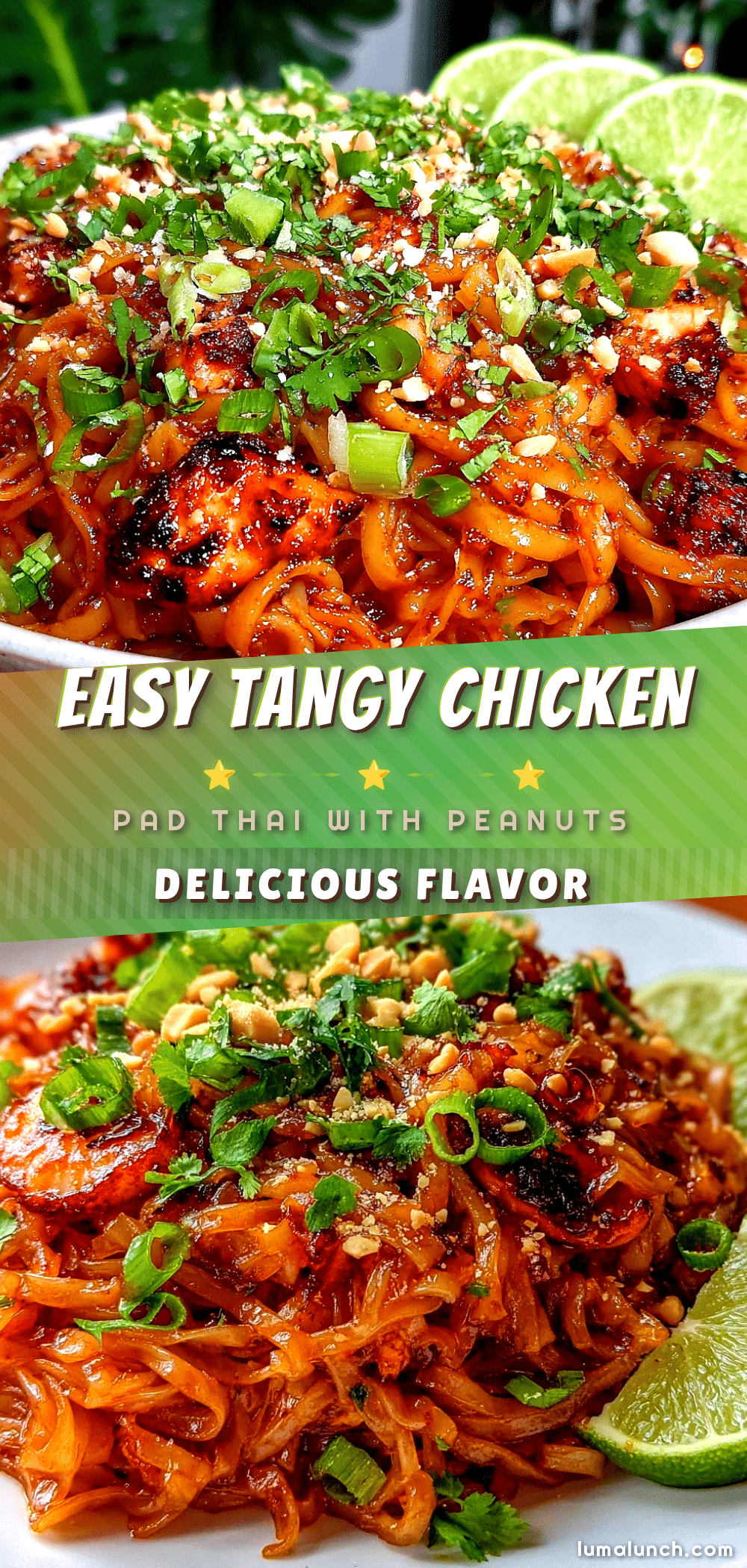
Easy Chicken Pad Thai Recipe with Tangy Tamarind Sauce for Perfect Thai Flavor
A quick and easy chicken pad thai recipe featuring a tangy tamarind sauce that balances sweet, sour, and salty flavors. Perfect for busy evenings and casual dinners, this dish delivers authentic Thai street food magic at home.
- Prep Time: 20 minutes
- Cook Time: 10 minutes
- Total Time: 30 minutes
- Yield: 4 servings 1x
- Category: Main Course
- Cuisine: Thai
Ingredients
- 8 ounces (225 grams) flat rice noodles, soaked or boiled until tender but still firm
- 1 pound (450 grams) chicken breast, thinly sliced into bite-sized strips
- 3 tablespoons tamarind paste
- 3 tablespoons fish sauce (substitute with soy sauce for vegetarian option)
- 2 tablespoons palm sugar, finely grated (brown sugar works as a substitute)
- 3 cloves garlic, minced
- 2 large eggs, lightly beaten
- 3 green onions, sliced thinly
- 1 cup bean sprouts, rinsed and drained
- ½ cup roasted peanuts, chopped coarsely
- Lime wedges, for serving
- 2 tablespoons vegetable oil
- Optional chili flakes, to taste
Instructions
- Soak 8 ounces (225 grams) of flat rice noodles in warm water for about 20 minutes until pliable but still firm to the bite. Drain and set aside. Alternatively, boil for 3-4 minutes but watch carefully to avoid overcooking.
- In a small bowl, combine 3 tablespoons tamarind paste, 3 tablespoons fish sauce, and 2 tablespoons grated palm sugar. Stir until sugar dissolves completely. Taste and adjust if needed.
- Heat 2 tablespoons vegetable oil in a large skillet or wok over medium-high heat. Add thinly sliced chicken breast and stir-fry for 4-5 minutes until cooked through and lightly golden. Remove chicken from the pan and set aside.
- In the same pan, add minced garlic and cook for about 30 seconds until fragrant but not browned.
- Pour in the lightly beaten eggs. Stir gently to scramble, cooking until just set but still soft.
- Add the drained noodles and pour the tamarind sauce mixture over everything. Stir-fry quickly for 2-3 minutes, making sure noodles are evenly coated and heated through.
- Return the cooked chicken to the pan along with sliced green onions and bean sprouts. Stir well to mix and warm everything together for another minute.
- Remove from heat. Sprinkle chopped roasted peanuts over the top and serve with lime wedges on the side. Optionally, add chili flakes to taste.
Notes
Soak rice noodles properly to avoid mushiness. Use high heat when stir-frying to seal in juices and achieve ‘wok hei’ flavor. Adjust tamarind, fish sauce, and palm sugar to taste. Add peanuts and lime wedges for texture and brightness. For gluten-free, use tamari or coconut aminos instead of fish sauce. Store leftovers in an airtight container for up to 2 days and reheat gently with a splash of water.
Nutrition
- Serving Size: 1 serving (approxima
- Calories: 450
- Fat: 12
- Carbohydrates: 45
- Fiber: 3
- Protein: 35
Keywords: chicken pad thai, tamarind sauce, easy Thai recipe, quick dinner, stir-fry noodles, authentic pad thai, Thai street food